Parents looking for clear organic labelling
You want to check the label on the specific product, rather than relying on a vague suggestion that it’s natural.


To choose an organic chocolate snack for the school holidays, first check the organic status of the exact product. Then compare its ingredients, sugar content per 100 g and per portion, and any allergens. A cereal bar can be handy to take with you, but organic certification alone doesn’t tell you about its nutritional make-up. A chocolate bar satisfies a different craving and shouldn’t be confused with a breakfast bar.
You want to check the label on the specific product, rather than relying on a vague suggestion that it’s natural.
You compare ingredients, sugar, fibre and portion sizes before planning snacks for the holidays.
Before sharing a product with a child or a guest who has an allergy, you need to read the highlighted allergens and any ‘may contain’ warnings.
For holiday snacks and breakfasts, start with the factor that matters most to you, then check the other details on the packaging of the specific product.
| Criteria | What to check | Who it matters to |
|---|---|---|
| Organic status | Look for organic labelling and check that it applies to the recipe you’ve chosen. According to Agence Bio, organic labelling is governed by European Regulation 2018/848. | If I’m planning snacks for the holidays, I want to be able to identify an organic product before comparing recipes; around 42% of consumers would prioritise this criterion. |
| Sugar and portion size | Compare the sugar content per 100 g and per portion, as well as the sweetening ingredients in the recipe. | If a bar is offered at breakfast, I want to know how much sugar is in a portion without treating it as a meal in itself; around 33% of consumers would make this their top priority. |
| Allergens | Read the highlighted allergens and any ‘may contain’ warnings on the relevant packaging. | If several people are sharing snacks, I need to check each recipe before serving it; around 25% of consumers would put allergens first when choosing. |
Organic status relates to how a product is made, not to a specific sugar content. Carrefour Bio’s product listing for a chocolate cereal bar mentions glucose syrup and sugar among its ingredients.
Compare the sugar content per 100 g and per portion, then read the ingredients list for each product.
The DGCCRF says that Nutri-Score is voluntary in France. Nutritional information, on the other hand, is generally required for prepacked foods.
If the logo isn’t shown, check the nutritional information, including sugar, fat and salt, and take the portion size into account.
Two chocolate recipes from the same brand can contain different ingredients and have different ‘may contain’ warnings. The DGCCRF says that allergenic ingredients must be highlighted in the ingredients list.
Check the packaging of the product you receive before serving it to anyone with an allergy.
The levy described by Légifrance applies to drinks and liquid preparations for drinks, not solid chocolate bars.
When comparing bars, focus instead on their ingredients, nutritional information and allergens.
The range includes an organic chocolate cereal bar sold in a box of six, with a total weight of 138 g.
The Bjorg product reviewed is an organic oat biscuit with chocolate chips, not a traditional cereal bar.
This brand may appeal if you’re looking for organic chocolate and are interested in fair trade, rather than a cereal bar.
These two products suit different holiday cravings: a filled cereal bar for an on-the-go snack, and a milk chocolate bar for anyone who prefers organic chocolate.
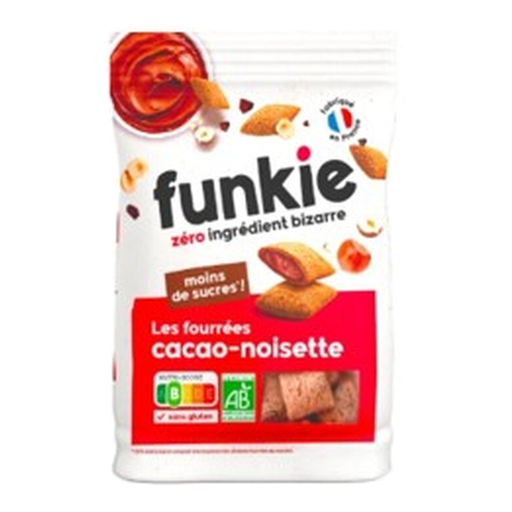 Image unavailable
Worth considering if you’re looking for a cereal snack with hazelnut and cocoa. Check the packaging for sugar per 100 g and per bar, the number of bars, and any allergens or traces before sharing.
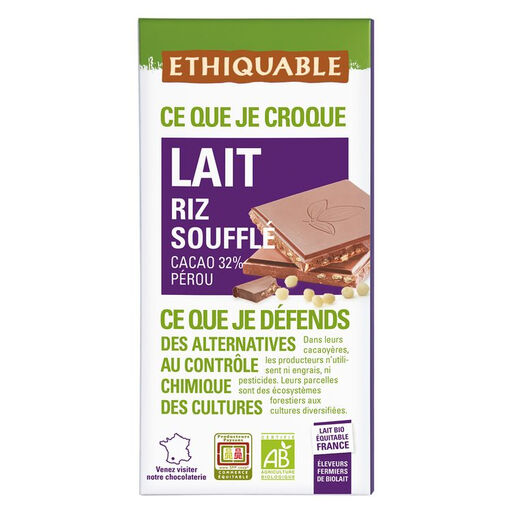 Image unavailable
Worth considering if you’re after organic chocolate rather than a breakfast cereal bar. Compare the sugar content based on the portion you’ll eat, and check the packaging for milk and any warnings about traces of other allergens.
No. The DGCCRF describes Nutri-Score as a voluntary label. Nutritional information is generally required for prepacked foods, so you can compare the figures shown on the packaging.
No, not to solid bars: the text published by Légifrance covers drinks and liquid preparations for drinks. When choosing a bar, check its ingredients and sugar content instead.
Check the organic labelling on the specific product, rather than relying on the word ‘natural’ alone. Agence Bio notes that labelling for organic products is governed by European Regulation 2018/848.
Read the ingredients list, highlighted allergens and any ‘may contain’ warnings on the pack you receive. Don’t assume the information for one recipe or flavour applies to another.