Organisers looking for clearly identifiable organic products
You want to serve an organic product without assuming it contains less sugar. Look for the certification, then compare the nutritional information for the products you’re considering.


For a birthday party, first choose a product with clearly identifiable organic certification, then check the allergens, sugar content and number of portions you can actually serve. A cereal bar, a chocolate biscuit bar and a chocolate bar to break into pieces all suit different serving needs. Organic certification alone doesn’t tell you how nutritious a product is.
You want to serve an organic product without assuming it contains less sugar. Look for the certification, then compare the nutritional information for the products you’re considering.
Before putting together the buffet, check the guidance from the parents concerned and read the allergen information for each recipe, including any warnings about possible traces.
You’re looking for a format that’s easy to hand out to the number of children invited. Individually wrapped bars and a chocolate bar that needs breaking into pieces require different arrangements when serving.
| Criterion | What to check | Consumers concerned |
|---|---|---|
| Organic certification and sugars | Look for organic certification, then compare the sugar content per 100 g and, if provided, per portion. | If I’m looking for organic food for the party, I want to identify this characteristic without assuming the recipe contains less sugar. Around 36% of consumers prioritise verifiable organic certification and checking sugar content. |
| Allergens | Read the highlighted allergen information and any warnings about traces on the exact product you’re considering, and follow the parents’ guidance. | When several children are sharing party snacks, I need to choose products that are suitable for the allergies I’ve been told about. This check is a priority for around 29% of consumers. |
| Serving format | Check the number of units and their weight, and decide whether individual wrapping is needed. | To hand out snacks without running short, I need to know how many children the pack will serve. Around 21% of consumers prioritise organising how the snacks are served. |
| Party portions | Check the portion sizes and choose between a bar to hand out and chocolate to break into pieces. | For this party, I want to offer chocolate while deciding how much each child gets. Portion control is the main concern for around 14% of consumers. |
Organic certification relates to how a product is made, not to a standard sugar content across all recipes. For one specific Carrefour Bio milk chocolate biscuit bar, Carrefour France lists 34.5844 g of added sugars per 100 g. This figure doesn’t apply to the brand’s other products.
Use certification to identify organic options, then compare the sugar and fat content on the same per-100 g basis.
In France, the DGCCRF distinguishes between the nutrition declaration required for prepacked foods and Nutri-Score, which is optional. The absence of a logo doesn’t tell you anything about the composition of a bar.
Read the nutritional information and ingredients list, whether or not Nutri-Score is displayed.
The levy described in Article 1613 ter of the French General Tax Code, published on Légifrance, applies to drinks and liquid preparations for drinks that meet the conditions set out in the legislation. It doesn’t apply to a solid chocolate bar.
When comparing bars, check their labels and the portion you plan to serve instead.
Recipes can vary within the same brand. The DGCCRF specifies that allergens in prepacked foods must be declared and highlighted. Packaging may also include warnings about possible traces.
Ask the parents for guidance before buying and check each product, especially if you need a separate option for one of the children.
A range where it’s worth distinguishing chocolate cereal bars from chocolate biscuit bars: their names and recipes aren’t interchangeable.
A brand to consider if biscuits or other organic chocolate products would also suit the party snacks you have in mind.
An option if an organic chocolate bar to break into pieces would work better than individual portions.
These two products suit different ways of serving: an organic chocolate bar to break into pieces, and organic cocoa-filled cereal bars. Check the packaging and allergens before deciding which is right for your guests.
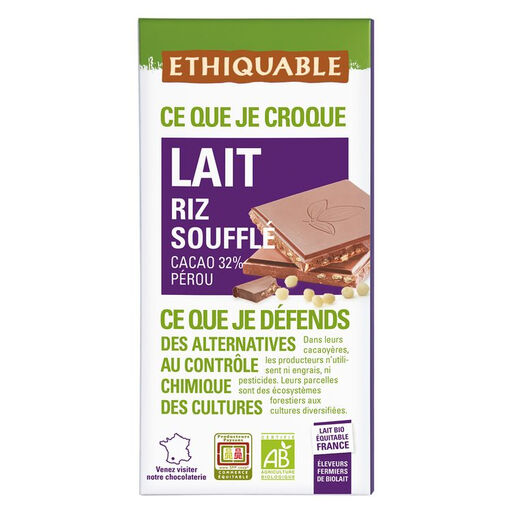 Image unavailable
Worth considering if an adult would rather break up a chocolate bar at snack time than hand out individual bars. The product contains milk; its product information also warns that it may contain traces of nuts and gluten. Check the packaging and decide on portions before serving.
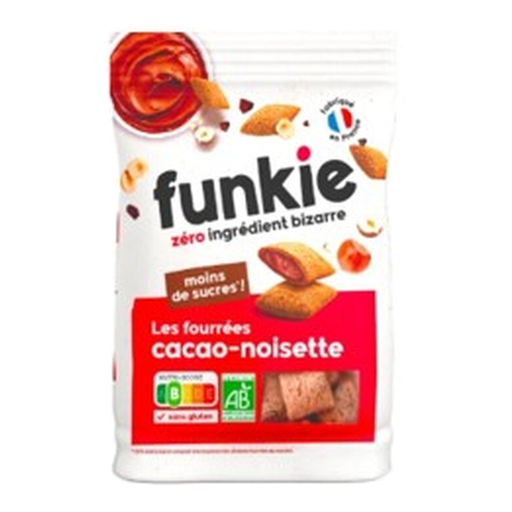 Image unavailable
A bar format to consider if you’d like to hand out individual bars rather than break up a chocolate bar. Check how many bars are in the pack and how they’re wrapped before counting portions. For allergy information, check the packaging of the product you receive before serving.
No. According to the DGCCRF, displaying Nutri-Score is optional, while a nutrition declaration has been required for prepacked foods since December 2016. Compare the nutritional values and ingredients even if there’s no logo.
A solid bar isn’t covered by the levy on drinks and liquid preparations for drinks defined in Article 1613 ter of the French General Tax Code, published on Légifrance. You should still check the sugar content on the label.
Ask the child’s parents for guidance before you buy, then check the allergens and any warnings about traces on the packaging of each exact product. According to the DGCCRF, allergens must be highlighted on prepacked foods.
No. Organic certification covers how a product is made, but doesn’t set the sugar content of a recipe. To compare two products, check their nutritional values per 100 g, then consider how much you plan to serve each child.
Not necessarily. For a birthday, you can choose an occasional chocolate treat that suits your guests and how you plan to serve it. For everyday snacks for children aged 4 to 11, Santé publique France recommends limiting foods that are high in sugar and fat.