What should you check?
When choosing a bar for an after-school snack, start with the reason for your purchase, then check the other information on the label of the specific product.
| What to check |
Look for |
Who is it for? |
| Organic certification |
Look for the EU organic logo or the AB mark on the packaging, rather than relying on the word ‘natural’ alone. |
For an after-school snack, I want to be able to identify the production method of the bar I’m buying; around 29% of consumers rank this certification as their top criterion. |
| Sugars and nutritional information |
Compare the ‘of which sugars’ figure per 100 g and per serving if this is shown on the label; check the sweetening ingredients too. |
When several recipes suit me, I want to know how much sugar the child will be eating. Around 36% of consumers prioritise this nutritional comparison. |
| Allergens and traces |
Check the allergens listed in the ingredients and any ‘may contain’ warnings for the specific product. |
If I need to consider an allergy, the exact ingredients matter more than the organic label; for around 21% of consumers, allergen suitability is the main criterion. |
| Pack size and availability |
Check the number of bars, how they’re packaged and whether they’re available from your chosen retailer. |
When preparing snacks to take out, I look for a pack that’s easy to share out and a product I can buy. This practical need comes first for around 14% of consumers. |
A chocolate option on Joybuy
This selection features a milk chocolate and puffed rice bar to consider as a snack. It’s not a cereal bar or an individual portion, so check the pack size and certification of the finished product if you’re specifically looking for an organic bar for an after-school snack.
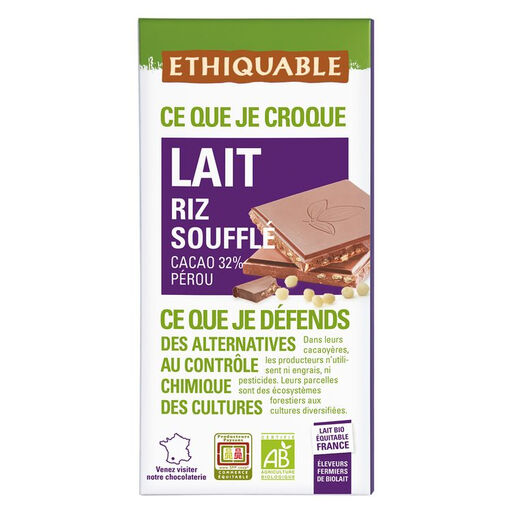 Image unavailable
ETHIQUABLE milk chocolate with puffed rice, 100 g bar
A chocolatey snack to share or portion out, rather than an individually wrapped bar. The product information lists 8% puffed rice and 48 g of sugars per 100 g, and describes the ingredients as organically produced. Check for the EU organic logo or AB mark on the packaging to confirm certification of the finished product. Milk is listed, and the product may contain traces of tree nuts and gluten.
View on Joybuy
Frequently asked questions
Is the Nutri-Score compulsory on a chocolate bar?
No. According to the European Commission, front-of-pack nutrition labelling is voluntary under current EU rules. However, most pre-packed foods must carry a nutrition declaration, so compare the information even when no Nutri-Score is displayed.
What does the organic label guarantee on a bar?
It indicates an organic production method governed by European regulations, as explained by the Ministry of Agriculture. Check the certification on the packaging of the specific product: on its own, it guarantees neither a low sugar content nor the absence of allergens.
What should I check on the label for a child with an allergy?
Check the allergens highlighted in the ingredients list and any warnings about possible traces. Depending on the recipe, the bars featured by Carrefour list cereals, milk, peanuts, tree nuts, sesame, eggs or soya, among other allergens. If there’s a diagnosed allergy, follow the advice of a healthcare professional.
Does the soft drinks tax apply to chocolate bars?
No. The Ministry of the Economy describes this levy as applying to sugary drinks. When choosing a bar for an after-school snack, check its certification, ingredients, nutrition information and allergens instead.


