What should you look for?
To choose between a cereal bar and a filled bar, start by deciding which format you want. Then check the certification, nutritional information and recipe separately.
| What matters to you |
What to check |
Who it’s for |
| Organic certification |
Look for the EU organic logo on the exact product and read the ingredients list. According to Agence Bio, the logo confirms that the product meets European organic farming rules. |
If I’m choosing a bar because it’s organic, I want to be able to recognise the certification on the packaging rather than relying on its name. This is the top priority for around 42% of consumers. |
| Sugars and nutritional values |
Compare the sugar content per 100 g with the amount you’ll eat. Check the Nutri-Score too, if one is shown. France’s Directorate General for Competition Policy, Consumer Affairs and Fraud Control notes that prepacked foods must carry a nutrition declaration, subject to certain exemptions. |
If I’m including a bar in breakfast, I want to assess its nutritional profile as well as the organic claim. Around 33% of consumers put this nutritional comparison first. |
| Recipe and allergens |
Know the difference between a cereal bar and a filled chocolate bar, and check the ingredients and any may-contain warnings for each one. |
For an Epiphany get-together, I want to find the type of chocolate we’d like to share while bearing in mind any ingredients that guests need to avoid. The recipe and its suitability for different diets are the main priority for around 25% of consumers. |
A selection of bars on Joybuy
This selection features a hazelnut and cocoa filled cereal bar, worth considering if you’re looking for this format for breakfast or an Epiphany snack.
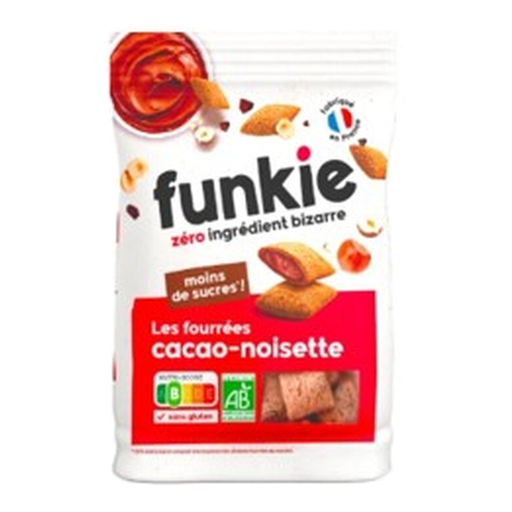 Image unavailable
FUNKIE Organic hazelnut and cocoa filled cereal bars, 250 g
A format to consider if you’re after a cereal bar with a hazelnut and cocoa flavour rather than a milk chocolate filled bar. The pack is listed as 250 g.
Before comparing sugar content, check the amount per 100 g on the packaging, as well as for the EU organic logo if certification is important to you. Also check the label of the exact product for peanut and cashew nut warnings: allergen information can vary between product descriptions.
View on Joybuy
Frequently asked questions
How can you recognise a certified organic bar in France?
Look for the EU organic logo on the exact product. According to Agence Bio, its presence on the label confirms that the product meets European organic farming rules. Also check that the product you’re looking at is the type of bar you want.
Does a chocolate bar have to carry a Nutri-Score?
No. According to France’s Ministry of the Economy, displaying a Nutri-Score is optional in France. Prepacked foods must carry a nutrition declaration, subject to certain exemptions, which lets you check the sugar content per 100 g, among other details.
Can you compare an organic cereal bar directly with a filled chocolate bar?
You can compare their values per 100 g, but their recipes and intended uses aren’t the same. For the two Bio Village products mentioned here, E.Leclerc’s product pages list a Nutri-Score D for the dark chocolate cereal bar and E for the milk chocolate filled bar. These scores don’t represent every bar in either category.
Which allergens should you check before sharing bars at Epiphany?
Read the ingredients and any may-contain warnings on each pack. The products listed by Carrefour and E.Leclerc include warnings about milk and wheat, or possible traces of peanuts and tree nuts, depending on the product. Don’t assume that one label applies to a different recipe.
Does the sugary drinks tax apply to an organic chocolate bar?
No. In France, the levy set out in Article 1613 ter of the General Tax Code applies, under the conditions set out in the legislation, to drinks and liquid preparations for making drinks—not solid bars. When choosing a chocolate bar, check its label instead.


