Fans of black tea chai
You’d like to serve a spiced tea, perhaps with milk. Compare the proportion of black tea, the spices and the brewing instructions: recipes and preparation times vary from one product to another.


To serve organic chai when friends come round, choose a black tea recipe if you want the flavour of tea alongside the spices and caffeine is suitable for your guests. For anyone who wants to avoid caffeine, opt for an infusion explicitly labelled caffeine-free instead: it won’t necessarily make the same kind of cup. In either case, check for the EU organic logo, the ingredients — particularly liquorice — and the pack size before you shop.
You’d like to serve a spiced tea, perhaps with milk. Compare the proportion of black tea, the spices and the brewing instructions: recipes and preparation times vary from one product to another.
You’d like to offer a second spiced drink alongside black tea chai. Look for an infusion explicitly labelled as naturally caffeine-free, rather than relying on the word ‘chai’ alone.
You’d like to check the label before serving several guests. The Agence BIO says the EU organic logo confirms compliance with European organic farming rules. You should also read the ingredients list and check any highlighted allergens.
When friends come round, first decide whether you want black tea and caffeine, then check the ingredients and organic labelling for each recipe.
Choose this if: your guests would like a cup where black tea complements the spices.
Bear in mind: black tea contains caffeine, and brewing instructions also vary between recipes.
Choose this if: you’d like to offer a spiced drink to guests who avoid caffeine, after checking the product label.
Bear in mind: a herbal infusion won’t necessarily taste like black tea chai, and some recipes contain liquorice.
| What to look for | What to check | Who is it for? |
|---|---|---|
| Black tea and spices | Look for black tea in the ingredients and compare the spices listed. | I want to serve chai where the tea flavour matters as much as the spices, and caffeine is suitable for my guests. Around 44% of consumers rank this profile as their top priority. |
| Caffeine-free option | Look for an explicit ‘naturally caffeine-free’ label and read the infusion’s ingredients. | If some guests avoid caffeine, I’d prefer to offer them another spiced drink. This is the top priority for around 33% of consumers. |
| Organic certification and ingredients | Check for the EU organic logo, the ingredients list and any highlighted allergens on the packaging. | Before serving chai to several people, I want to check its organic certification and find out what’s in the recipe. This is the top priority for around 23% of consumers. |
The word ‘chai’ is also used for herbal and spiced infusions. The flavour and caffeine content can therefore vary.
If your group has different preferences, compare black tea chai with an infusion explicitly labelled as naturally caffeine-free.
The EU organic logo confirms compliance with European organic farming rules, but it doesn’t tell you whether a product contains black tea, liquorice or allergens.
Check the ingredients list too. For pre-packaged foods, the DGCCRF says allergenic ingredients must be highlighted on the label.
Liquorice is included in some of the Pukka and Pagès chai recipes featured here. Anses warns of risks associated with excessive liquorice consumption.
Check the packaging for liquorice and bear it in mind if you plan to serve this recipe regularly.
A product page may still be available to view even if the chai is no longer sold for your shop: Carrefour Bio’s black tea chai page says that this product is no longer on the shelves.
Before putting together your basket, check what your store offers and look for another recipe of the same type if needed.
These products feature different ingredients and formats. Compare the specific recipe rather than relying on the brand alone.
Kashmir Tchaï Bio is for anyone who wants to make black tea chai and control how much they serve.
Chai Original and Chai Vanilla suit two different choices: black tea chai or an infusion labelled naturally caffeine-free.
An organic tea-bag recipe for serving chai made with black tea and spices.
An organic chai infusion made with herbs, orange and spices, rather than black tea.
An organic black tea chai in tea bags, with ingredients that can serve as a point of comparison.
This tea-bag option is a black tea and spice chai for serving several cups. If you’re looking for a certified organic product, check for the EU organic logo on the packaging before buying.
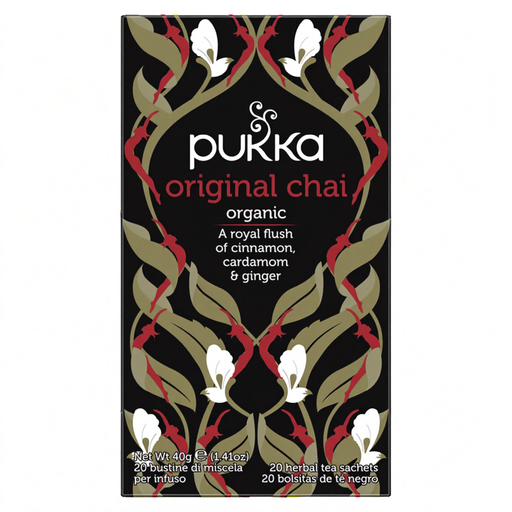 Image unavailable
A tea-bag option to consider if you’d like to serve black tea chai to several guests. The listed ingredients include cinnamon, black tea, ginger, cardamom and liquorice. Black tea contains caffeine. Check the brewing instructions and look for the EU organic logo on the packaging if organic certification matters to you.
Look for the EU organic logo on the packaging: the Agence BIO says this logo confirms compliance with European organic farming rules. Also read the product description, ingredients list and any highlighted allergens to find out which recipe you’ll be serving.
No, it depends on the recipe. Kusmi Kashmir Tchaï and Yogi Tea’s spiced chai contain black tea, a natural source of caffeine according to Anses. Carrefour’s product page for Pukka Chai Vanilla infusion, on the other hand, says it is naturally caffeine-free.
Yes, if it suits your preferences and the recipe instructions. Pukka says its Original Chai can be enjoyed with or without milk. You could also serve the milk on the side so everyone can prepare their cup as they like.
Some of the chai recipes featured here contain liquorice, and Anses warns of risks associated with excessive consumption. Check the ingredients list, particularly if you plan to serve this drink often or in large quantities.