What should you look for first?
For a weekend breakfast, start with the factor that will really determine your purchase: proof of fair trade, the recipe you want to serve or the caffeine content. A single chai can meet several of these criteria, but you’ll need to check each one separately.
| Criteria |
What to check |
Who is it for? |
| Fair trade |
The Fairtrade/Max Havelaar claim on the product and which ingredients it covers, particularly the tea and spices. |
I want to know exactly which parts of my chai are covered by fair trade; around 50% of consumers put this proof first. |
| Recipe and preparation |
The tea base, the spices listed and the instructions for brewing or preparing it with milk. |
I want to take the time to prepare a spiced chai, so I prioritise a recipe and method that suit my cup; this comes first for around 30% of consumers. |
| Caffeine |
Whether it contains black tea and what other caffeinated drinks you have during the day. |
If I’m sensitive to caffeine, the chai’s ingredients could affect my choice; around 20% of consumers put this consideration first. |
Brands to compare
These examples illustrate different criteria: a fair trade statement for a specific chai, organic recipes or another certification applied to black tea.
Jardin BiO étic
Its Thé noir Équitable Chaï Intense combines an organic chai recipe with a Fairtrade/Max Havelaar statement covering the tea.
- Jardin BiO étic says all the tea in the product comes from fair trade sources; its product information recommends brewing for 3 to 4 minutes at 95 °C.
- The same product information states that 80.5% of the ingredients of agricultural origin meet fair trade standards. Don’t assume the claim about the tea applies to every spice.
Kusmi Tea
Kashmir Tchaï is for those who first compare organic spiced black tea recipes and the formats available.
- Kusmi Tea recommends brewing this product for 3 to 5 minutes at 90 °C.
- If Fairtrade/Max Havelaar is your priority, check for this certification separately: an organic label is not a substitute.
Palais des Thés
Organic Chaï Impérial may appeal if you’d like to prepare your spiced black tea with milk for breakfast.
- For this chai, Palais des Thés suggests using two parts water to one part milk.
- This chai latte recipe does not indicate Fairtrade/Max Havelaar certification.
Lipton
Yellow Label is worth considering only if you’d rather add your own chai spices.
- Lipton states that Yellow Label black tea packaged in Europe is Rainforest Alliance certified.
- This claim applies to Yellow Label, not to a chai ready to brew; Rainforest Alliance certification is not proof of Fairtrade/Max Havelaar certification.
A chai to consider on Joybuy
This selection features a chai for breakfast. If your purchase depends on fair trade certification, check the claim and what it covers on the packaging of the product you choose.
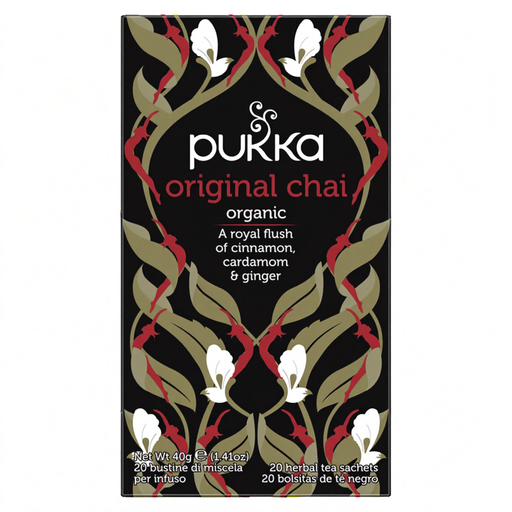 Image unavailable
Pukka Original Chai 20pcs
An option to consider if you’re looking to make chai for breakfast. The stated format is 20 pieces. If fair trade is your main priority, check the packaging for the Fairtrade/Max Havelaar claim and which ingredients it covers.
View on Joybuy
Frequently asked questions
What should you check about a chai’s Fairtrade/Max Havelaar label?
First, check that the claim applies to the product you’ve chosen, then read which ingredients it covers. Fairtrade/Max Havelaar France describes its label as a guarantee based on social, economic and environmental criteria. For a blend of tea and spices, the manufacturer’s statement clarifies what the claim covers.
How should you brew Jardin BiO étic’s Thé noir Équitable Chaï Intense?
Jardin BiO étic recommends brewing it for 3 to 4 minutes in water at 95 °C. These instructions are for this product; follow the packaging instructions for a different chai.
Can you make organic Chaï Impérial with milk?
Yes. Palais des Thés suggests preparing its organic Chaï Impérial with two parts water at 95 °C and one part milk, then leaving it to brew for four minutes. If you choose a different chai, follow its product instructions.
Is organic chai always fair trade?
No. Organic and Fairtrade/Max Havelaar labels provide different information. If both matter to you, look for each one on the chai you’re considering and check which ingredients it applies to.
What should I look for if I’m sensitive to caffeine?
Start by checking whether the chai contains black tea. Anses points out that tea naturally contains caffeine, and its effects vary from person to person. Also consider your other caffeinated drinks when making your choice.


