For a little something to nibble on while watching TV, choose a cereal bar with organic credentials clearly identifiable on the packaging, then compare the ingredients, sugars per 100 g and allergens. Chocolate recipes may contain glucose syrup and sugar, while bars with seeds or nuts call for particular care over allergens. A bar is a snack, not an automatic substitute for dinner.
Who is this choice for?
Fans of an indulgent evening snack
If you’re looking for an easy-to-eat chocolate or fruit bar to enjoy in front of the TV, check its size, ingredients list and sugars per 100 g too. The Carrefour Bio and Bio Village product pages show that the organic label alone doesn’t answer these questions.
Shoppers who pay close attention to ingredients
To choose between cereals, seeds and nuts, read the ingredients and compare the nutritional information per 100 g. Carrefour Bio’s chocolate and seed-and-almond recipes illustrate how ingredients can differ.
Anyone who needs to check for dietary requirements
If you need to avoid an ingredient or are looking for a gluten-free label, check the exact product, including highlighted allergens and any ‘may contain’ warnings. The DGCCRF stresses the importance of identifying allergens on food labels.
What should you check first?
For a snack in front of the TV, start by checking the product’s organic credentials, then look at the recipe, any dietary requirements and the portion that suits you.
| What matters |
What to check |
Who is it for? |
| Organic credentials |
Organic logo, certification body and the stated origin of agricultural ingredients next to the European logo. |
If I’m specifically looking for an organic bar, the recipe name isn’t enough: I want to be able to recognise the relevant labelling. Around 33% of consumers would make this their top priority. |
| Nutritional composition |
Sugars and energy per 100 g; recipe ingredients. |
When choosing between several flavours, I want to compare what each bar contains before choosing a snack. This is said to be the main concern for around 25% of consumers. |
| Allergens and gluten-free requirements |
Allergens in the ingredients list, ‘may contain’ warnings and an explicit gluten-free label if needed. |
A bar with seeds may also contain an ingredient I need to avoid, so I check the packaging for the flavour I’ve chosen. For around 25% of consumers, this compatibility would come before other criteria. |
| Size and flavour |
Number of bars, net weight and stated flavour. |
For a little something to enjoy in front of the screen, I’m mainly looking for a portion and flavour that suit me. Around 17% of consumers would put this practical, taste-related choice first. |
What pitfalls should you avoid?
-
Assuming ‘organic’ means low in sugar
Organic certification doesn’t tell you about a product’s nutritional profile. The Bio Village dark chocolate bar featured by E.Leclerc contains 33 g of sugars and 405 kcal per 100 g.
Compare sugars, energy and other nutritional values per 100 g, as well as the ingredients list. If a Nutri-Score is shown, use it alongside this information, not instead of it.
-
Choosing a seed bar without checking the allergens
Carrefour Bio’s seed-and-almond recipe contains 18% almonds and also carries ‘may contain’ warnings for milk, peanuts and other nuts.
If you have an allergy, check the ingredients and ‘may contain’ warnings on the packaging for the exact product, even if you’re familiar with another flavour from the same brand.
-
Confusing an online product page with local availability
For the Bio Village product pages in question, E.Leclerc says the products aren’t sold directly on its website and advises shoppers to check with their chosen store.
Check that the product you want is available from the store or the collection or delivery service you plan to use.
Brands to know
Carrefour Bio
Carrefour France features organic cereal bars in flavours including chocolate and seed and almond.
- The product pages give details of the ingredients; the seed-and-almond bar contains 18% almonds.
- The chocolate recipe includes ingredients such as glucose syrup and sugar. Check the allergens for each flavour.
Bio Village
E.Leclerc features Bio Village organic cereal bars, including strawberry and dark chocolate varieties.
- The product pages list the ingredients and nutritional values per 100 g.
- According to E.Leclerc, the dark chocolate bar contains 33 g of sugars per 100 g. Check locally whether the product you want is available.
nümorning
nümorning offers a range of organic cereal bars made with ingredients such as oats, seeds, nuts and dark chocolate, depending on the recipe.
- The brand describes its recipes as plant-based; check the details for the bar you choose.
- Some of the bars featured contain almonds or peanuts, so check the ingredients and allergens before buying.
Gerblé
Gerblé describes a chocolate cereal bar as gluten-free; this is separate from organic certification.
- According to Gerblé, the product page carries an explicit gluten-free label.
- It lists soya and warns that it may contain traces of milk, peanuts and nuts. Check separately for any organic credentials you’re looking for.
An option on Joybuy
For a cocoa and hazelnut snack to enjoy in front of the TV, you could consider this cereal bar, provided you check its packaging for organic credentials, nutritional information and allergens.
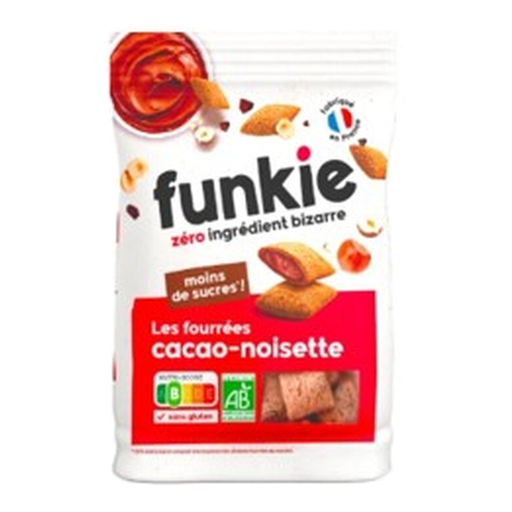 Image unavailable
FUNKIE Organic hazelnut and cocoa cereal bars, 250 g
Worth considering if you’re looking for a cocoa and hazelnut cereal bar to satisfy a little hunger. The listed ingredients include 56% cereals, 12.4% hazelnuts and 4.2% cocoa. Before comparing nutritional values, check that they’re given per 100 g on the packaging; also check the information on organic credentials, cashews and peanuts.
View on Joybuy
Frequently asked questions
How can you identify an organic cereal bar in France?
Look for the European organic logo or the AB mark, and read the associated information on the packaging. According to Agence Bio, a processed product using the European logo must contain at least 95% organic agricultural ingredients, subject to the other applicable rules. The origin of the agricultural ingredients and the certification body’s reference appear alongside the logo.
Is an organic bar necessarily low in sugar?
No. Organic status alone doesn’t determine the sugar content: the chocolate recipes featured by Carrefour France and E.Leclerc include ingredients such as glucose syrup and sugar. Compare the ingredients list and sugars per 100 g for the product you choose.
What should you read on the packaging before choosing?
Check the product name, ingredients, allergens, net quantity and nutritional information. The DGCCRF says allergens must be highlighted and nutritional information must be given per 100 g or 100 ml, making it easier to compare products.
Is a gluten-free bar also organic and free from other allergens?
No, these labels answer different questions. Gerblé describes its chocolate cereal bar as gluten-free, but lists soya and warns that it may contain traces of milk, peanuts and nuts. Check the organic information and allergens for the exact product separately.


