To choose an organic savoury biscuit as part of a high-protein diet, check the product’s certification, then compare the protein and salt per 100 g. Organic certification does not guarantee a high protein content. The Nutri-Score, which the French Ministry of Agriculture says is optional, can provide additional information when displayed, but it does not replace checking the ingredients and allergens.
Who is this choice for?
People who rely on biscuits for protein
If you want the biscuit to contribute to your protein intake, compare the amount listed per 100 g and for the portion you plan to eat. The claim ‘source of protein’ has a specific legal meaning; the word ‘organic’ alone does not imply it.
People who prioritise organic products without overlooking the label
You’re looking for an identifiable organic certification, while also comparing protein, salt and other nutritional information separately.
People who need to check specific ingredients
If you need to avoid an allergen or are looking for a feature such as ‘gluten-free’ or ‘vegan’, check the recipe and claims for the specific biscuit. These characteristics are not guaranteed by organic certification.
What should you check?
Start with what you want the biscuit to bring to your drinks and nibbles, then check the label to see whether it fits.
| Criterion |
What to check |
Who is it for? |
| Protein in the biscuit |
Protein per 100 g and per planned portion. Under the European regulation on nutrition claims, ‘source of protein’ means that at least 12% of the product’s energy comes from protein. |
If I want the biscuit itself to contribute to my protein intake, I need to be able to quantify that contribution. Around 42% of consumers would put this need first. |
| Nutritional profile |
Salt and saturated fatty acids per 100 g; use the Nutri-Score only if it is displayed, and only to compare like-for-like products. |
When choosing nibbles, I don’t want to base my choice on the protein figure alone without also checking the salt. Around 33% of consumers would prioritise this balance. |
| Organic status and ingredients |
The organic certification for the specific product, followed by its ingredients list, allergens and any additional claims. |
When I’m catering for people with dietary restrictions, I need a suitable recipe as well as an organic biscuit. Around 25% of consumers would prioritise these checks. |
Common misconceptions to avoid
-
Assuming ‘organic’ means ‘high in protein’
Organic certification relates to production methods; it does not set a minimum protein content for a savoury biscuit.
Check the protein per 100 g and per portion you plan to serve. Don’t assume a biscuit makes a protein claim just because it carries an organic logo.
-
Ruling out a biscuit that doesn’t display a Nutri-Score
The French Ministry of Agriculture says that displaying the Nutri-Score remains voluntary in France. Its absence, on its own, tells you nothing about the biscuit’s nutritional profile.
Compare the nutritional values on the pack directly, particularly protein, salt, sugars and saturated fatty acids.
-
Checking protein without looking at salt
The two values may point you towards different choices. For example, the product listing for Pural Parmesan Crackers gives 6.8 g of protein and 1.63 g of salt per 100 g.
Compare the salt per 100 g in similar savoury biscuits, then take the planned portion into account.
-
Assuming dietary suitability from the organic logo
Organic certification does not mean that every biscuit from a brand is gluten-free, vegan or free from allergens.
Check the ingredients list, allergens and claims for each product, especially if you’re serving several people.
Brands to know
Pural
Pural offers a range of organic savoury biscuits, with features that vary from product to product.
- Some Pural product listings provide ingredients and nutritional values, making it easier to compare two specific biscuits.
- Organic doesn’t necessarily mean high in protein: the listing for Parmesan Crackers gives 6.8 g of protein and 1.63 g of salt per 100 g.
Carrefour Bio
Carrefour offers a cracker under its Carrefour Bio brand.
- This product gives you the option of choosing a cracker identified as organic.
- To see how it fits into a high-protein spread, check the nutritional values on the pack you choose.
Markal / Luce
Markal offers organic products for drinks and nibbles, including Luce sesame mini crackers and a separate seed mix that is not a biscuit.
- Luce mini crackers are one savoury biscuit option to explore among the brand’s organic products.
- A product name containing ‘Protein’ does not describe the brand’s other products: check the label of the biscuit you’re thinking of buying.
Savoury biscuits to explore on Joybuy
These two RAMDAM SOCIAL savoury biscuits are designed for drinks and nibbles. Their names include ‘Organic’; if organic certification for the whole biscuit is important to you, check the packaging of the specific product you choose.
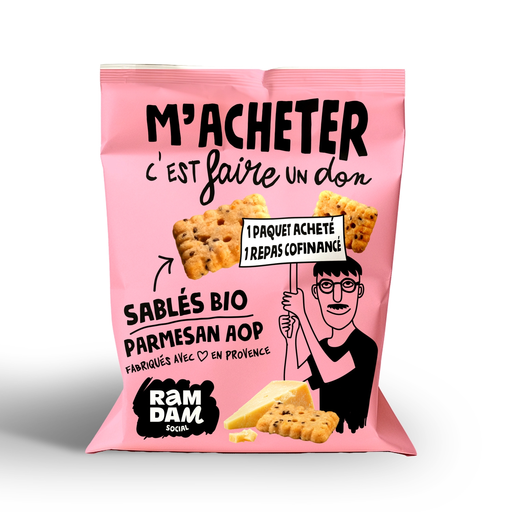 Image unavailable
RAMDAM SOCIAL Organic Parmesan & Chia Seeds, 100 g
Worth a look if you’re after a savoury biscuit with Parmesan and chia seeds to serve with drinks. The listing for this product gives 13 g of protein, 1.2 g of salt and 19 g of saturated fatty acids per 100 g. These figures alone aren’t enough to support a ‘high in protein’ claim. Check the organic certification for the whole product and the allergens on the packaging.
View on Joybuy
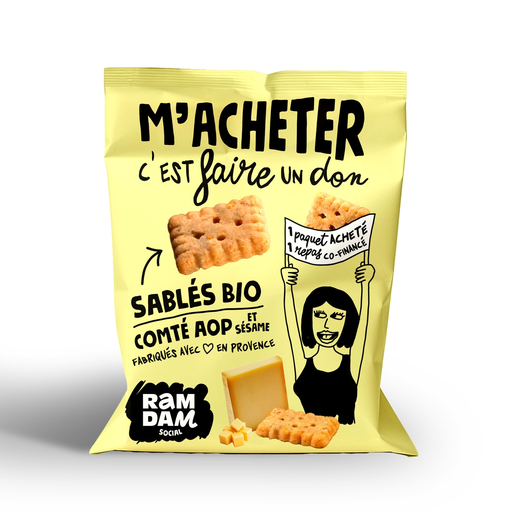 Image unavailable
RAMDAM SOCIAL Organic Comté & Sesame, 100 g
Worth a look if you’re after a savoury biscuit with Comté and sesame to serve with drinks. Its listing gives 14 g of protein, 1.9 g of salt and 21 g of saturated fatty acids per 100 g. The protein figure alone does not confirm a ‘high in protein’ claim. Check the organic certification for the whole biscuit and the allergens in this recipe before choosing it.
View on Joybuy
Frequently asked questions
Is the Nutri-Score compulsory on savoury biscuits in France?
No. The European Commission distinguishes between the nutrition declaration required on prepacked foods and front-of-pack nutrition information, which is voluntary. The French Ministry of Agriculture confirms that the Nutri-Score remains optional in France. If it isn’t shown, check the biscuit’s nutritional values instead.
Are organic savoury biscuits always high in protein?
No. Organic certification does not set a minimum protein content. Compare the grams of protein per 100 g and per portion. Under the European regulation on nutrition claims, a ‘source of protein’ claim requires at least 12% of the product’s energy to come from protein.
How can you check whether a savoury biscuit is organic?
Look for evidence of organic certification on the packaging of the specific biscuit, rather than relying on the recipe name alone. The French Ministry of Agriculture notes that organic production is governed by European regulations.
Can you eat an organic cracker for breakfast too?
Yes, if its flavour and ingredients suit you, but its organic status says nothing about the protein content of the whole meal. Pural markets its organic oat mini crackers for breakfast or as a snack and lists 10 g of protein per 100 g. Check the portion you eat before assessing its contribution.


