
Livraison le jour même ou le lendemain

Qualité garantie

Débloquez vos offres de bienvenue: Livraison GRATUITE | Jusqu'à -80 % | 30 jours d'essai gratuits à JoyPlus
Téléchargez l'application
Introducing solid foods is a key milestone for parents and their babies. Between preparing meals and managing outings, finding a snack that is healthy, convenient, and loved by little ones can quickly become a challenge. The organic baby fruit pouch has emerged as the ultimate solution: it's easy to carry, simple to use, and designed to meet the nutritional needs of young children.
With an overwhelming number of options on the market, it's not always easy to know which to choose. To help you see more clearly, we've decoded the labels and selected the best products to complement your baby's organic snack time or round out a meal.
Before you commit to a multipack, here are the essential points to check to ensure you get a product that's perfectly suited for your child.
A high-quality organic fruit purée is defined by one thing: its ingredient list, which should be as short as possible. The ideal? A "100% fruit" composition. Look for the "no added sugar" label. This means the product only contains the sugars naturally present in the fruit. Organic certifications (like the AB label or the Euroleaf) guarantee that the fruit was grown without synthetic pesticides—a non-negotiable for infant nutrition.
The age indicated on the packaging is a crucial guide. It corresponds not only to the child's swallowing abilities but also to their progress in introducing solid foods.
For regular use—whether for snacks at daycare, the park, or at home—opting for a multipack of fruit pouches is often more economical. It also allows you to have several flavours on hand to add variety and prevent boredom. The pouch format is particularly popular for its on-the-go convenience and ease of use, whether fed directly from the spout for older children or with a spoon for younger ones.
Here are a few products that tick all the boxes for quality and convenience.
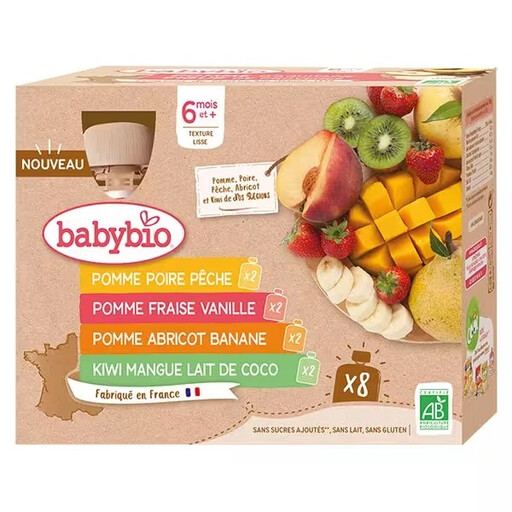
What sets it apart: This multipack stands out for its diverse recipes and its focus on ingredients from French sources for certain varieties. Blends like Kiwi-Mango-Coconut or Apple-Strawberry-Vanilla are designed to spark babies' taste curiosity.
Key features:
Who is it for? This multipack is an excellent option for parents of children aged 6 months and up who want to introduce a wide range of tastes while prioritising locally sourced ingredients where possible.
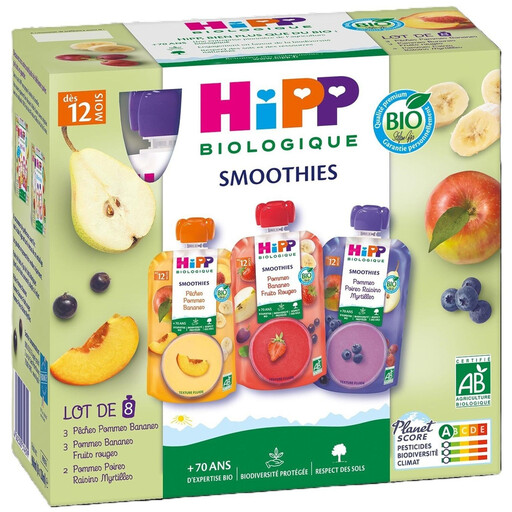
What sets it apart: Designed for children from 12 months, these pouches come in a more generous 120 g size. The texture, which the brand describes as halfway between a juice and a purée, is created for toddlers who enjoy "smoothie-like" consistencies.
Key features:
Who is it for? This product is aimed at parents of toddlers (1 year and up) who are looking for a more substantial fruit pouch for snack time or as a fruity dessert.
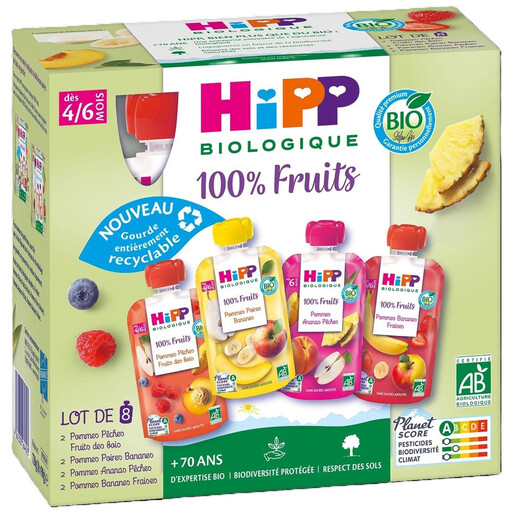
What sets it apart: This multipack is specifically formulated for the first stages of weaning, from 4 to 6 months. The recipes are made with 100% fruit and focus on simple, easily digestible flavours. Another key feature highlighted by the manufacturer is the packaging, which is designed from a mono-material (polypropylene) to be fully recyclable.
Key features:
Who is it for? Ideal for parents who are beginning to introduce solid foods and are looking for a first organic fruit purée in a convenient pouch format, with simple recipes and a focus on recyclable packaging.
Our selection focuses on specific formats and recipes, but the world of baby food is vast. To explore other flavours, different formats, or discover other types of suitable drinks, feel free to browse our complete category.
? Explore our full range of children's drinks
You can start from the beginning of the weaning process, usually between 4 and 6 months, as long as you choose a product specifically designed for this age group. The texture must be perfectly smooth. Always check the recommended age on the packaging and consult your paediatrician or a healthcare professional.
The first step is to read the ingredient list. If it only lists fruits (e.g., "apples 80%, bananas 20%"), the product contains no added sugar. The "of which sugars" line in the nutritional table simply indicates the sugars naturally present in the fruit, which is completely normal.
Yes, most pouches can be stored after opening. Simply close the cap tightly and place it in the refrigerator. It can typically be kept for 24 hours. However, always check the manufacturer's instructions on the packaging.