
Livraison le jour même ou le lendemain

Qualité garantie

Débloquez vos offres de bienvenue: Livraison GRATUITE | Jusqu'à -80 % | 30 jours d'essai gratuits à JoyPlus
Téléchargez l'application
Between fruit purées, savoury purées, cereals and ready-made baby meals, comparing products can quickly become complicated. Colourful packaging or the word “natural” is not enough to tell you whether a recipe is suitable for your child’s age, eating habits or any sensitivities they may have.
To buy organic baby food jars with confidence, three common pitfalls are worth avoiding:
Labels such as baby food jars from 4 months, baby food jars from 6 months, baby meals from 8 months or baby meals from 12 months provide an initial indication, but they do not replace the detailed information on the packaging. A product intended for babies from 4 months is generally smooth, while recipes for older children may be thicker or contain small pieces.
When starting weaning, a smooth-textured organic baby purée is often easier to offer by spoon. From 6 months, recipes based on vegetables, cereals or pulses help gradually broaden your baby’s range of flavours. More varied textures can then support the development of chewing skills.
Organic certification applies to agricultural ingredients, in line with the current European framework. However, this does not mean that the product is free from all allergens. In particular, check for milk, egg, gluten, celery, soya, mustard or nuts.
A few examples show why it is important to read the label carefully:
The absence of an allergen stated on a product page should always be confirmed on the packaging you receive. Recipes and information may change.
The multipack price alone is not enough to compare two products. Work out the price per jar or per 100 g, then check the storage instructions after opening. Depending on the product, a portion that has been opened can generally be kept for 24 to 48 hours in the fridge, provided it has not been eaten from directly or reheated.
Glass jars are practical for storing at home, while pouches are easy to slip into a bag when you are out and about. For children under 36 months, however, the cap must be kept out of reach. If your child is not yet eating independently, squeeze the purée onto a spoon rather than letting them suck directly from the pouch.
The official organic logo and control code, such as FR-BIO-01 when shown on the product, are more reliable indicators than vague wording such as “natural recipe”.
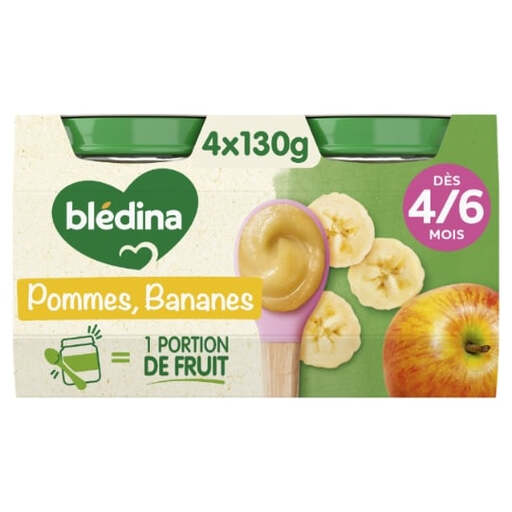
Why this choice suits this shopping need : this pack of four 130 g jars is a simple way to start with a fruity recipe made with 80 % apple and 20 % banana, for babies from 4 months according to the packaging.
The easy-to-read ingredients make it simple to distinguish a straightforward recipe from a very sugary or heavily flavoured blend. The smaller pack also reduces the risk of overstocking at the start of weaning.
A smooth texture, four 130 g jars and a recipe listed as gluten-free on the product page.
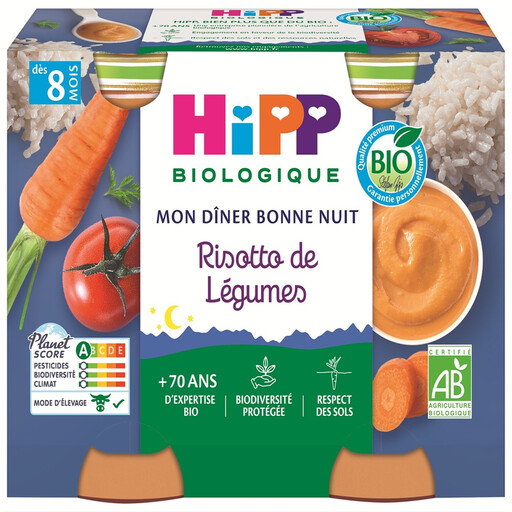
Why this choice suits this shopping need : this organic baby meal, intended for children from 8 months, combines carrots, tomatoes, potatoes and rice in two 190 g portions. Its texture is described as smooth.
The age guidance, net weight and presence of milk are all details to check before buying. This avoids choosing a recipe based solely on its organic image.
Two 190 g portions, ingredients from organic farming and no added salt, as stated on the product page.
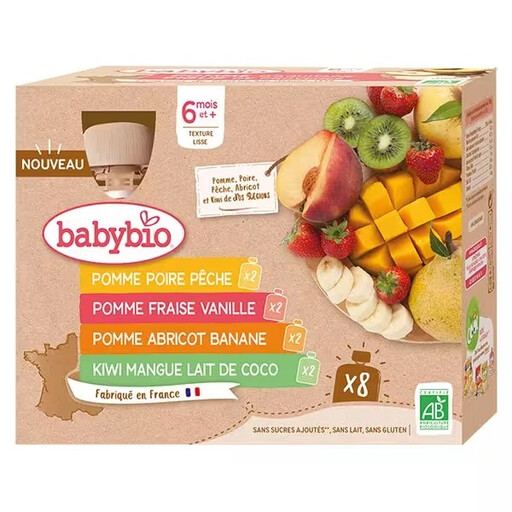
Why this choice suits this shopping need : with eight 90 g pouches and four fruit combinations, this pack is ideal for families who like to vary flavours at home or take an organic baby fruit purée out with them.
The small-portion packaging means you do not need to open a large jar when only a little is required. However, “no added sugars” should be distinguished from the sugars naturally present in fruit.
Eight pouches, four recipes and one variety containing coconut, which should be taken into account when checking allergens.
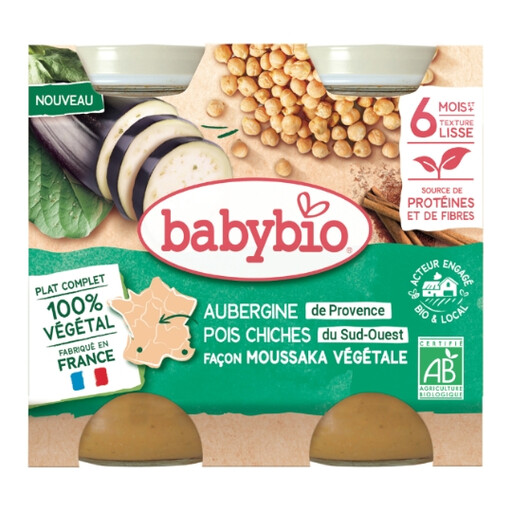
Why this choice suits this shopping need : this vegetarian recipe combines aubergine, tomato and chickpeas in two 200 g jars. It is an easy way to add variety to ready-made baby meals from 6 months.
The product page specifies that it contains no added salt, milk or gluten. It is still essential to check the full ingredients list and the age guidance on the jar before serving.
Two 200 g portions, a vegetarian recipe and the FR-BIO-01 organic certification shown in the available information.
We have brought together a complete, real-time updated selection of products that meet these demanding criteria, as well as European safety requirements.
It depends on the product and the recommendations shown on the packaging. Some fruit purées are available from 4 months, such as the apple and banana or apple and mango recipes featured here. Start with small amounts and ask a healthcare professional for advice if you have any concerns about starting weaning.
Yes. The term no added sugars means that no additional sugar has been added to the recipe. Fruit naturally contains sugars, which are listed in the nutritional table. So check the ingredients list and values per 100 g rather than relying solely on the message shown on the front of the packaging.
Always follow the manufacturer’s instructions. The products in this selection generally state that they can be kept for 24 or 48 hours in the fridge, depending on the recipe and packaging. A portion eaten directly from the spoon or reheated must not be returned to the fridge. Also check the temperature before serving and avoid reheating some products more than once.