
Livraison le jour même ou le lendemain

Qualité garantie

Débloquez vos offres de bienvenue: Livraison GRATUITE | Jusqu'à -80 % | 30 jours d'essai gratuits à JoyPlus
Téléchargez l'application
Choosing organic baby food isn’t just about spotting the organic farming logo. The recommended age, ingredients, allergens and format all matter just as much. Between the promises of “natural” recipes, products with no added sugar and pouches that slip easily into a bag, certain details can make the difference between a convenient purchase and something that’s genuinely right for your daily routine.
Here are the key criteria to check before picking a fruit purée, a fruit pouch or a complete meal for your baby.
A fruit purée for babies with no added sugar naturally contains the sugars found in the fruit. An apple-banana purée can therefore show around 15 g of sugar per 100 g, without any extra sugar having been added.
So the ingredients list and the nutritional table deserve a careful look. A recipe made solely from organic fruit is much easier to decipher than a preparation containing syrup, concentrated juice or flavourings.
The recommended age should always be considered alongside the texture and composition. An organic baby purée from 4 months is usually smooth, whereas an organic baby meal from 8 months may offer a thicker texture. Recipes aimed at older children can contain chunks, cereals, dairy products or various allergens.
Introducing a new food should follow the advice given for your child. Before serving, always check the information on the packaging.
A baby food pouch is very handy when you’re out and about, but it doesn’t necessarily replace learning to use a spoon. An opened pouch or small jar must be kept in the fridge according to the manufacturer’s instructions, then consumed within the recommended time.
For families who buy regularly, multipacks can help avoid running out. However, do check the variety of recipes and the best-before date.
Start by looking for a clear indication: “from 4 months”, “from 6 months”, “from 8 months” or “from 18 months”. This alone isn’t enough to make a choice, but it does help you rule out unsuitable products.
Ingredients are listed in descending order of quantity. A recipe made from clearly identified fruit or vegetables makes it easier to know what your child is eating. Allergens should be checked carefully, especially milk, gluten, egg, celery and mustard.
A purée made only from apples, mangoes, bananas or other fruit doesn’t necessarily contain milk or gluten. However, this information must be confirmed on the label of the product you receive.
For a savoury dish, compare the amount of salt per 100 g and check whether salt has been added. The HiPP vegetable risotto shown below indicates 0.1 g of salt per 100 g and contains no added salt, according to its product description.
For desserts and fruit purées, the phrase “no added sugar” means the sugars present come from the fruit. It does not mean the product is sugar-free.
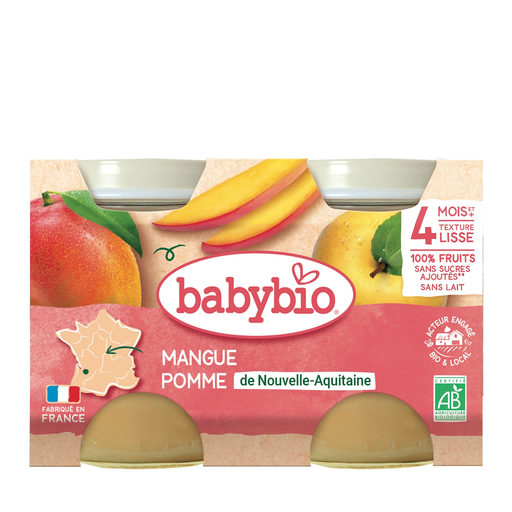
Why this choice suits this profile: The 2 × 130 g format lets you start with a sensible quantity and a simple recipe, made from equal parts organic mango and apple.
The ingredients list states 100% fruit and no added sugar. So there’s no risk of mistaking this fruity recipe for a dessert containing extra sweetening ingredients.
A recipe free from milk and gluten according to the product description, to be served at room temperature or slightly chilled.
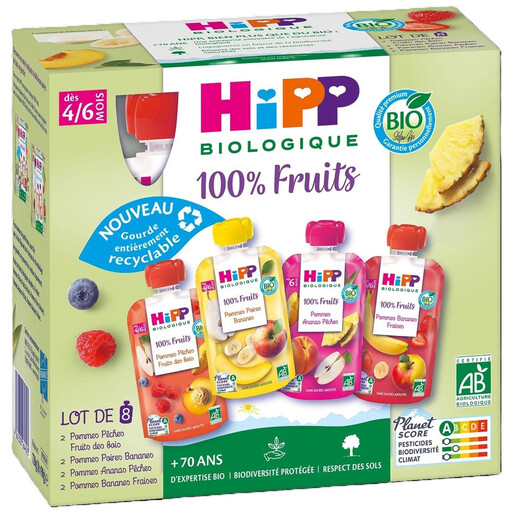
Why this choice suits this profile: This multipack brings together four organic fruit combinations in eight 90 g pouches. A great way to vary discoveries without having to buy lots of different products.
The four recipes are clearly detailed. They contain no added sugar and no allergens are declared on the product description.
A recyclable mono-material polypropylene pouch, to be served chilled or at room temperature.
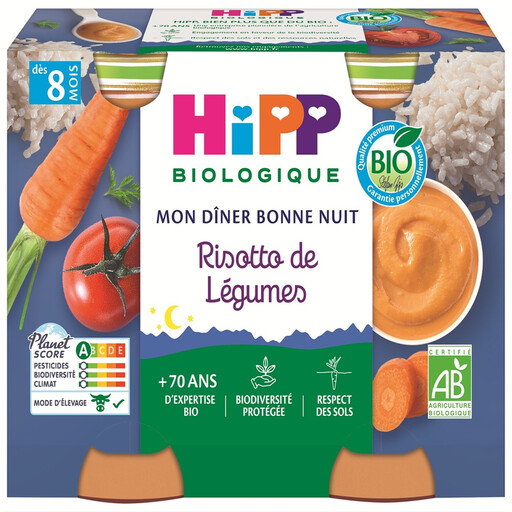
Why this choice suits this profile: The 2 × 190 g format is ideal for regular meals at home or busy days, for a child from 8 months.
The recommended age, smooth texture, absence of gluten and no added salt are all stated on the product description. The milk allergen is also clearly indicated.
Carrots, tomatoes, potatoes and rice, with rapeseed oil listed at 0.9% in the ingredients.
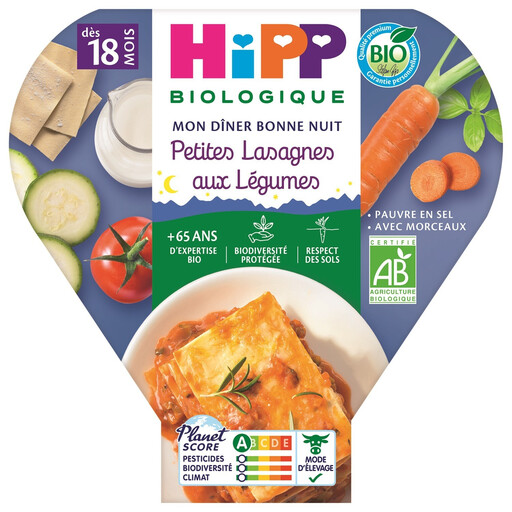
Why this choice suits this profile: This 260 g recipe is designed for children from 18 months and families who want to move to a thicker texture.
The recommended age and allergens are clearly listed: milk, gluten from wheat, egg and celery, with a mention regarding mustard.
The recipe contains 41% tomatoes, carrots, courgettes and lasagne sheets. Its salt content is stated as 0.28 g per 100 g.
We’ve put together a comprehensive, real-time updated selection of products that meet these exacting criteria, while complying with European safety regulations.
Go for a smooth texture and a short ingredients list. Apple-mango, apple-banana or mixed fruit recipes can work well at this stage, as long as they match the recommendations for your child. Always check the label and introduce new foods gradually.
It depends on the product. Some brands say to keep it in the fridge for 24 hours, while others allow up to 48 hours. Seal the pouch carefully, put it in the fridge and always follow the instructions printed on the packaging.
A complete baby meal can be useful on a busy day, when travelling or eating out. However, it should be part of a varied and balanced diet. Compare its ingredients, recommended age, texture and allergens with your child’s needs, without stopping at just the “organic” label.