
Livraison le jour même ou le lendemain

Qualité garantie

Débloquez vos offres de bienvenue: Livraison GRATUITE | Jusqu'à -80 % | 30 jours d'essai gratuits à JoyPlus
Téléchargez l'application
Choosing organic baby products from Babybio isn’t just about spotting the AB or EU organic logo. Between claims like “no added sugar”, “gluten-free”, “made in France” and the age recommendations, some details need a closer look. Whether you’re starting weaning or looking for easy meals to take on the go, here are the criteria to check before adding a product to your basket.
A jar labelled “from 6 months” doesn’t meet the same needs as a fruit purée suitable for a baby from 4 months. The recommended age takes into account the texture, ingredients and stage of weaning. Trust the information on the packaging and ask a healthcare professional for advice if you’re unsure.
An organic baby fruit purée with no added sugar still contains the sugars naturally present in the fruit. The Babybio apple and banana purée, for example, is made up of 49.5% banana and 49.5% apple, with no added sugar. The fruit therefore naturally provides carbohydrates. This distinction is essential for comparing recipes without jumping to conclusions based on the label.
“Organic” does not mean “allergen-free”. Biscuits may contain gluten, milk or eggs, while some savoury recipes are free from milk and gluten. Once opened, many jars need to be kept in the fridge and consumed within 24 to 48 hours, depending on the product. Reading the label is therefore essential, especially if you know your baby has an allergy.
For first meals, it’s best to start with a smooth texture and a simple recipe. Gluten-free baby jars made from vegetables, cereals or fruit can help with the gradual discovery of new flavours. From 6 months, savoury recipes become more varied and can combine vegetables, cereals, pulses, meat or fish, depending on the ingredients.
From 8 months, some organic baby biscuits can be offered, always under supervision. The Babybio orange biscuit is suitable from 8 months, contains wheat and egg, and softens easily in the mouth. Your child should remain seated and supervised throughout the snack.
Look at the ingredients list, which is presented in descending order. When a recipe highlights a particular vegetable, its percentage allows you to compare it more directly with other products. The Babybio carrot, butternut squash and rice meal, for instance, contains 38% carrots and 17% butternut squash purée.
For baby meals with no added salt, always check the exact wording on the packaging. The absence of added salt does not mean the product contains absolutely no sodium. However, the savoury recipes shown below do carry the “no added salt” claim in their description.
The claims “made in France” and “ingredients from organic farming” do not mean the same thing. A product can be made in France while containing ingredients grown in other countries, such as banana or mango. The format is also worth considering: packs of two 200 g jars are ideal for meals at home, while 130 g portions slip easily into a bag for a fruit purée or snack.
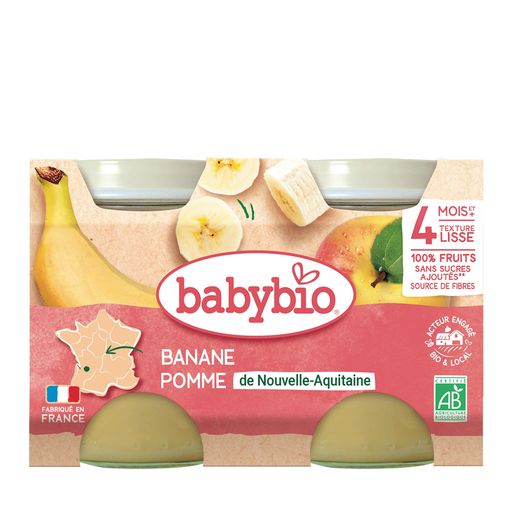
Why this choice suits this profile: The pack of two 130 g portions lets you introduce a fruity recipe in a format that’s easy to include in first snacks.
The recipe clearly states “no added sugar” and contains neither gluten nor milk. The sugars present come naturally from the fruit.
Two 130 g jars, a recipe made with equal parts apple and banana, and a recommendation from 4 months.
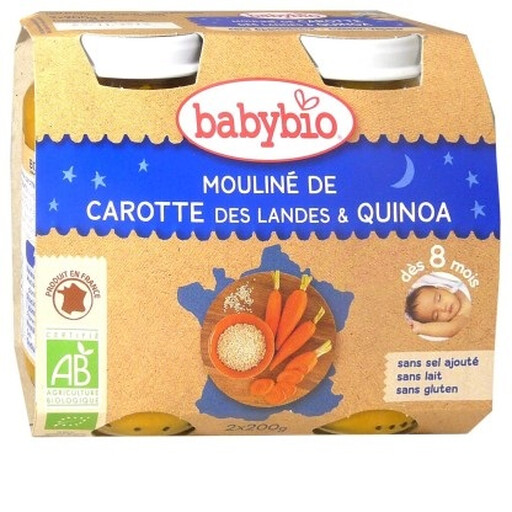
Why this choice suits this profile: This recipe focuses on a generous proportion of vegetables and quinoa, in a pack of two 200 g trays ideal for evening meals.
The ingredients list shows 73% vegetables, plus the absence of milk, gluten and added salt.
Carrots from the Landes region at 48%, sweet potato, quinoa at 6%, two 200 g portions and “made in France” stated.
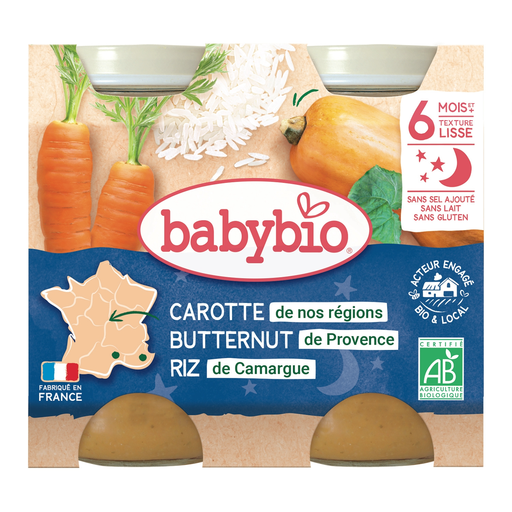
Why this choice suits this profile: The pack of two portions is handy for families who want to keep a few ready-to-serve meals for those days when time is short.
The recommended age from 6 months, the format and the storage instructions after opening are clearly stated. The recipe contains no milk, gluten or added salt.
38% carrots, 17% butternut squash, Camargue PGI rice and two 200 g jars.
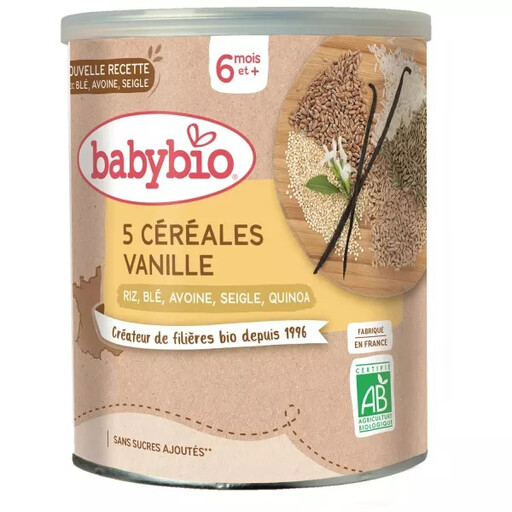
Why this choice suits this profile: This preparation from 6 months offers a change from fruit purées at breakfast or snack time, mixed with your baby’s usual milk or water, following the instructions.
The product page states “no added sugar” and notes the possible presence of traces of gluten, milk, lupin, mustard and soya.
88.9% rice flour, 9.8% quinoa flour, added vitamin B1 and simple preparation in a few steps.
Products may vary depending on stock. For older children, butter biscuits from 12 months or Comté and oregano shortbread can complete the range. However, these do contain gluten and milk. The orange biscuit, suitable from 8 months, also contains wheat, eggs and cane sugar: so don’t confuse it with a no-added-sugar recipe.
We’ve put together a complete, real-time updated list of products that fully meet these strict selection criteria and European safety regulations.
Fruit purées labelled from 4 months, such as the apple and banana, apple and mango or apple and mirabelle plum recipes, are suitable for this stage. Always check the age indicated on the product, its texture and its ingredients. The introduction of foods should follow the recommendations of the healthcare professional looking after your child.
Several products in this selection are stated as being made in France by Vitagermine, whose site is based in Gironde. This does not mean that all the ingredients are French: the product pages specify their origin where known. So it’s important to distinguish between the place of manufacture and the agricultural origin of the ingredients.
The storage time varies depending on the product. Several savoury recipes need to be placed in the fridge and consumed within 48 hours, while some fruit purées or desserts should be eaten within 24 hours. If your child has eaten directly from the jar, follow the instructions on the packaging and avoid keeping a portion that has already been in contact with their spoon.