For a birthday party, only choose an organic almond drink after checking with the families that almonds are suitable for every child. If they are, check the organic certification on the packaging, then compare the ingredients, added sugars and almond content: organic certification alone tells you nothing about the recipe. If a child cannot have almonds, agree on an alternative drink with their parent or carer and follow any arrangements in place for them.
Who is this choice for?
Parents organising a shared party tea
Before choosing an almond drink for the group, ask families about any dietary restrictions. France’s Ministry of National Education says that an individualised care plan (PAI) can be put in place for a pupil with a food allergy.
People looking for an organic drink
Look for organic certification on the packaging, then read the ingredients. An organic drink can contain cane sugar, as in the Carrefour Bio Intense product featured by Carrefour France.
Families comparing recipes
Whether you’re serving the drink or using it in a party recipe, compare the stated almond content, sugars and other ingredients. The almond drinks featured by Carrefour France don’t all have the same ingredients.
What should you check before the party?
For a group party tea, first check whether almonds are suitable for every child. You can then compare organic drinks by their ingredients and how you plan to use them.
| Criteria |
What to check |
Who is this for? |
| Allergies in the group |
Guidance from families and any PAI; almonds and other allergens listed for the exact product. |
I need to be able to serve a drink that respects every child’s restrictions, even if that means leaving almonds off the party menu. Around 44% of consumers would make this their top priority. |
| Organic certification |
Organic certification on the packaging, followed by the ingredients and nutritional information. |
I want to identify an organic product without assuming its recipe contains no added sugars. This would be the top priority for around 33% of consumers. |
| Recipe and use |
Almond content, where stated, sugars and other ingredients, depending on whether the drink will be served as it is or used in cooking. |
Whether I’m making a recipe or serving the drink, I want to choose a recipe that suits the flavour I’m looking for, once I’ve checked any restrictions. Around 23% of consumers would make this their top priority. |
Common misconceptions to avoid
-
Assuming “plant-based” means “suitable for everyone”
An almond drink contains a tree nut, even though it doesn’t contain cow’s milk. The DGCCRF says that allergenic ingredients must be highlighted on food labels.
Ask families about any restrictions before you buy, read the label on the carton you plan to serve, and provide another drink if almonds aren’t suitable.
-
Assuming “organic” means “no added sugars”
The Carrefour Bio Amande Intense drink featured by Carrefour France contains cane sugar. Organic certification and the ingredients answer two different questions.
Check the organic certification on the packaging, then compare the ingredients and nutritional information of the products you’re considering separately.
-
Choosing based on the word “almond” alone
The products featured by Carrefour France list 7% almonds for Carrefour Bio Intense, compared with 2% for the Bjorg Bio drink, which also contains pea protein and cane sugar.
Compare the ingredients and almond content of each product with what you plan to serve or prepare. Don’t assume the percentage alone tells you which flavour the children will prefer.
Brands to consider
Carrefour Bio
Organic almond drinks with recipes you can compare product by product.
- Carrefour France’s product listing for Amande Intense Bio states that it contains 7% almonds.
- This recipe also contains cane sugar, so check the ingredients if you’re looking for a product labelled as having no added sugars.
Bjorg
An organic almond drink to consider if a recipe that also contains pea protein is suitable for the group.
- The Bjorg Bio product featured by Carrefour France contains 2% almonds and pea protein.
- It also contains cane sugar and almonds, so check the exact recipe before serving it.
Alpro
An almond drink to compare if organic certification isn’t a requirement.
- Carrefour France’s product listing for Amande Grillée states that it contains 2.3% almonds, as well as added calcium and vitamins.
- This recipe contains sugar and almonds. If you’re looking for an organic drink, check that the product you’re considering has this certification.
Almond drink available on Joybuy
This 1 L almond drink could be used in a party recipe or served to the group, provided almonds are suitable for every child concerned. Check the claimed organic certification and ingredients on the packaging before choosing.
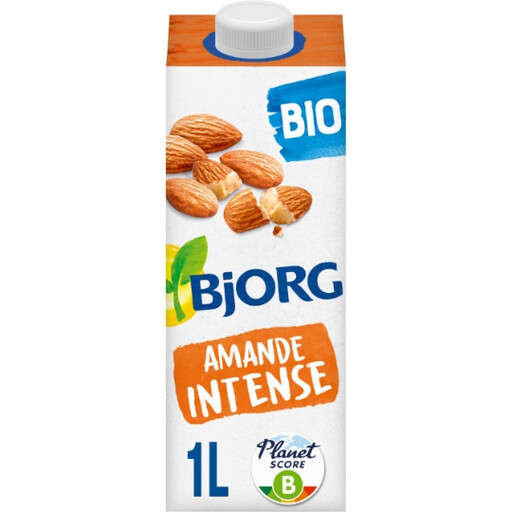 Image unavailable
BJORG Organic Almond Milk Intense 1 L
Consider this for a party only if the children concerned can have almonds. The stated size is 1 L; check the carton for organic certification, allergens and ingredients. The product listing pairs a “no added sugars” claim with an ingredients list that includes cane sugar, so don’t draw conclusions without checking the packaging.
View on Joybuy
Frequently asked questions
How can you tell if an almond drink is organic?
Check for organic certification on the packaging rather than relying on the word “natural”. France’s Ministry of Agriculture says that organic farming is governed by European regulations. Then read the ingredients and nutritional information to find out more about the recipe.
Is an almond drink suitable for a child who doesn’t have dairy?
Not automatically: a drink without cow’s milk still contains almonds. If the child has an allergy or follows a particular diet, ask their parent or carer for guidance and follow any PAI they may have before choosing a drink for them.
Can you give an almond drink instead of infant formula to a baby at the party?
No. An almond drink is not a substitute for breast milk or infant formula for a baby under one. Anses guidance on drinks other than milk specifically covers babies from birth to one year old. Agree with the baby’s parent or carer on what they should be given.


