Care home menu planners
You’re looking for an organic almond drink for a communal breakfast, without assuming that organic also means ‘no added sugars’.


For breakfast in a care home, choose an almond drink by checking its organic certification, ingredients, sugars and allergens separately. A no added sugars recipe meets a different need from an Intense recipe, but neither can automatically replace an item on a resident’s menu that is there to meet their nutritional needs.
You’re looking for an organic almond drink for a communal breakfast, without assuming that organic also means ‘no added sugars’.
You need to match the ingredients list and allergen information to the product being served, and then follow the avoidance diet of each resident concerned.
You’re considering how this drink fits into each resident’s individual nutrition plan, particularly in cases of malnutrition or risk of malnutrition, or where someone has difficulty chewing or swallowing.
When serving a drink in a care home, first check the allergens and each resident’s circumstances, then consider how it fits into their menu. Next, compare the organic certification and the exact recipe: these tell you different things.
| Criterion | What to check | Who it matters to |
|---|---|---|
| Allergens and serving | Read the ingredients and any ‘may contain’ warnings on the batch received; match this information to the resident’s dietary requirements and the drink being served. | If I’m preparing breakfast trays, I must avoid serving an almond drink to a resident who is allergic to almonds. Around 42% of consumers would prioritise this safety check when serving. |
| Place in the menu | Compare the recipe’s nutritional information with the resident’s individual nutrition plan, involving the relevant healthcare professional if a resident is at risk of malnutrition. | If a resident’s intake is being monitored, I can’t assume this drink is a like-for-like replacement for milk. Around 33% of consumers would prioritise this individual suitability. |
| Organic certification and recipe | Check the organic logo, then distinguish the ‘no added sugars’ claim from the sugars figure and the ingredients list. | If I’m looking for an organic breakfast option, I also want to know whether it contains added sugar, rather than relying on the product name alone. Around 25% of consumers would put this choice of recipe first. |
Organic certification alone doesn’t tell you how much sugar a drink contains. Carrefour, for example, offers an organic almond drink with no added sugars, as well as an organic Intense recipe containing cane sugar.
Check the certification, ingredients and nutritional information for the exact product, rather than relying on the organic claim alone.
Choosing a plant-based drink doesn’t, by itself, tell you whether breakfast meets the needs of a resident who is malnourished or at risk of malnutrition.
Before changing their menu, compare the recipe with their individual nutrition plan and consult the relevant healthcare professional, especially if a particular texture or nutritional care plan has been recommended.
An almond drink contains almonds; some products also warn that they may contain traces of other nuts. This information must remain clearly linked to the food being served.
Check the batch delivered and the resident’s avoidance diet before serving, and have a suitable alternative ready for anyone concerned.
Instructions vary by product: Auchan’s product information says ETHIQUABLE should be refrigerated and used within five days of opening, while BJORG No Added Sugars should be used within four days.
Choose a pack size to suit the portions you’ll actually serve, date cartons once opened and follow the instructions on the product delivered.
A carton that’s too large for the planned servings may go to waste if it isn’t used within the stated time.
The range includes organic almond drinks in 1 L cartons, with a no added sugars recipe and an Intense recipe.
Auchan France’s range includes an organic, unsweetened almond drink that is UHT-treated and available in a 1 L carton.
Auchan France offers an organic, unsweetened almond drink in a multipack of three 250 ml cartons.
This BJORG Intense product could be considered for a breakfast where this type of almond recipe is being looked for. Before choosing it for a care home, check the organic certification, sugars and allergen information on the carton delivered.
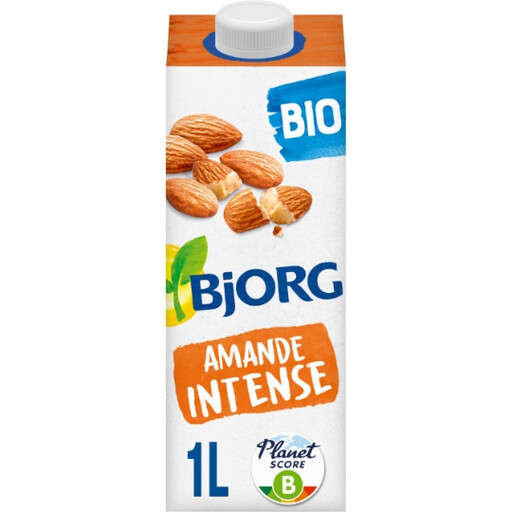 Image unavailable
Worth considering if an Intense recipe is being considered for breakfast, subject to its suitability for each resident’s menu and dietary requirements.
Joybuy’s product information lists 1.2 g of protein per 100 ml and says to refrigerate and use within four days of opening. The ingredients list includes cane sugar: check the sugars information on the carton delivered.
The drink contains almonds and may contain traces of other nuts. Check the allergen information and organic certification for the exact product before serving.
Look for the EU organic logo and, if it appears on the packaging, the AB mark. The French Ministry of Agriculture explains that these labels help identify processed products containing at least 95% organically produced agricultural ingredients. They don’t tell you about the sugars or nutritional value of the recipe.
No. It must not be served to a resident with a diagnosed almond allergy. Also check the batch for warnings about traces of other nuts, and make sure the allergen information stays with the food right through to serving.
No. The absence of added sugars isn’t enough to establish whether it belongs in someone’s individual nutrition plan. Compare the nutritional information for the exact product and ask the relevant healthcare professional for advice if a resident’s intake is being monitored.
Follow the instructions on the carton being served. Auchan France’s product information says to refrigerate the ETHIQUABLE product reviewed and use it within five days of opening, compared with four days for the BJORG No Added Sugars product. These instructions are not interchangeable.
Not automatically. Any replacement must be assessed as part of the resident’s individual nutrition plan. The French National Authority for Health highlights the importance of managing malnutrition in older people. Have the relevant healthcare professional approve any menu changes, particularly if a specific texture or nutritional intake has been recommended.