Buyers who need to serve orange juice
If your specification calls for “orange juice”, check the product description before looking at the pack size. The DGCCRF distinguishes fruit juice from nectars and other fruit drinks.


If your canteen needs to offer orange juice, start by checking the product description. E.Leclerc lists Jafaden pure orange juice in 4 × 20 cl packs, while Carrefour offers no-pulp orange juice in 6 × 20 cl packs. Multipacks of orange cans are another option if the canteen accepts a fruit drink or soft drink, but they shouldn’t be described as pure juice. Before placing a bulk order, confirm the container type, order quantities and delivery terms.
If your specification calls for “orange juice”, check the product description before looking at the pack size. The DGCCRF distinguishes fruit juice from nectars and other fruit drinks.
If you’re handing out individual portions or adding them to lunch boxes, it’s worth considering the 20 cl packs listed by Carrefour and E.Leclerc. Confirm the container type and the quantities available for your order.
If cans are more important than having pure juice, multipacks of orange drinks are available. Auchan, for example, lists Oasis Orange in 6 × 33 cl cans as a fruit drink, not pure juice.
First decide whether “orange juice” is a service requirement or whether an orange drink in a can will do. This determines which products to compare, before you even consider the number of units in each pack.
Best for: serving individual portions of orange juice; E.Leclerc lists Jafaden pure orange juice in 4 × 20 cl packs, while Carrefour offers no-pulp orange juice in 6 × 20 cl packs.
Keep in mind: these pack sizes don’t confirm that the containers are cans; check the packaging before ordering.
Best for: when cans are a priority and a fruit drink or fizzy drink suits the canteen’s offering.
Keep in mind: the Oasis Orange multipacks listed by Auchan are fruit drinks, not pure juice; check the product description for each item.
| Criteria | What to check | Who it matters to |
|---|---|---|
| Type of drink | Check the product description and ingredients: orange juice, juice from concentrate, nectar or fruit drink. | If I need to advertise orange juice in the canteen, an orange drink in a can may not meet that requirement. Around 42% of consumers would put this match with the offering first. |
| Individual portions | Check the volume per unit, the number of units and the container material to plan storage and distribution. | When stocking fridges or preparing lunch boxes, I want units that are easy to hand out without having to pour a drink. Around 33% of consumers would prioritise this approach. |
| Can format | Check the product description, whether it’s carbonated, and the sugar content per 100 ml and per serving. | I’m mainly looking for orange cans to offer during breaks and am happy for them not to be pure juice. Around 25% of consumers would put cans first. |
The product category matters: Auchan describes Oasis Orange as a fruit drink containing 10% fruit juice from concentrate, while E.Leclerc describes Pulp Orange as a carbonated drink. Neither meets a requirement for pure juice.
Specify the type of drink you need when ordering, then check the product description of the item you choose.
The 4 × 20 cl and 6 × 20 cl juice packs listed by E.Leclerc and Carrefour tell you the portion size, not the packaging material.
Check the container type, volume per unit and number of units with the seller before allocating fridge space.
According to ADEME, metal packaging goes in the recycling bin. If you’re offering drinks in cans, you’ll need an accessible collection point for people who drink them on site.
Place a recycling point near the fridges or break areas.
Carrefour lists Tropicana fresh orange juice with no bits, including a 90 cl size.
Le Fourgon lists Pampryl orange juice in a 25 cl portion, made from concentrate.
Joker lists its Le Fruit Orange juice with no bits in 1 L and 1.5 L sizes.
Carrefour’s range includes Carrefour Classic’ orange juice with no bits in a 6 × 20 cl pack.
E.Leclerc lists Jafaden pure orange juice in a 4 × 20 cl pack.
Auchan lists Oasis Orange in 6 × 33 cl cans.
These products are options for serving orange drinks in cans during breaks or keeping them in the canteen fridge. They aren’t a selection of pure orange juice, so check the category and labelling of each drink before adding it to your offering.
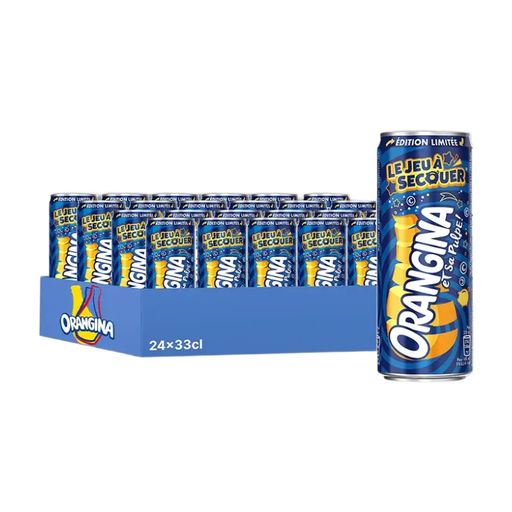 Image unavailable
Worth considering if an orange drink in a can suits your canteen better than pure orange juice.
Pack of 24 × 330 ml cans.
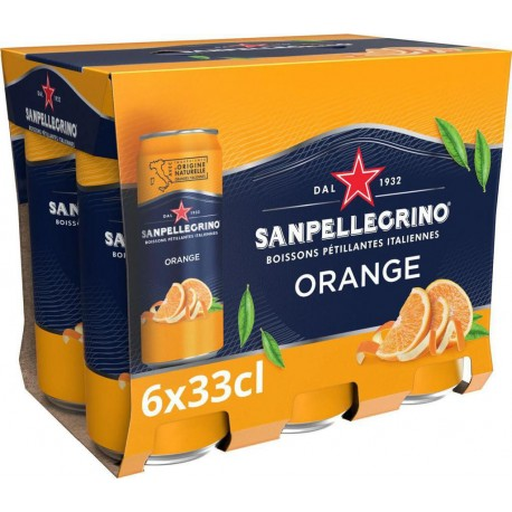 Image unavailable
Consider this if your canteen accepts a fizzy orange drink instead of pure juice.
Pack of six 330 ml slim cans.
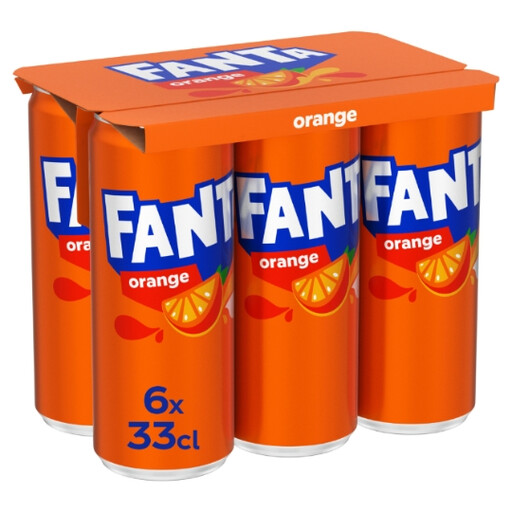 Image unavailable
An option if individual servings of orange soft drink suit your offering, without describing it as orange juice.
Pack of six 330 ml cans. Check the juice content on the label of the product you order.
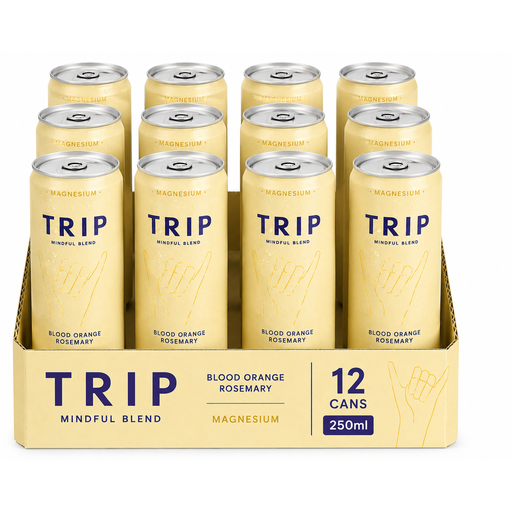 Image unavailable
Only consider this if a blood orange and rosemary drink, rather than pure orange juice, is suitable for your service.
Pack of 12 × 33 cl cans. Check the labelling and whether this product is suitable for the people you serve before ordering.
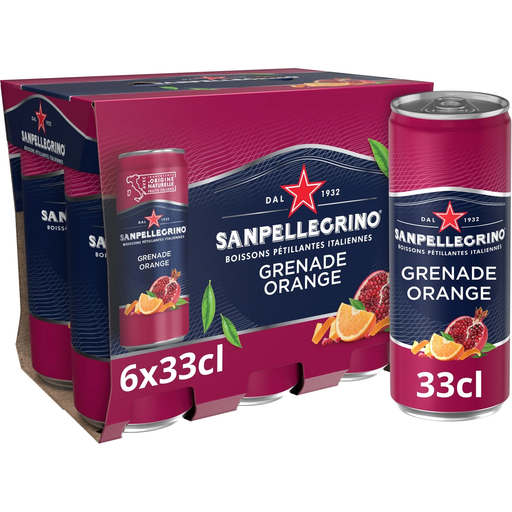 Image unavailable
Consider this if a drink combining orange and pomegranate is suitable, rather than orange juice on its own.
Pack of six 330 ml slim cans.
Start by checking the product description, then read the ingredients. The DGCCRF distinguishes fruit juice, juice from concentrate, nectars and other drinks; a fruit drink shouldn’t be described as pure juice.
Not if your specification requires pure orange juice. Auchan describes Oasis Orange 6 × 33 cl as a fruit drink containing 10% fruit juice from concentrate; the fact that it comes in a can doesn’t change its category.
E.Leclerc lists Jafaden pure orange juice in 4 × 20 cl packs, while Carrefour offers no-pulp orange juice in 6 × 20 cl packs. These portions could work for individual servings, as long as you confirm the container type and the quantities available to order.
Set up an accessible recycling point near the area where people drink them. According to ADEME, metal packaging goes in the recycling bin; clear signage will help people see where to put their cans.