Hosts avoiding added sugars
You want to serve juice with no added sugar, while bearing in mind the sugars naturally present in oranges.


For a garden party, choose orange juice with no added sugars if you want to avoid added sugar, but not if you’re looking for a sugar-free drink: the juice still contains sugars naturally present in the fruit. Compare the sugars and energy per 100 ml, then choose a format to suit how you’ll serve it and check the pulp content and storage instructions.
You want to serve juice with no added sugar, while bearing in mind the sugars naturally present in oranges.
You need to choose between bottles to share and individual portions, while finding a way to keep the juice chilled and minimise leftovers.
You prefer juice with or without pulp and want to consider this separately from its sugar content.
For a garden party, start by checking the ingredients and nutrition information, then choose the format and texture to suit how you’ll serve it.
| What to consider | What to check | Who it matters to |
|---|---|---|
| Added sugars | Check the product name, ingredients and ‘of which sugars’ line, all on the same per-100 ml basis. The DGCCRF distinguishes between no added sugar and sugars naturally present in juice. | I want to avoid added sugar without mistaking juice for a sugar-free drink. Around 46 % of consumers prioritise this. |
| Format and storage | Compare bottle sizes and storage instructions for before and after opening, especially if you’re serving the juice outdoors. | For a buffet, I want enough juice to serve without opening more bottles than necessary. Ease of serving is the top priority for around 36 % of consumers. |
| Pulp | Look for ‘with pulp’ or ‘without pulp’; compare the nutrition information separately. | If guests have different preferences, I want to choose a texture that suits them. Pulp is the main deciding factor for around 18 % of consumers. |
Orange juice may contain no added sugar and still contain sugars naturally present in the fruit.
Compare the ‘of which sugars’ line per 100 ml and the ingredients of the product you’re considering, rather than relying on the wording on the front of the pack.
Storage instructions vary by product. The listing for Auchan’s 20 cl bottle says to protect it from heat and light, then refrigerate it after opening.
Store bottles according to their labels and bring them out as you need them.
‘Without pulp’ describes the texture, not the amount of sugar: juice without pulp also contains sugars naturally present in oranges.
Choose the texture to suit your guests’ preferences, and check the ingredients and nutrition information separately.
Joker offers, among other products, a 2 × 1 L multipack of smooth pure orange juice and a 4 × 1 L multipack made from concentrate, listed by Auchan and Carrefour respectively.
The range includes a 2 L bottle of smooth pure orange juice, which Carrefour describes as having no added sugars.
Auchan offers a 20 cl bottle of pure orange juice with no added sugars, a format to consider for individual servings.
Carrefour’s range includes Tropicana smooth orange juice products.
A Houra listing describes a 1 L bottle of Pampryl pure orange juice.
These 1 L bottles are worth considering for serving to a group. Before choosing one for its added-sugar content, check its product name, ingredients and nutrition information.
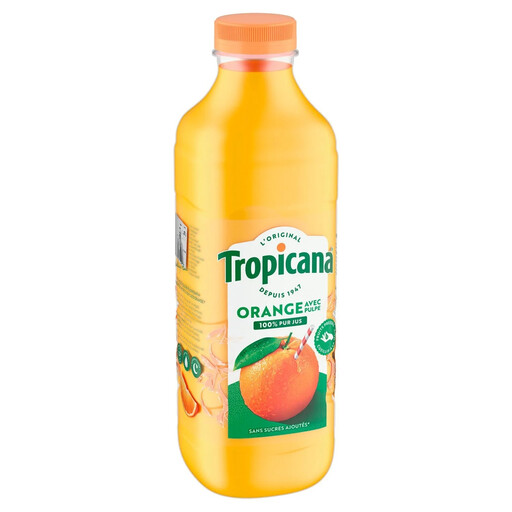 Image unavailable
The 1 L format is suitable for sharing if your guests prefer juice with pulp.
The ‘Near Expiry’ label makes it especially important to check the best-before date before buying. Also check the label for sugar content and storage instructions.
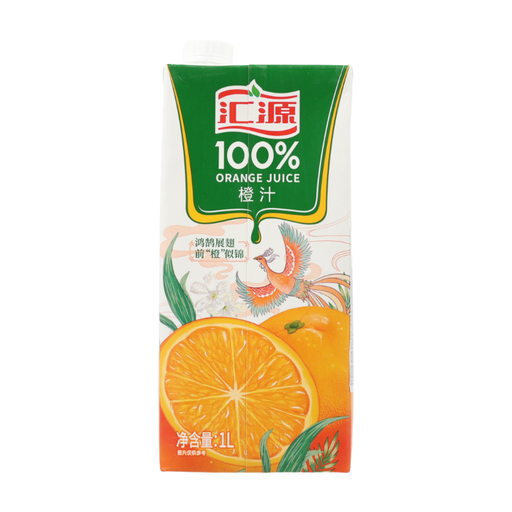 Image unavailable
This 1 L bottle may be worth considering for sharing if its product name and ingredients match the type of juice you’re looking for.
Check the label for the product category, ingredients, sugars per 100 ml, whether it contains pulp and storage instructions after opening.
No: the juice still contains sugars naturally present in oranges. The DGCCRF says that the wording ‘contains naturally occurring sugars’ is reserved for fruit juice; also check the ‘of which sugars’ line on the product you choose.
Compare their nutrition information on the same basis, particularly the energy and ‘of which sugars’ figures per 100 ml, then check the ingredients. The DGCCRF states that nutrition information is given per 100 g or 100 ml, so take care not to confuse these two units.
Choose the volume based on the number of guests, the other drinks on offer and whether you can store bottles after opening. A larger bottle makes it easier to serve a group; 20 cl bottles are ideal for individual portions.
No, ‘fruit juice’ and ‘nectar’ are not interchangeable product descriptions. If you’re choosing based on ingredients or no added sugars, check the product name, ingredients and nutrition information for each product.