Organisers keeping an eye on sugar
You want to avoid added sugars without telling guests that the juice is sugar-free. The ‘of which sugars’ figure helps you describe the drink you’re serving accurately.


For a wedding buffet, first choose between pure orange juice and orange nectar by checking the product name and ingredients. Then compare the ‘of which sugars’ figure per 100 ml: ‘no added sugars’ does not mean ‘sugar-free’. If you’re looking for a genuinely sugar-free drink, don’t describe orange juice as one. When planning how to serve it, choose pack sizes you can store and open according to each product’s instructions.
You want to avoid added sugars without telling guests that the juice is sugar-free. The ‘of which sugars’ figure helps you describe the drink you’re serving accurately.
You need to plan for several litres and open bottles at a pace that works with the fridge space available. The number of bottles, their capacity and whether they contain pulp all matter as much as the recipe.
You want to know whether you’re serving pure juice, juice made from concentrate or nectar. The product name, ingredients and nutritional information let you compare products without confusing these categories.
For your buffet, start by checking the drink category and its sugar content, then choose a pack size that suits your storage and serving needs.
| Criterion | What to check | Who it matters to |
|---|---|---|
| Sugars | The ‘of which sugars’ figure per 100 ml and the ingredients list; don’t confuse no added sugars with no sugars. | If I want to give guests clear information, I need to distinguish naturally occurring sugars from any added sugars. Around 42% of consumers would make this transparency a priority. |
| Serving and storage | The capacity, number of units and storage instructions after opening. | To serve lots of guests without opening all the bottles in advance, I’d choose packaging that works with the fridge space I have. Around 33% of consumers would make this a priority. |
| Recipe and texture | Whether it is labelled ‘pure juice’ or ‘nectar’, the ingredients and whether it contains pulp. | If the recipe and texture matter most for my buffet, I want to know exactly what drink will be served. Around 25% of consumers would make this their main criterion. |
Orange juice contains naturally occurring sugars: Auchan’s listing for a pure juice gives 8.7 g of sugars per 100 ml, while the Joker Le Fruit listing on Joybuy gives 9.8 g per 100 ml.
If you need to offer a sugar-free drink, check its label and choose a different type of drink rather than describing orange juice as ‘sugar-free’.
These product names describe different recipes. Joybuy’s listing for DON SIMON orange nectar specifies juice from concentrate, water and sugar, among its ingredients.
First decide which category you want, then compare ingredients and sugar content across products in that category.
The Auchan listings we checked say to refrigerate after opening and consume within 5 days; Joybuy’s Joker Le Fruit listing says 3 days.
Check how much fridge space you have and open bottles as you need them, following the instructions for each one.
An opened bottle that can’t be stored in line with its label may end up going to waste.
A Carrefour listing for the Tropicana product we checked showed it as unavailable. So, having spotted a product in advance isn’t enough to plan your purchase.
Confirm the product, pack size and availability with your chosen retailer before finalising quantities.
These products give you a starting point for comparing recipes and pack sizes. The details below apply to the specific products listed, not to every drink from each brand or retailer.
Joker offers a pulp-free Bio Orange; Joybuy lists a separate 1 L bottle of Joker Le Fruit Orange, also without pulp.
A Carrefour listing describes a Tropicana pure orange juice with no pulp and no concentrate.
The Carrefour range includes orange juice in several pack sizes, including a pulp-free 2 L Carrefour Extra.
Auchan offers, among other products, a pack of 4 × 1 L bottles of pulp-free pure orange juice.
The E.Leclerc range includes, among other options, pulp-free pure orange juice in 2 L bottles and packs of 6 × 1 L.
These products illustrate different options for a buffet: orange juice with pulp, orange nectar and an orange drink whose product name should be checked on the label. They don’t all meet the aim of avoiding added sugars.
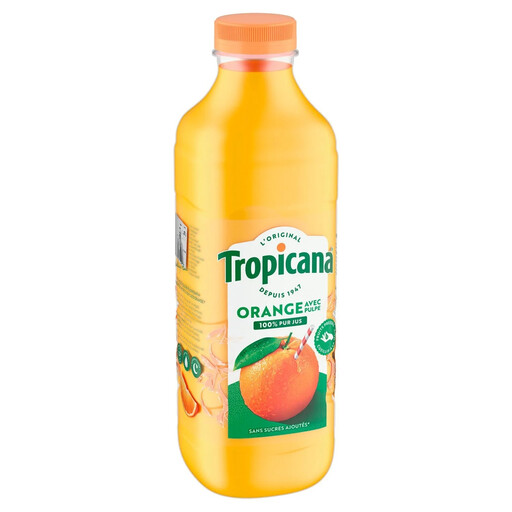 Image unavailable
Consider this if you want to serve orange juice with pulp in 1 L bottles.
‘Near Expiry’ appears in the product title. Check the printed date before choosing it for your wedding day.
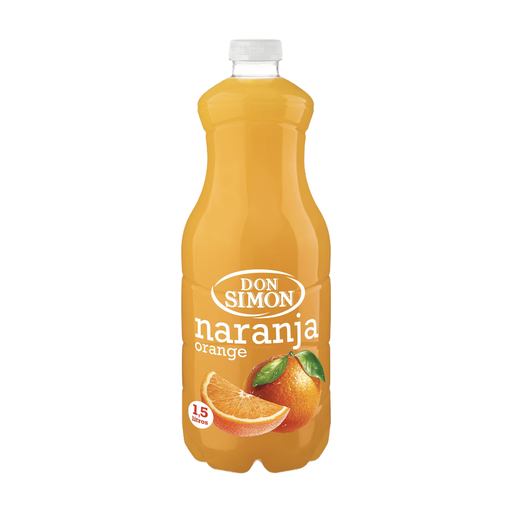 Image unavailable
Consider this if you specifically want to serve nectar rather than pure juice.
Joybuy’s listing states that it contains 50% orange juice from concentrate, as well as water and sugar. This product isn’t suitable if you’re looking for something with no added sugars.
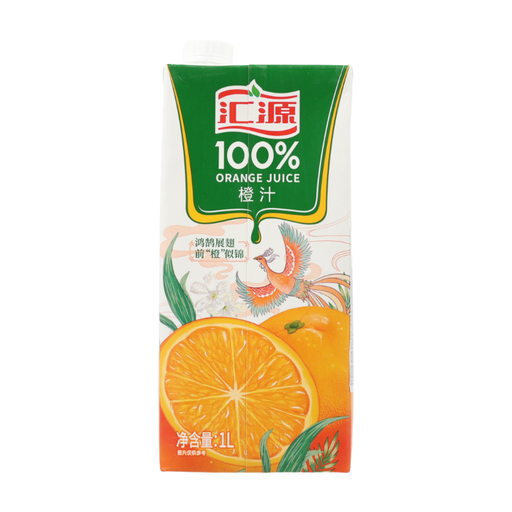 Image unavailable
Only compare this product once you’ve checked that its product name and recipe match the drink you want for your buffet.
Check the ingredients and the ‘of which sugars’ figure per 100 ml on the label before presenting it as an alternative to pure juice or nectar.
No. This wording doesn’t remove the sugars that occur naturally in the fruit. The DGCCRF distinguishes these sugars on juice labels; for example, an Auchan listing for pure juice gives 8.7 g of sugars per 100 ml. If you want to offer a genuinely sugar-free drink, check the label of a different type of drink.
Serve pure juice if you want a drink made from orange juice; choose nectar if its different recipe is what you’d like to offer. The DGCCRF distinguishes between these product names, and Joybuy’s listing for DON SIMON nectar specifies orange juice from concentrate, water and sugar. Check the ingredients before you decide.
Follow the storage instructions for each product and open bottles as you need them. The Auchan listings we checked advise refrigerating the juice after opening and consuming it within 5 days; Joybuy’s Joker Le Fruit listing gives 3 days.
Compare the product name, ingredients and the ‘of which sugars’ figure in the nutrition declaration. The DGCCRF explains that juice and nectar have different product names, and that nutritional values are given per 100 g or 100 ml to make comparisons easier.