Anyone who wants something fizzy
For an outdoor aperitif or snack, you’re looking for a genuinely fizzy orange drink. Its product description matters just as much as its flavour: a fizzy drink isn’t necessarily fruit juice.


If fizz is your top priority, look for an orange-flavoured fizzy drink and check its product description and ingredients: the word “sparkling” alone doesn’t mean it’s orange juice. If you prefer pure juice, choose between individual portions and a bottle to share, then check the storage instructions for your picnic.
For an outdoor aperitif or snack, you’re looking for a genuinely fizzy orange drink. Its product description matters just as much as its flavour: a fizzy drink isn’t necessarily fruit juice.
You want to hand out drinks without opening a large bottle for the whole group. Carrefour and E.Leclerc, for example, stock packs of pure orange juice in 4 × 20 cl cartons.
You’re happy to go without fizz if “pure orange juice” is what matters most to you. Check whether it contains pulp, the pack size and the storage instructions after opening for the product you choose.
First decide whether fizz, easy serving or pure juice matters most to you. These priorities don’t always point to the same type of drink.
| What to consider | What to check | Who is it for? |
|---|---|---|
| Fizziness | The product description and whether the ingredients list carbon dioxide; don’t rely on the word “sparkling” alone. | I want fizz, even if that means choosing a different category from pure orange juice. Around 40% of consumers with this preference would put it first. |
| Individual servings | The volume of each container and the number of units; Carrefour and E.Leclerc, for example, stock pure juice in 4 × 20 cl cartons. | I’d rather have individual containers so I can serve everyone without sharing an opened bottle. Around 30% of consumers with this preference would put convenience first. |
| Type of juice | Whether it’s labelled “pure juice”, “juice from concentrate” or “nectar”, as well as the pulp and storage instructions after opening. | If fizz isn’t a priority, I mainly want to know what kind of orange juice I’m taking and how to store an opened bottle. Around 30% of consumers with this preference would prioritise this. |
According to the DGCCRF, fruit juice and nectar are distinct product categories in France. So an orange flavour and fizz alone don’t tell you what type of drink it is.
Read the product description on the pack, then check the ingredients if you’re looking for both orange and a fizzy drink.
A bottle to share may still be open after your meal, and storage instructions vary from one product to another.
Check the label before you set off and pack a cool bag if the product needs to stay chilled. For the Tropicana 2 × 1,5 L pack listed by Auchan, the instructions say to keep it at no more than 7 °C after opening and consume within five days.
No added sugars doesn’t mean there are no naturally occurring sugars in the juice.
Check the product description, ingredients and the “sugars” line in the nutrition information for the product you choose.
The orange juice products described by Carrefour and Auchan include pure, pulp-free juice, particularly in 1,5 L bottles and packs of 2 × 1,5 L.
Joker offers “Le Fruit Orange sans pulpe” in 1 L and 1,5 L bottles.
Carrefour stocks Carrefour Extra pure, pulp-free orange juice in four 20 cl bottles, among other products.
Auchan’s range includes orange juices with and without pulp, in both small and large formats.
E.Leclerc’s range distinguishes between pure juice, juice from concentrate and nectar, and includes pure juice in 4 × 20 cl cartons.
The FoodFactor catalogue lists a 1 L Pampryl orange juice.
These products are aimed at anyone looking for fizz and drinks that are easy to hand out at a picnic, rather than a selection of pure orange juices. Check each drink’s product description and ingredients if its type or composition will influence your choice.
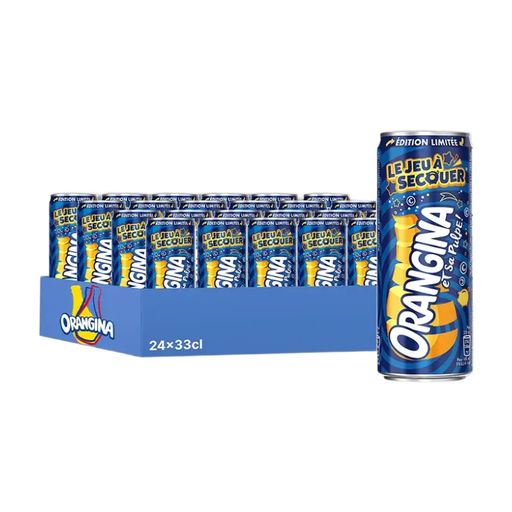 Image unavailable
Worth considering if you’d rather serve a fizzy drink in cans than open a large bottle of orange juice.
Pack of 24 330 ml cans. Follow the storage instructions on the packaging.
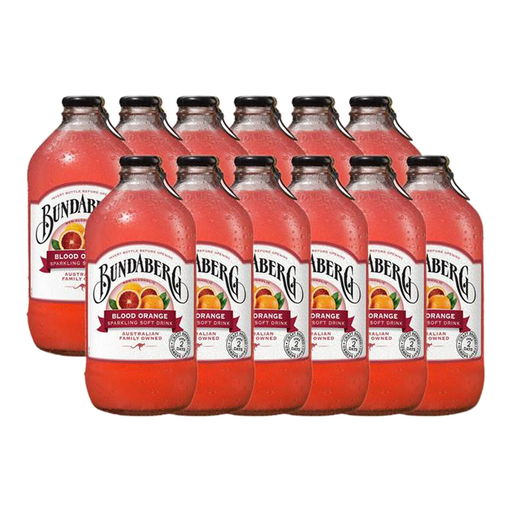 Image unavailable
This blood orange drink may suit you if you’re looking for fizz in individual bottles rather than pure juice.
Pack of 12 37,5 cl bottles; check the product description and storage instructions after opening on the label.
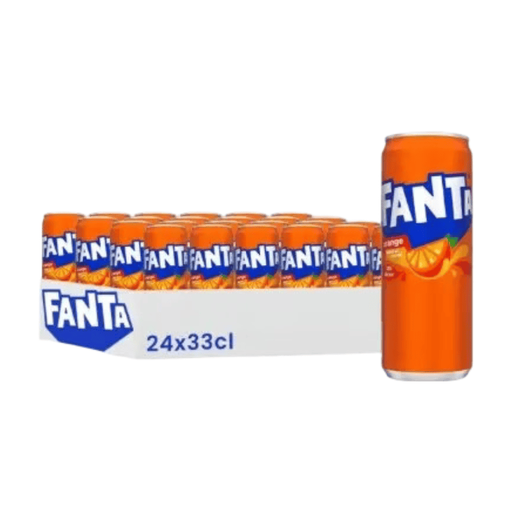 Image unavailable
A good option for serving orange fizzy drinks individually, without mistaking them for pure juice.
Pack of 24 330 ml cans; check the label for the exact product description and ingredients.
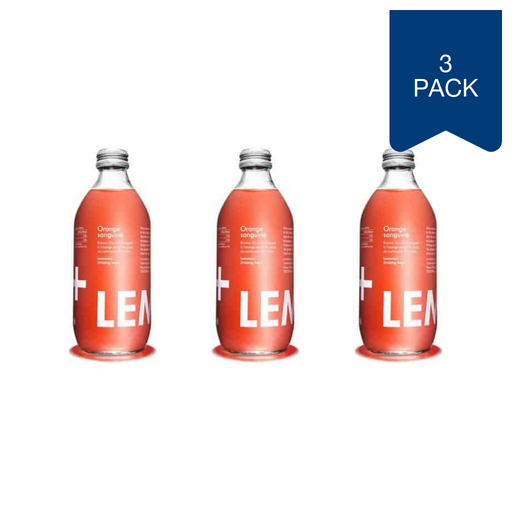 Image unavailable
This blood orange lemonade is for anyone looking for a fizzy drink in a small pack rather than juice.
Three 33 cl bottles; check the product description and storage instructions on the packaging.
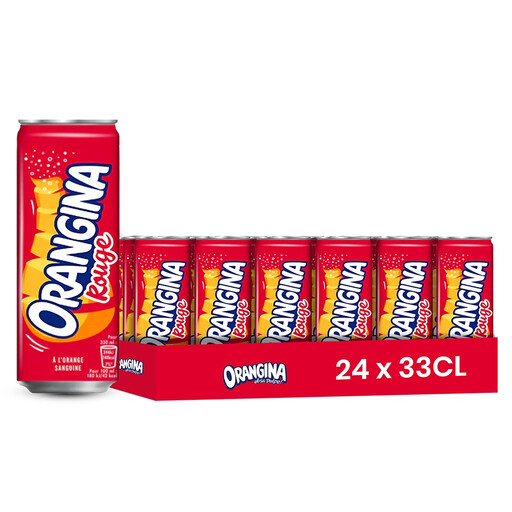 Image unavailable
Consider this if you’d enjoy a fizzy drink combining orange and red berries instead of orange juice.
Pack of 24 330 ml cans; compare the ingredients and nutrition information for this variant on its label.
No: fizz or the word “sparkling” alone doesn’t make a drink orange juice. In France, the DGCCRF distinguishes between fruit juice and nectar; check the specific product description and ingredients before choosing.
No: orange juice can contain sugars that occur naturally in the fruit, even when no sugars have been added. To compare two products, check their category, ingredients and the “sugars” line in the nutrition information.
Individual containers mean you don’t have to share a large bottle once it’s open. Carrefour and E.Leclerc, for example, stock pure orange juice in 4 × 20 cl cartons; if fizz matters more, check the product description of the fizzy drink you choose.
Follow the instructions for the specific bottle and use a cool bag whenever it needs to be kept chilled. For the Tropicana 2 × 1,5 L pack listed by Auchan, the instructions say to keep it at no more than 7 °C after opening and consume within five days; more generally, Anses recommends limiting how long perishable foods are kept at room temperature.