Busy people who want a set portion
An individual carton or a measured glass makes it easy to serve the same amount each morning, rather than pouring straight from a large bottle.


If you’re looking to avoid added sugar at breakfast, choose a juice labelled “no added sugars”, then check the “of which sugars” line: the sugars naturally present in oranges are still included. If your main challenge is serving a consistent amount on busy mornings, a small carton or a measured glass makes it easier to keep track of your portion. With a large bottle, also check the storage instructions once it’s been opened.
An individual carton or a measured glass makes it easy to serve the same amount each morning, rather than pouring straight from a large bottle.
This claim means no sugar has been added to the recipe, but it doesn’t mean the juice contains no sugars. The “of which sugars” line in the nutrition information is still key.
A large bottle can work well for several people, as long as you have room to keep it chilled and follow the stated storage instructions once it’s been opened.
For a weekday breakfast, start by checking the recipe and sugar information. Then choose a size that suits the amount you’ll serve and how the juice needs to be stored.
| Criteria | What to check | Who is it for? |
|---|---|---|
| Added sugars and naturally occurring sugars | Check the ingredients and the “of which sugars” line per 100 ml; don’t confuse “no added sugars” with “sugar-free”. | If I want to avoid added sugar, I also need to know how much sugar is in the juice I pour. Around 42% of consumers are said to prioritise this distinction. |
| Morning portion | Check the container size or measure your glass; compare the sugar content with the amount you’ll actually drink. | When I leave early, an easy-to-spot portion helps me avoid unknowingly serving different amounts. Around 33% of consumers are said to share this priority. |
| Size for sharing | Check the volume, chilled storage requirements and how soon it should be consumed after opening on the packaging you choose. | If several people drink juice, I look for a container we can finish while following its storage instructions. Around 25% of consumers are said to prioritise this need. |
Naturally occurring sugars are still listed in the nutrition information. For example, Auchan’s product listing for Joker pure orange juice states that it contains 8.6 g of sugars per 100 ml.
Check the “of which sugars” line per 100 ml, then relate it to the amount you plan to drink.
Storage instructions after opening vary by product. A large bottle is only practical for sharing if your household can follow the instructions on its packaging.
Before choosing 1,5 or 2 L, check where you’ll keep the bottle chilled and how soon you’ll need to finish it.
A bottle that isn’t finished within the stated time may go to waste.
Manger Bouger notes that fruit juices are low in fibre and recommends choosing whole fruit instead.
If you’d like to eat more fruit at breakfast, bear this difference in mind when choosing between juice and whole fruit.
Carrefour and E.Leclerc list pure juice and juice made from concentrate as distinct products. The description alone isn’t enough to determine the sugar content.
Check the product description, ingredients and nutrition information for each product before comparing sizes or whether it contains pulp.
Carrefour lists a 1,5 L Tropicana pure squeezed orange juice with no pulp and no added sugars.
Auchan lists a 1 L Joker pure orange juice with no pulp and no added sugars.
The Carrefour products mentioned include a 2 L Carrefour Extra pure juice with no added sugars and a 1 L Carrefour Classic juice made from concentrate.
E.Leclerc’s range includes pure juices with or without pulp and juices made from concentrate, in a variety of sizes.
Auchan lists a 20 cl bottle of pure orange juice with no added sugars.
These 1 L options are for choosing juice for weekday breakfasts. If you’re specifically looking for pure orange juice with no added sugars, compare their descriptions and ingredients.
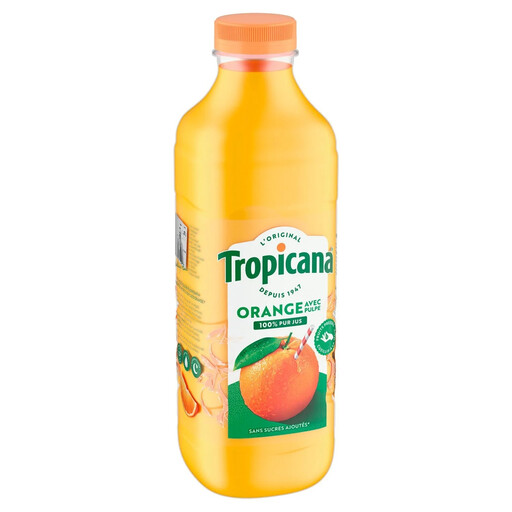 Image unavailable
This size may suit you if you’re serving juice to several people and prefer it with pulp. The Joybuy listing states that it contains 9.8 g of sugars per 100 ml, so adjust the calculation to the amount you pour. The title indicates that it’s short-dated; check the exact date before buying.
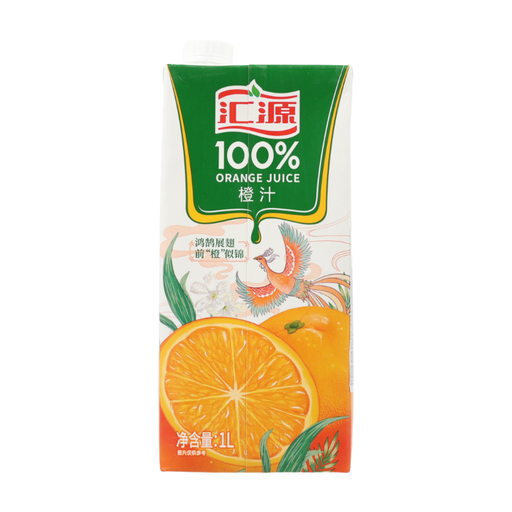 Image unavailable
If you’re looking for orange juice for several breakfasts, first check that the description and ingredients of this 1 L product match what you want. Its name also mentions fruit and vegetables, so don’t assume it’s pure orange juice without checking the label. Also check the “of which sugars” line and the instructions for after opening.
No. Sugars naturally present in oranges remain in the juice. For example, Auchan’s listing for Joker pure orange juice with no added sugars states that it contains 8.6 g of sugars per 100 ml. Check the figure for the product you’re considering.
Manger Bouger recommends limiting fruit juice to no more than one glass a day and choosing whole fruit instead. To find out how much is in your glass, measure the amount you pour or check the volume of an individual carton.
No. They’re not equivalent choices, particularly if you’re looking for fibre: Manger Bouger describes juices as low in fibre and recommends choosing whole fruit instead.
Follow the time and temperature instructions on the bottle you choose. Auchan’s product listings for 20 cl pure orange juice and an Andros pure juice state that they should be kept in the fridge for five days after opening; don’t assume this applies to other products.
No. This term doesn’t tell you how much sugar is in the juice or in your portion. To choose a product, check its description, ingredients and the “of which sugars” line per 100 ml, then consider how much you’ll drink.