You want something fizzy with your sandwich
A can of sparkling orange drink is a handy single-serve option, as long as you’re happy for it to be a fizzy drink rather than pure juice.


If you want something fizzy with your sandwich, choose a sparkling orange drink, but check its product description, juice content and sugar levels: it may not be pure juice. If orange juice content is your priority, opt for still pure juice instead. The pack size and storage instructions can then help you choose between products.
A can of sparkling orange drink is a handy single-serve option, as long as you’re happy for it to be a fizzy drink rather than pure juice.
You want to keep the fizz, but the amount of sugar in the can matters more to you than orange flavour alone.
What’s in the drink matters more than the fizz: you’re happy to choose a still drink after checking its product description and ingredients list.
To go with a bakery sandwich, decide first whether fizz or pure juice matters more to you. Then compare the sugar content and the amount you’ll actually serve.
Choose this if: you want the fizz and prefer an individual can.
Bear in mind: containing orange doesn’t make this a pure juice; the ingredients vary by recipe.
Choose this if: you’d rather have a product described as orange juice than a fizzy drink.
Bear in mind: the pure juice products mentioned here are not sparkling.
| Criteria | What to check | Who is it for? |
|---|---|---|
| Fizz and orange | The product description and whether it contains carbon dioxide, followed by the stated juice content. | I mainly want a sparkling orange drink for my sandwich break, without mistaking it for pure juice. Around 36% of consumers would make this their top priority. |
| Sugars | The ‘of which sugars’ figure per 100 ml and the can size, so you can compare equivalent portions. | I want the fizz, but I also want to know how much sugar I’ll be drinking with my sandwich. This is thought to be a priority for around 29% of consumers. |
| Pure juice | The product description and ingredients list, including ‘pure juice’ or ‘100% squeezed oranges’ claims where shown on the product. | I’d rather have orange juice than a fizzy fruit drink, even if that means going without the fizz. Around 21% of consumers would put pure juice at the top of their list. |
| Pack size and serving | The volume per unit, number of units and storage instructions for the product you choose. | To go with a sandwich, I mainly want a suitable serving size and a drink I can store as directed on the packaging. This would be the top priority for around 14% of consumers. |
A fizzy drink can contain juice without being pure juice. For example, Carrefour’s product information for SAN PELLEGRINO Aranciata states that it contains 16% orange juice from concentrate, along with water, sugar and carbon dioxide.
Read the product description before checking the juice percentage and ingredients list. The DGCCRF explains that in France, the description ‘fruit juice’ is reserved for products that meet its regulatory definition.
Figures given for different volumes don’t describe the same portion. A whole can may also contain more than the 100 ml used in the nutrition information table.
First compare the ‘of which sugars’ figure per 100 ml, then calculate it for the amount you plan to drink.
These names help you distinguish the sparkling drinks from the pure juices mentioned here, but availability may vary from one shop to another.
Canned fizzy orange drinks, including Aranciata and Ciao! Blood Orange.
A useful option for comparing pure orange juice with or without pulp against fizzy drinks.
Pure orange juice options with or without pulp for anyone who prefers juice.
A pure juice option to consider if you’re happy with a still drink.
A retailer where you can distinguish pure juice products from fizzy orange drinks.
Another retailer where you can compare different types of orange drinks.
This order starts with two fizzy drinks that match the original request, then shows a pure juice alternative. It isn’t a third-party award list or a sales ranking. The figures relate to the specific products and pack sizes shown, not to the entire range.
| Rank | Product | Features | Benefit and limitation | Retailer |
|---|---|---|---|---|
| 1 | SAN PELLEGRINO Ciao! Blood Orange, 4 × 33 cl | Flavoured fizzy drink; 5.4% fruit juice and 0.4 g of sugars per 100 ml, according to Auchan. | A way to keep the fizz while choosing the stated sugar content; the fruit juice content remains 5.4% for this Auchan product. | Auchan |
| 2 | SAN PELLEGRINO Aranciata, 6 × 330 ml | 16% orange juice from concentrate, sugar and carbon dioxide; 8.1 g of sugars per 100 ml, according to Carrefour and Joybuy listings for this product. | A sparkling orange drink in a can, if you’re happy that it isn’t pure juice and take the stated sugar content into account. | Joybuy |
| 3 | Tropicana Pressed Orange Juice Without Pulp, pure juice, 1.5 L | Orange juice without pulp, described as ‘100% pure juice’ in Carrefour’s listing. | For choosing pure juice over fizz: this product without pulp isn’t suitable if you’re looking for a sparkling drink. | Carrefour |
These cans are suitable if you want a sparkling drink to go with a sandwich. Some combine orange with other fruit, so if you’re looking for pure orange juice, compare the product description and ingredients of a still juice instead.
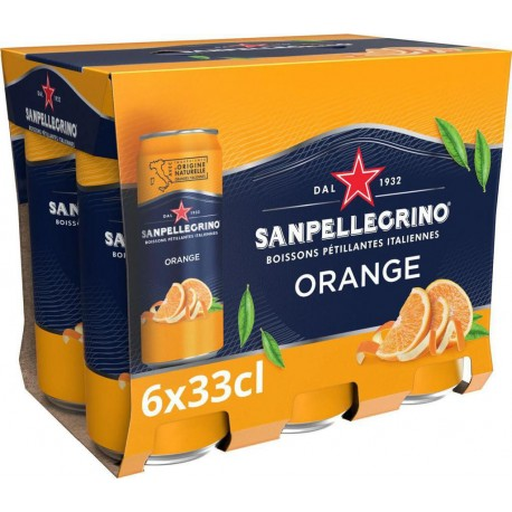 Image unavailable
A sparkling orange drink in a can to enjoy with a sandwich.
Joybuy’s listing states that it contains 16% orange juice and 8.1 g of sugars per 100 ml. It’s a sparkling drink, not pure juice.
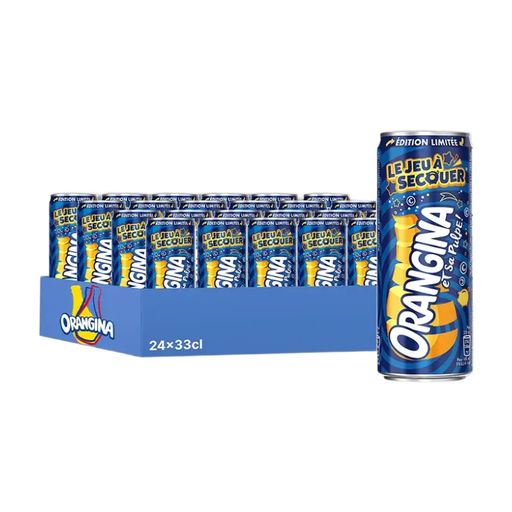 Image unavailable
A canned option if you’d like a citrus drink with your sandwich rather than pure orange juice.
The multipack contains 24 cans of 330 ml. Check the ingredients list and the ‘of which sugars’ figure if the ingredients matter to your choice.
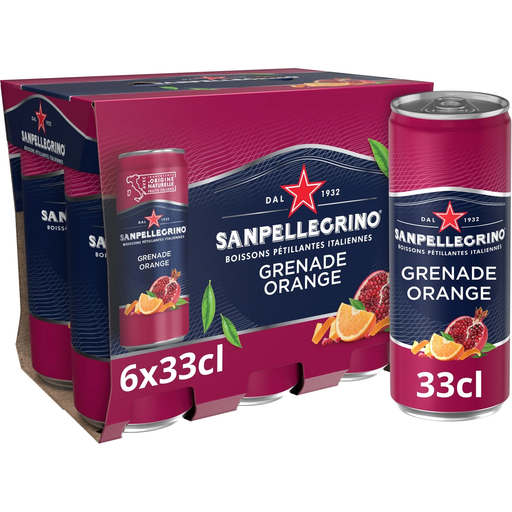 Image unavailable
Worth considering if you’re happy with a sparkling drink that combines orange and pomegranate rather than offering an orange-only flavour.
The stated pack size is six cans of 330 ml. Compare the sugars per 100 ml with those in the other recipes you’re interested in.
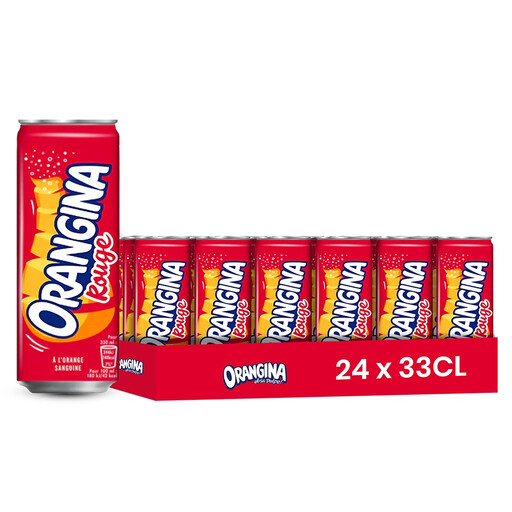 Image unavailable
A sparkling drink in a can that combines orange and red berries to enjoy with a sandwich.
The multipack contains 24 cans of 330 ml. If fruit content is important to you, check the juice percentage for the product you choose.
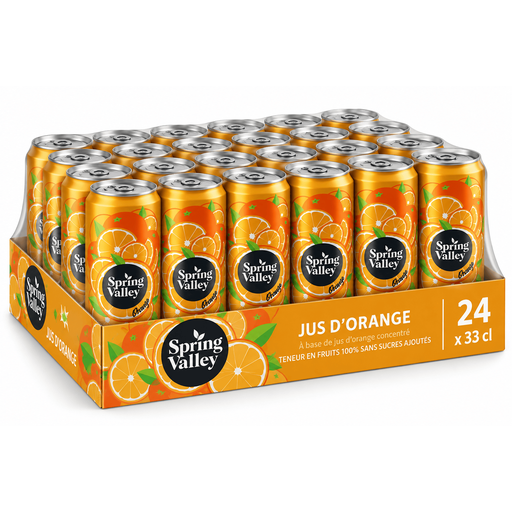 Image unavailable
A sparkling orange drink in a can to serve with a sandwich.
The multipack contains 24 cans of 330 ml. Check the orange juice content and stated sugar levels if these matter more to you than the fizz.
No. Fizz and orange content alone don’t make it fruit juice. In France, the DGCCRF explains that a product must meet the regulatory definition to use that description. For example, Carrefour describes its Aranciata as a flavoured fizzy drink containing 16% orange juice from concentrate.
Compare the ‘of which sugars’ figure per 100 ml, then take the size of each can into account. For their respective products, Auchan listings state 0.4 g of sugars per 100 ml for SAN PELLEGRINO Ciao! Blood Orange and 30 g per 330 ml for the orange and pomegranate sparkling drink. Convert the figures to the same measure before choosing.
Look for a product described as pure orange juice and check its product description and ingredients list. Carrefour describes a Tropicana product without pulp as ‘100% pure juice’, while Joker says its Pur Jus Orange without pulp is made with 100% squeezed oranges. Neither of the products mentioned is sparkling.
Follow the storage instructions for the product you buy, as they can vary. Carrefour states that its chilled Tropicana product without pulp should be kept refrigerated. Check the packaging for instructions on storing it after opening, too.