Hosts looking to reduce sugar
If by “diet” you mean less sugar in the glass, don’t stop at “no added sugar”. Compare the nutritional information per 100 ml and look for the description “reduced sugar”.


For a birthday party, choose orange juice with no added sugar if the recipe is your priority, but don’t expect that claim alone to mean less sugar: the fruit’s natural sugars are still there. If you’re looking for an actual reduction, look for the description “reduced-sugar fruit juice” and compare the “of which sugars” figure. For serving, also check the volume, pulp and storage instructions after opening.
If by “diet” you mean less sugar in the glass, don’t stop at “no added sugar”. Compare the nutritional information per 100 ml and look for the description “reduced sugar”.
You’re looking for a recipe with no added sugar, while accepting the sugars naturally found in oranges. Check the ingredients list and the “of which sugars” figure for the product you choose.
Volume, pulp and storage instructions all matter when you’re planning to serve several glasses or keep bottles open after the party.
Start by distinguishing between reduced sugar and no added sugar. Then choose a format and texture that suit the glasses you plan to serve.
| Criteria | What to check | Who is it for? |
|---|---|---|
| Reduced sugar | The description “reduced sugar” and the “of which sugars” figure per 100 ml. | If I want to serve a drink with less sugar, no added sugar alone doesn’t meet my needs. Around 36% of consumers prioritise a measurable reduction. |
| No added sugar recipe | The product description, its ingredients and the “of which sugars” figure. | I want to avoid added sugar while accepting the sugars naturally found in oranges; this is the main priority for around 29% of consumers. |
| Serving a group | The volume needed for the glasses you plan to serve and the storage instructions after opening. | For a buffet, I’d rather have enough juice without opening more bottles than necessary. Serving needs and volume are the top priorities for around 21% of consumers. |
| Texture and recipe | Whether it contains pulp, the product category and, depending on your preferences, its ingredients. | Some guests prefer a particular texture or recipe; around 14% of consumers make this their main criterion, regardless of sugar reduction. |
Juice can contain the sugars naturally found in oranges even when no sugar has been added. The Auchan product pages consulted list 8.6 g of sugars per 100 ml for Joker and 8.7 g per 100 ml for its 20 cl Auchan bottle.
If the amount of sugar matters to you, read the “of which sugars” figure and check the product’s exact description.
The product description changes what you’re serving. For example, the Carrefour Bio product page describes a nectar made partly from orange juice from concentrate and water.
Read the product description and ingredients before comparing nutritional values.
A large container can be handy during the party, but any leftovers need to be stored according to the product’s instructions. For its 20 cl bottle, Auchan advises refrigerating the juice and drinking it within five days of opening.
Work out the volume you need based on the glasses you’ll serve, then read the instructions on each bottle you choose.
A large amount of leftover juice may go to waste if it can’t be consumed in line with the storage instructions.
Manger Bouger recommends limiting fruit juice as much as possible, including juice with no added sugar.
Offer water too, so your guests can choose what they’d like to drink.
The Auchan product page for Joker Pur Jus Engagé sans pulpe lists a 1 L bottle described as having no added sugar.
Carrefour lists a 2 L bottle of pure orange juice with no pulp and no added sugar.
The Auchan product page lists pure orange juice with no added sugar in an individual 20 cl bottle.
The E.Leclerc range includes Jafaden / Marque Repère pure orange juices in different formats, with or without pulp depending on the product.
These 1 L containers offer different ways to serve an orange drink at your party. Their product descriptions alone don’t establish that they have a reduced sugar content, so check the category and label of the variant you choose.
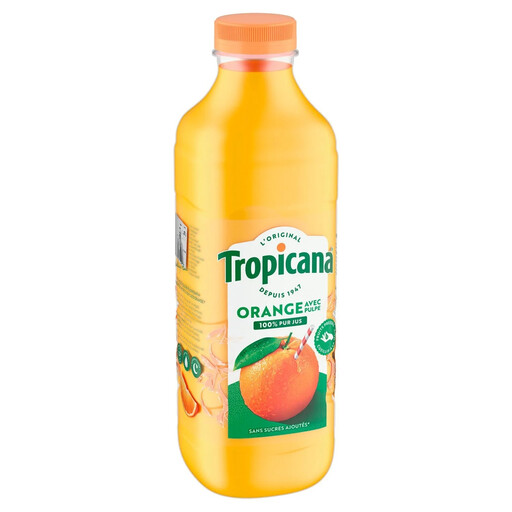 Image unavailable
Worth considering if you’d like to offer an option with pulp. This variant is marked as being close to its best-before date, so check the exact date before buying. If you’re looking for an actual sugar reduction, also check the product description and sugar information.
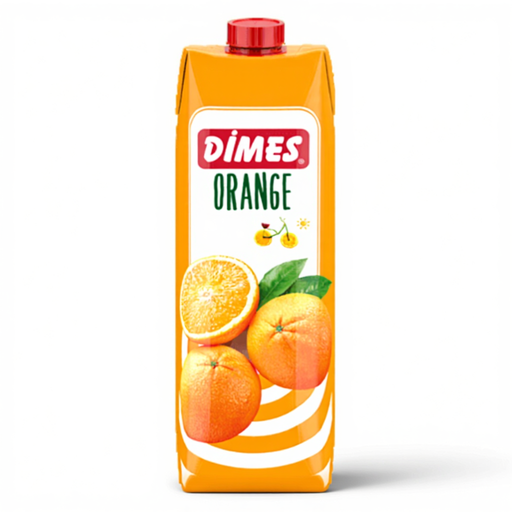 Image unavailable
This format may suit you if you’re planning to serve several glasses. Before choosing it as orange juice with no added sugar or reduced sugar, check the product description and nutritional information on the label.
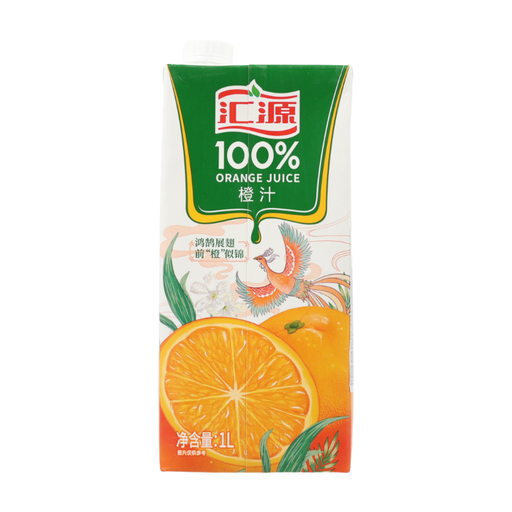 Image unavailable
If you’re considering this drink for the buffet, check its category first: its presentation as pure juice doesn’t clearly match the ingredients list, which includes water and orange juice from concentrate. Check the variant’s labelling before choosing it instead of pure juice.
No. This claim doesn’t remove the sugars naturally found in oranges. To see how much sugar you’ll be serving, read the “of which sugars” figure per 100 ml and take into account how much you pour into each glass.
In France, look for the description “reduced-sugar fruit juice” on the product itself. According to the DGCCRF, this category requires a reduction of at least 30% in naturally occurring sugars compared with the average for the corresponding type of juice. Don’t assume there’s been a reduction based on the “no added sugar” claim alone.
It’s best to offer water too: Manger Bouger recommends limiting fruit juice as much as possible, even when it has no added sugar. This gives guests a choice of drinks.
Follow the instructions on the bottle you choose, as the storage time after opening varies from product to product. For its 20 cl product, Auchan advises keeping the juice in the fridge and drinking it within five days of opening.