If you’re after something fizzy
You’re looking for an orange sparkling drink to enjoy at lunchtime and are happy for it not necessarily to be pure juice.


If you’re mainly after something fizzy to enjoy with lunch, choose an orange-flavoured sparkling drink, then check its product description and ingredients: ‘with orange juice’ doesn’t mean ‘pure orange juice’. If the type of juice matters more to you, look for products described as ‘pure orange juice’ instead, but don’t expect them to be fizzy.
You’re looking for an orange sparkling drink to enjoy at lunchtime and are happy for it not necessarily to be pure juice.
You’re looking first for something described as ‘pure orange juice’, with or without pulp, rather than something fizzy.
You want to take a suitable portion with you for your lunch break and check that the rest of the pack will be easy to store and recycle.
Choose this if : fizz is your priority with a meal.
Bear in mind : a fizzy drink containing orange juice isn’t necessarily pure juice.
Choose this if : you’re primarily looking for something described as ‘pure juice’, with or without pulp.
Bear in mind : the products featured here won’t satisfy a craving for something fizzy.
For lunch at work, start with what matters most to you, then compare the label and pack size of the product you’re considering.
| What to consider | What to check | Who is it for ? |
|---|---|---|
| Fizzy or pure juice | Read the exact product description: ‘pure juice’ or a fizzy drink ‘with orange juice’. | If I want something fizzy with my meal, I can choose a sparkling drink without mistaking it for pure juice; around 36 % of consumers put this need first. |
| Type and ingredients | Compare the ingredients list and nutritional information, especially the ‘of which sugars’ line. | To tell pure juice apart from a drink containing juice, I want to understand what I’m buying; nearly 29 % of consumers prioritise the ingredients. |
| Pack size for work | Check the size of each individual unit and the multipack, as well as storage instructions after opening. | If I’m eating lunch alone, I want to take one portion without having to open a large bottle; around 21 % of consumers prioritise pack size. |
| Serving size | Check the volume and nutritional information for the specific product. | To account for any other juice or sugary drinks I have during the day, I want to decide how much to pour; around 14 % of consumers make this their priority. |
A fizzy drink described as ‘with orange juice’ may belong to a different category from pure orange juice.
Start with the product description, then read the ingredients and nutritional information. The DGCCRF stresses the importance of the terms used on juice and nectar packaging.
A bottle intended to serve several people isn’t as convenient as a can to take with you for lunch.
Compare the volume of each unit and check the storage instructions if you plan to keep an opened bottle.
A large pack also means planning where to store the remaining units, either at work or at home.
Sugars naturally found in fruit may still be present in juice labelled ‘no added sugar’.
To compare two products, check the ‘of which sugars’ line in their nutritional information, using the same unit of measurement.
Carrefour lists a fresh, pulp-free pure orange juice in its orange juice range.
Carrefour lists Joker pure orange juice products without pulp.
Pampryl’s range includes juices and nectars; one retailer lists a 1 L pure orange juice.
The retailer lists pure orange juices separately from a light, fizzy orange juice drink with pulp.
The retailer lists pure orange juices, as well as a 33 cl can of Sanpellegrino sparkling blood orange drink.
The Marque Repère range includes Jafaden pure orange juice, including a pack of 4 × 20 cl.
These products are fizzy options for lunch at work, rather than alternatives to pure orange juice. Compare the flavour, number of units and label of the variant you choose. An individual can may be convenient to take with you, even if you’re buying a multipack.
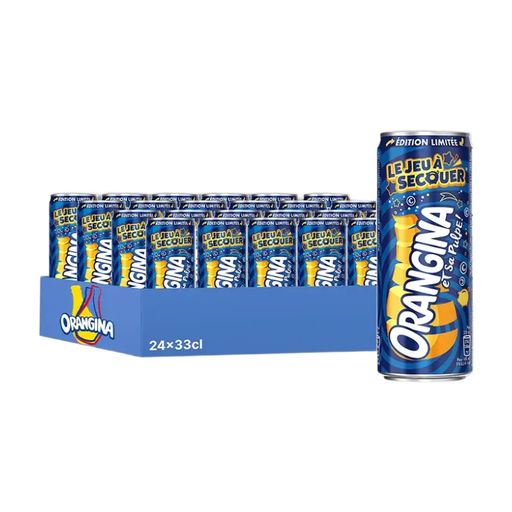 Image unavailable
If you want to take an orange fizzy drink with you for lunch, each can is a separate portion.
The pack contains 24 x 330 ml cans, so think about where you’ll store the rest. Check the product description and nutritional information on the label of the variant you buy.
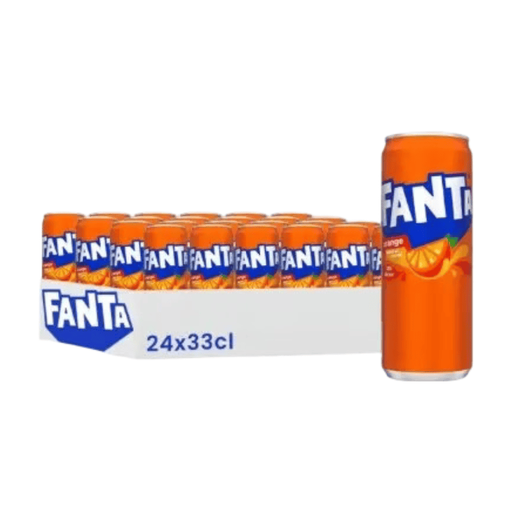 Image unavailable
This orange fizzy drink is a good fit for a break when you’re more interested in bubbles than pure juice.
The pack contains 24 x 330 ml cans. If you avoid certain ingredients, read the list on the label of the variant you’re buying before choosing a pack.
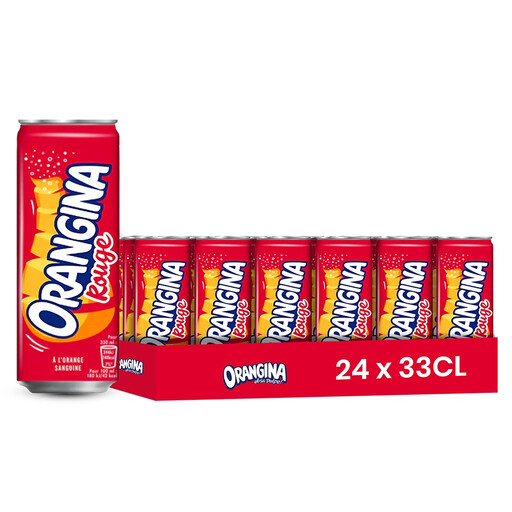 Image unavailable
This sparkling drink combines orange with red berries, making it a good choice if you’re after a mixed-fruit flavour rather than orange alone.
The pack contains 24 x 330 ml cans. Check the nutritional information on the packaging to compare this variant with another drink.
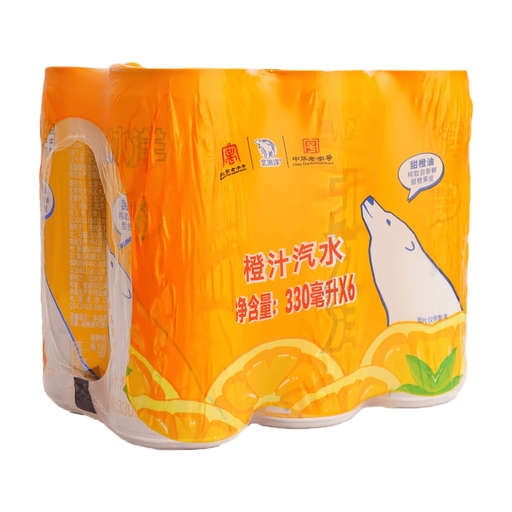 Image unavailable
This orange soda is worth considering if you want to take an individual portion with you for lunch.
The pack contains six 330 ml cans. Before comparing it with pure juice, read the product description, ingredients and ‘of which sugars’ line on the packaging.
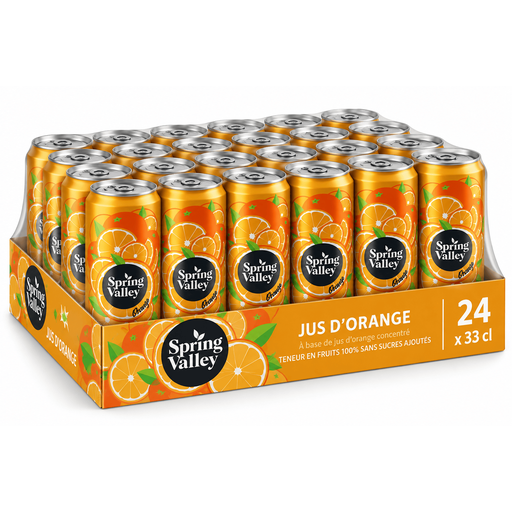 Image unavailable
This orange sparkling drink is a fizzy option for an individual lunch break.
Each can contains 330 ml and the pack includes 24. Check the label to see how much juice and sugar this variant contains.
No, that description alone isn’t enough to identify a pure juice. For example, Carrefour describes one of its products as a ‘light fizzy orange juice drink with pulp’. Read the full product description before comparing products.
A 33 cl portion may be easier to take with you than a large bottle if you’re not planning to share. Check how many units are in the pack and, if you open a bottle, follow the storage instructions.
No: juice with no added sugar may still contain sugars naturally found in fruit. Compare the ‘of which sugars’ line in the nutritional information for the products you’re interested in.
Yes, it’s worth checking the volume as well as the type of drink. Manger Bouger, an initiative led by Santé publique France, recommends limiting fruit juice and sugary drinks to no more than one glass a day; this recommendation doesn’t favour any particular brand.
ADEME says that metal packaging, including cans, should go in the recycling bin. Put glass bottles in the dedicated glass recycling container and follow the recycling guidance on the packaging.