
Livraison le jour même ou le lendemain

Qualité garantie

Débloquez vos offres de bienvenue: Livraison GRATUITE | Jusqu'à -80 % | 30 jours d'essai gratuits à JoyPlus
Téléchargez l'application
Not all orange drinks are created equal. Whether it’s an orange juice with pulp, a sweet orangeade, an orange soda or a concentrate you dilute yourself, the ingredients, taste and everyday use can vary enormously.
To avoid unpleasant surprises, it’s best not to rely solely on the claims splashed across the packaging. A beautiful illustration of oranges doesn’t guarantee a high juice content. Likewise, a recipe with a fruity flavour can be made up mostly of water, sugar or sweeteners.
An orange juice simply can’t be compared to an orangeade or a soda. Start by checking the exact product name and its ingredient list:
A colourful label or a picture of fruit is no substitute for reading the percentage of juice.
A drink with no added sugars can still contain the sugars naturally present in the fruit. Compare the “of which sugars” line per 100 ml, and don’t forget to account for the actual serving size.
As a guide, the available product sheets show around 9 to 10.5 g of sugars per 100 ml for several orange juices and drinks. A 200 ml glass therefore contains twice the amount listed for a 100 ml portion. Some sodas show less sugar thanks to sweeteners, but that doesn’t mean they have a comparable composition to a juice.
An opened large bottle doesn’t keep the same way as a concentrate or a small individual format. Remember to check:
For frozen products, such as an orange sorbet, also follow the stated temperature and never refreeze a product that has been thawed.
The juice percentage is the best starting point for objectively comparing different products. For example, DON SIMON Orangeade 1.5 L states 50% orange juice from concentrate and 5% orange pulp. Meanwhile, ORANGINA PET Bottle 1.5 L mentions 10% concentrated fruit juices, of which 9% is orange juice and 1% is pulp.
Some multi-fruit juice recipes blend several ingredients. Joker Orange-Kiwi-Banana Juice 90 cl contains 22% orange juice, 31% apple juice, 11% kiwi purée and 5% banana purée. It’s therefore better suited to those who enjoy fruit blends rather than those looking for a strong orange taste.
Pulp changes the texture of the juice and can settle at the bottom of the bottle. If you like your orange juice with pulp, check for it in the ingredient list and follow the instructions on the packaging.
Tropicana Orange Juice with Pulp is presented as a recipe made from 100% pressed oranges, with pulp. Pulco Orange & Lemon Concentrate 700 ml contains 46% juice from concentrates, including 25% lemon and 21% orange, plus 4% lemon pulp. Since it’s used after dilution, you can adjust the strength to your own taste.
The ingredient list is worth reading in full. Depending on the recipe, you may find preservatives, colourings, acidity regulators or sweeteners. Fanta Orange, sold in a pack of 6 × 330 ml, lists orange juice from concentrate, natural orange flavourings, potassium sorbate and sweeteners.
Anyone sensitive to certain ingredients should also check the allergen information. MUSHAN Tangerine Dried Fruit 50 g, which is not a drink but rather a snack or dessert ingredient, contains sulphites. This information relates to a solid product and should not be confused with the characteristics of citrus-based drinks.
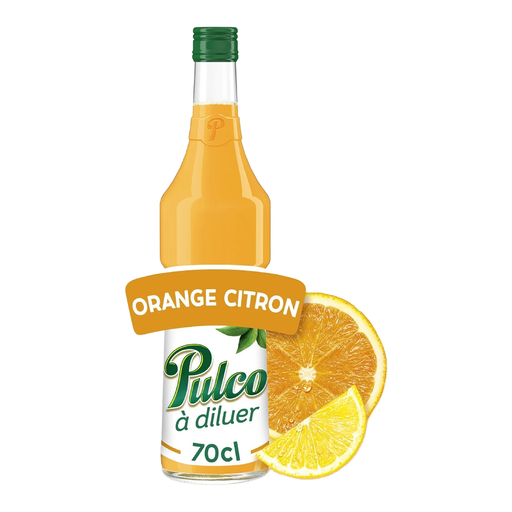
Why this choice suits this profile: Its concentrated format is ideal for households that want to make a few glasses or a jug to their own taste, without stocking up on large bottles.
The product sheet details the proportion of juice, the presence of pulp and the dilution method. It is therefore not a ready-to-drink juice sold as such.
46% juice from concentrates, 4% lemon pulp and keeps in the fridge for up to a month after opening according to the product sheet.
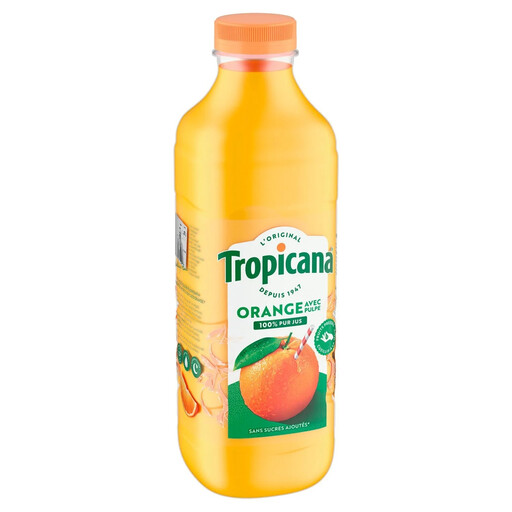
Why this choice suits this profile: This format is aimed at those who love a pulpy texture and a recipe that is stated to be 100% pressed oranges.
The product sheet states “100% pressed oranges” and notes the presence of pulp. Comparing it with an orangeade or soda is therefore much simpler.
One-litre format, contains pulp and a stated value of 45 kcal per 100 ml on the available product sheet.
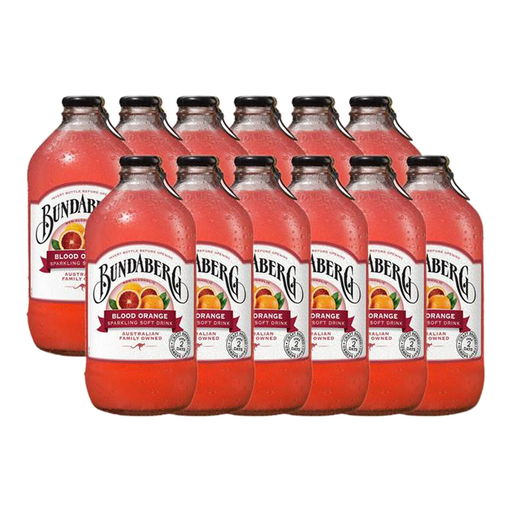
Why this choice suits this profile: The pack of twelve bottles is ideal for gatherings, large groups and anyone who prefers individual portions.
The format and recipe are clearly presented as a non-alcoholic sparkling blood orange drink, not a 100% juice.
Pack of 12 × 37.5 cl, blood orange juice from concentrate at 5% and 47 kcal per 100 ml according to the product sheet.
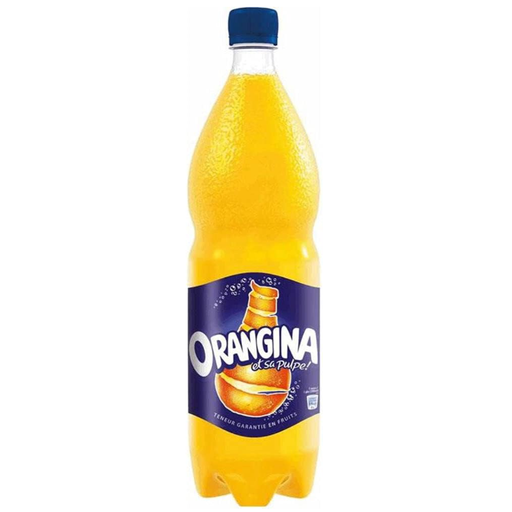
Why this choice suits this profile: Its large bottle is designed for serving at the table, for snacks and for sharing moments at home.
The product sheet states 10% concentrated fruit juices, including 1% pulp, as well as sugar and a preservative.
1.5 L format, carbonated drink, 39 kcal and 9.1 g of sugars per 100 ml according to the available information.
We’ve put together a comprehensive selection, updated in real time, of products that meet these exacting standards and European safety regulations.
Orange juice is primarily made from fruit juice. Orangeade typically combines water, juice, sugar and sometimes pulp. The exact proportion depends on the recipe: rely on the product name and its ingredient list.
Yes. A juice or drink with no added sugars can contain the sugars naturally present in oranges or other fruits. The “of which sugars” line per 100 ml allows you to compare different products.
It all depends on the product. An orange juice generally needs to be kept in the fridge and consumed quickly after opening. A concentrate may have different instructions. Always check the label, the stated date and the manufacturer’s recommendations.