
Livraison le jour même ou le lendemain

Qualité garantie

Débloquez vos offres de bienvenue: Livraison GRATUITE | Jusqu'à -80 % | 30 jours d'essai gratuits à JoyPlus
Téléchargez l'application
An orange drink could be a juice, an orangeade, a fizzy drink, a dilutable concentrate or even a sweet citrus-based speciality. This variety makes it easy to find something you like, but it also makes comparisons more difficult. Between claims such as “fruity”, “natural”, “no added sugar” and “with pulp”, it is worth taking the time to read the label.
To avoid any unpleasant surprises, three mistakes are particularly common: confusing an orange fizzy drink with orange juice, underestimating how much sugar you are actually consuming and choosing a format that does not suit your habits. Here are the criteria to check before stocking up the fridge.
Orange juice contains fruit juice, which may have been made from concentrate. Orangeade may also contain water, sugar, pulp and citric acid. An orange fizzy drink, on the other hand, is primarily made with carbonated water, with varying amounts of juice, flavourings and sometimes sweeteners.
The colour and aroma are therefore not enough to tell you what the product contains. To get a clearer picture, check the ingredients list and the percentage of juice shown on the packaging.
Orange juice with no added sugar can naturally contain several grams of sugar per 100 ml, as this sugar comes from the fruit. For example, Dimes orange juice contains 9 g of sugar per 100 ml, while Tropicana with pulp contains 9.8 g per 100 ml, according to the information provided.
The claim “no added sugar” simply means that no sugar has been added to the recipe. It does not make the product a sugar-free drink.
A 1 or 1.5-litre bottle is well suited to family consumption, but it will generally need to be kept in the fridge after opening when the label specifies this. For occasional consumption, a smaller format or a can is often more practical. Concentrate takes up less space if you are preparing several glasses.
If you are looking for an orange flavour that is closer to the fruit, start by comparing the percentage of juice. Don Simon Orangeade 1.5 l contains 50% orange juice from concentrate and 5% orange pulp. Orangina in a 1.5-litre bottle, meanwhile, lists 10% orange and other citrus fruit juice, including 9% orange juice and 1% pulp.
Pulp changes the texture and creates a fuller sensation in the mouth. A drink containing pulp should generally be shaken gently before serving to distribute the particles evenly.
Comparing values per 100 ml is a useful starting point, but the amount actually poured into your glass matters just as much. A 200 ml glass contains roughly twice the values displayed for 100 ml. For fizzy drinks, also remember to check whether they contain sugar and sweeteners.
For example, Fanta Orange lists 5.9 g of sugar per 100 ml in the available information. It also contains sucralose and acesulfame-K. Orangina Orange & Red Fruits in 330 ml cans, meanwhile, lists approximately 4.3 g of sugar per can.
Depending on the recipe, you may find acidity regulators, preservatives, flavourings, colourings or stabilisers. MUSHAN candied orange fruit, for example, contains orange, sugar, citric acid, the preservative E223 and sulphites. These are clearly listed in the product information: anyone with sensitivities or allergies must read the label carefully before buying.
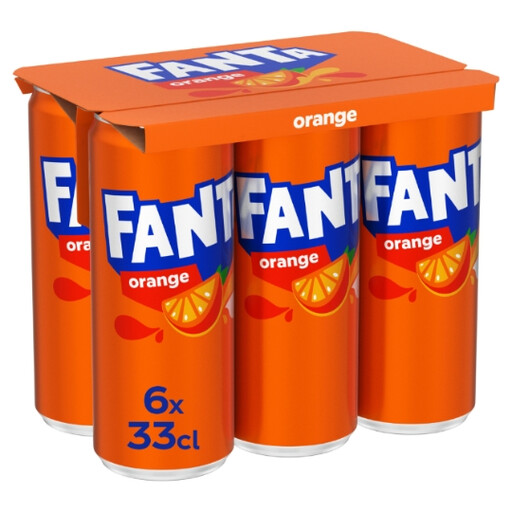
Why it suits this profile : The six-pack of 330 ml cans makes it easy to serve individual portions with a meal or during a break, without having to open a large bottle.
The product details state that it contains 5 % orange juice from concentrate, as well as sugar and sweeteners: this composition is very different from that of pure juice.
Individual format, fizzy drink best served chilled, pack of 6 × 330 ml.
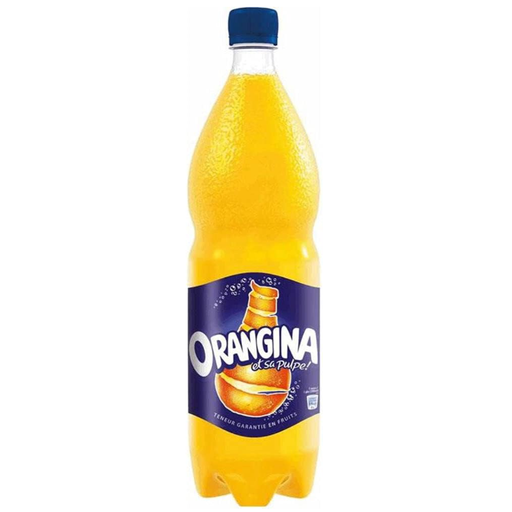
Why it suits this profile : Its recipe combines carbonated water, citrus juice, pulp and concentrated peel for a richer, more textured experience than a simple orangeade.
The product details specify the proportion of orange juice and pulp, as well as the need to gently shake the bottle before opening it.
Family-sized 1.5 l bottle, 9.1 g of sugar per 100 ml according to the product details, with pulp and citrus juice.
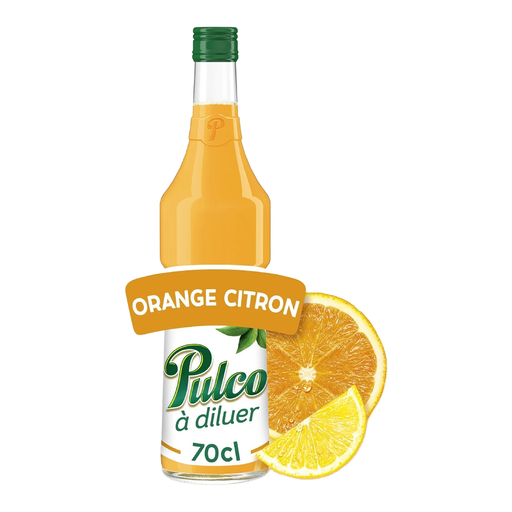
Why it suits this profile : The concentrated format lets you prepare a refreshing drink with the dilution adjusted to your preference, whether at home or for a large meal.
The product details state that it contains 46 % fruit juice from concentrate, including 21 % orange and 25 % lemon, as well as 4 % lemon pulp: this is a concentrate, not a ready-to-drink juice.
Orange and lemon recipe, with no sweeteners or artificial colourings according to the product details, and can be kept refrigerated for up to one month after opening.
For breakfast, Dimes Orange Drink 1 l is described as a drink made with 100% orange juice, with no added sugar, preservatives or artificial colourings, according to its product details. Tropicana Orange Juice with Pulp 1 l is better suited to those who enjoy juice with pulp and no added sugar.
Fancy a change from classic orange? Joker Orange-Kiwi-Banana 90 cl combines orange, kiwi, banana, apple and coconut water. Joker Orange-Carrot-Lemon 90 cl combines orange, mandarin, carrot and lemon, among other ingredients. These recipes are not simply orange juice: the ingredients list shows the exact proportion of each fruit.
For dessert, CAPRI-SUN Orange & Cherry Ice Pops are enjoyed after freezing. Each 37 g ice pop contains 34 kcal and 7 g of sugar, according to the information provided. MUSHAN candied fruit, sold in a 50 g bag, can be used in baking or to decorate a dessert, but it contains sugar and sulphites. An orange or mandarin-flavoured ice cream is therefore not intended for the same use as a drink for everyday consumption.
Orange juice contains fruit juice, which may have been made from concentrate. Orangeade is a mixed drink that may also contain water, sugar, pulp, acidity regulators and flavourings. The ingredients list and percentage of juice make it possible to tell the difference.
Follow the manufacturer's instructions. Chilled juices often need to be consumed within a few days of opening. A concentrate such as PULCO can be kept in the fridge for up to one month, according to its product details. An opened fizzy drink gradually loses its fizz, so it is best to drink it promptly.
A 1 to 1.5-litre format may suit shared meals, provided you check the storage requirements and ingredients. To avoid leftovers, individual cans are a practical option. If household tastes differ, a dilutable concentrate or several smaller formats offer greater flexibility.