Hosts looking to serve something fizzy
For drinks before or during a meal, you’re looking for a sparkling orange drink in individual cans. The juice content, sugars and pack size are all worth considering.


For individual servings of something fizzy, choose a sparkling orange drink; if you prefer pure juice in a bottle to share, choose still orange juice. They are not the same kind of drink: SANPELLEGRINO describes Aranciata as a drink containing 16% orange juice from concentrate, with water, sugar and carbon dioxide. Check the product description, ingredients, sugars per 100 ml and pack size before planning the drinks for your evening.
For drinks before or during a meal, you’re looking for a sparkling orange drink in individual cans. The juice content, sugars and pack size are all worth considering.
You want to serve still orange juice with an ingredient list focused on juice, even if that means going without the fizz.
You’re looking for enough to share: compare bottle sizes with the number of cans you’ll need, then check availability at your chosen shop.
For an Asian-themed evening, first decide whether your guests want something fizzy or pure juice; then choose between individual servings and a bottle to share. The label tells you what kind of drink it is, regardless of its format.
Choose this if : you want to serve something fizzy, particularly in individual cans before a meal.
Bear in mind : it isn’t necessarily pure juice; the Aranciata described by SANPELLEGRINO contains 16% orange juice from concentrate.
Choose this if : you prefer still orange juice, perhaps in a bottle to share.
Bear in mind : this option alone won’t satisfy anyone looking for a fizzy drink.
| What to consider | What to check | Who is it for? |
|---|---|---|
| Fizziness and individual servings | The description ‘sparkling drink’, whether it contains carbon dioxide and the can size. | For drinks before a meal, I want to offer something fizzy without pouring every glass from a large bottle; around 46% of consumers put this sparkling option first. |
| Type of drink | The difference between ‘pure juice’ and ‘orange juice drink’, followed by the ingredients list. | If orange juice matters more to me than the fizz, I check what the drink actually contains. Around 36% of consumers are said to have this priority. |
| Enough to share | The total volume in litres and availability at your chosen shop. | When I’m serving several people, I’d rather plan the amount I need than buy cans for everyone; this is said to be the top priority for around 18% of consumers. |
The word ‘orange’ alone doesn’t tell you how a drink is made. According to SANPELLEGRINO, Aranciata contains 16% orange juice from concentrate, as well as water, sugar and carbon dioxide; Carrefour’s product information for Tropicana smooth pure orange juice lists orange juice as the ingredient.
Start by checking the product description, then the ingredients, depending on whether you’re looking for something fizzy or pure juice.
You can’t compare two drinks in different pack sizes simply by looking at a can versus a bottle. The French Directorate-General for Competition Policy, Consumer Affairs and Fraud Control states that drinks’ nutritional information is given per 100 ml to make comparisons easier.
Compare sugars per 100 ml, then factor in how much you plan to serve.
A bottle of pure juice makes it easier to serve several people, but it won’t replace a fizzy drink for guests who want something sparkling. Conversely, a group may need several individual cans.
Decide whether you’ll serve pure juice, a sparkling drink or both before choosing pack sizes.
A product listed by a retailer may only be available at certain shops or for certain collection options. E.Leclerc, for example, recommends contacting your local store to check availability of its 2 L ECO+ pure juice.
Check each drink with the shop where you plan to do your shopping.
Aranciata is an example of a sparkling orange drink, available in 33 cl cans.
The 1.5 L smooth pure juice listed by Carrefour is a good choice for those who prefer a bottle to share.
Its orange juice range lets you compare pure juice with or without pulp, in different pack sizes.
The range includes 1 L and 1.5 L pure orange juices with or without pulp, as well as a pack of 6 × 33 cl SANPELLEGRINO Aranciata cans.
The 2 L ECO+ option is a large bottle of pure orange juice.
These cans are a good fit if you’re choosing sparkling drinks for your evening, whether you need individual servings or multipacks for a group. Some recipes combine orange with other fruits, so check the ingredients if you’re looking for an orange-only drink.
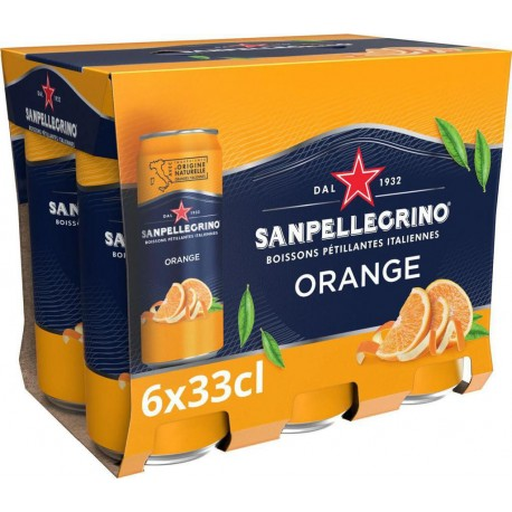 Image unavailable
A multipack of cans for serving sparkling orange drink in individual portions.
The listed recipe contains 16% orange juice from concentrate, water, sugar and carbon dioxide. It contains 8.1 g of sugars per 100 ml; it isn’t pure juice.
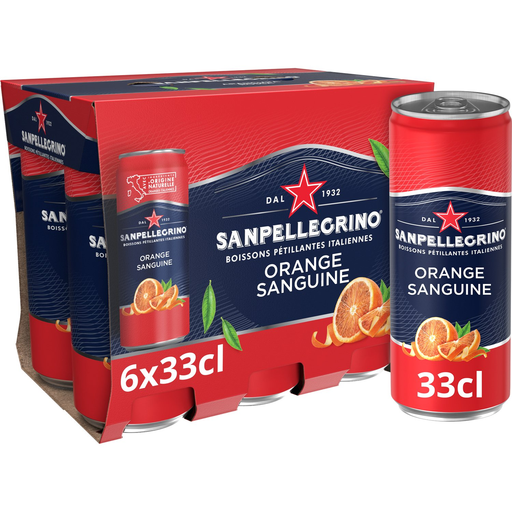 Image unavailable
A sparkling canned option for anyone who likes a mix of orange and blood orange.
The recipe lists 10% orange juice and 5% blood orange juice, and contains 8.8 g of sugars per 100 ml. It also contains sugar, so it isn’t pure juice.
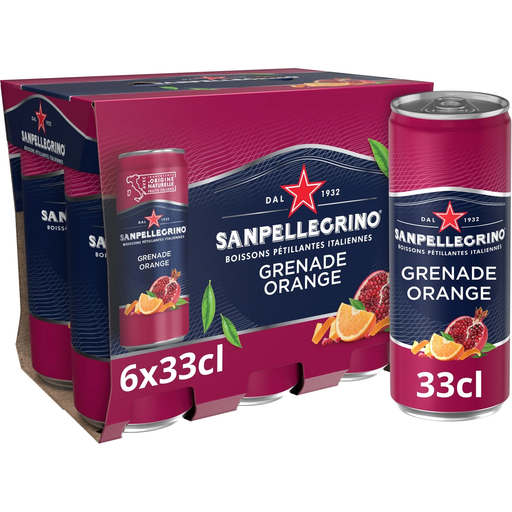 Image unavailable
Sparkling cans for serving a recipe that combines orange and pomegranate, rather than an orange-only drink.
The listed ingredients include 10% orange juice and 5% pomegranate juice; sugars are listed at 8.8 g per 100 ml. This isn’t pure orange juice.
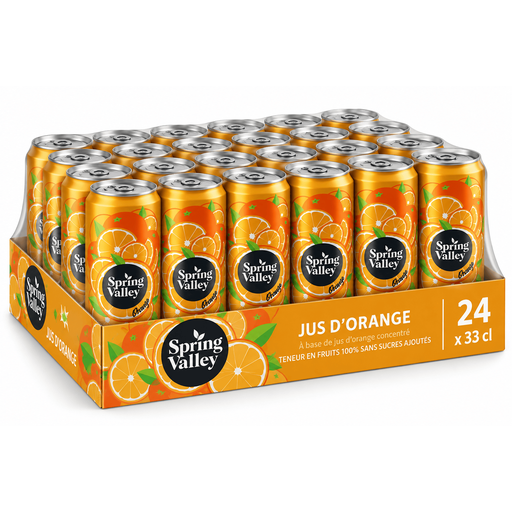 Image unavailable
A multipack of sparkling orange cans to consider if you’re planning individual servings for a group.
The ingredients list mentions orange juice from concentrate and carbon dioxide; sugars are listed at 10.5 g per 100 ml. If the exact juice content matters to you, check the packaging.
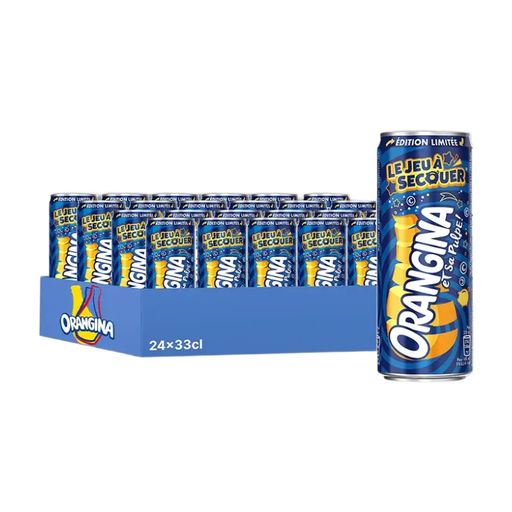 Image unavailable
A multipack of cans for serving a sparkling citrus drink to several guests.
The recipe described combines orange, grapefruit and mandarin, among other ingredients; it contains 8.9 g of sugars per 100 ml. If the exact amount of orange juice is important, check the product label.
No: ‘sparkling orange drink’ doesn’t mean ‘pure orange juice’. SANPELLEGRINO describes Aranciata as a drink containing 16% orange juice from concentrate, water, sugar and carbon dioxide; check the product description and ingredients of the one you choose.
First compare the sugars listed per 100 ml, then consider how much you’ll serve. According to the French Directorate-General for Competition Policy, Consumer Affairs and Fraud Control, presenting information per 100 ml makes it easier to compare the nutritional information for prepacked drinks.
Check the product description, ingredients list, pack size and nutritional information. The French Directorate-General for Competition Policy, Consumer Affairs and Fraud Control lists the product description, ingredients and nutrition declaration among the details to check on prepacked food. For your evening, they’ll help you distinguish pure juice from a sparkling drink.
Not necessarily: check availability at your chosen shop or for your selected collection option before planning your drinks. For its 2 L ECO+ pure juice, for example, E.Leclerc recommends checking with your local store.