For everyday meals, first choose a size that fits the space and connections available, then a capacity that suits your dishes. In an open-plan kitchen, also compare the noise level and noise class on the energy label, along with water per cycle and electricity per 100 cycles, between models with a similar capacity. A slimline appliance frees up space but holds less per load; whichever size you choose, check these details for the specific model.
Who should consider these criteria?
Households where noise matters in the living space
If you cook, eat or relax near the appliance, compare the decibel level and noise class on the energy label. As Que Choisir points out in its advice on quiet dishwashers, noise matters particularly when the kitchen and living area share the same room.
Households that regularly fill the dishwasher
Frequent meals also mean bulky dishes and utensils. Que Choisir recommends considering the number of place settings: compare this figure with the space actually available in the racks, rather than choosing capacity based solely on the number of people in your household.
People with limited space for installation
An existing alcove or restricted width may determine the size you need before you even consider the programmes. Measure the space and check access to water, drainage and electricity; Bosch’s installation guidance lists these three connections for a plumbed-in appliance.
Which criteria should you prioritise?
Freestanding
Consider this if: you have floor space and connections available outside a fitted appliance alcove.
Bear in mind: the appliance will be on show in your open-plan kitchen.
Integrated
Consider this if: you have a suitable alcove designed to fit the appliance into your kitchen units.
Bear in mind: you’ll need to check the door panel and installation requirements.
Slimline or compact
Consider this if: there isn’t enough room for the size you had in mind for larger loads.
Bear in mind: capacity will be more limited, so check it against the dishes you use every day.
Washing by hand
Keep this option if: there’s no suitable space or connection available, or you don’t have much washing up.
Bear in mind: you’ll still need to wash and dry your dishes by hand.
| Criterion |
What to check |
Who is this for? |
| Noise in an open-plan kitchen |
The dB level and noise class on the label, comparing appliances with a similar capacity. |
If a cycle is running while I’m talking or relaxing in the living area, I want to keep noise to a minimum. Around 29% of consumers prioritise this level of quiet. |
| Everyday capacity |
The stated number of place settings and the space in the racks for your usual dishes and utensils. |
When meals quickly fill the sink, I’d rather be able to load large dishes too than run several washes. Capacity comes first for around 29% of consumers. |
| Water and electricity |
For a similar capacity, check the litres per cycle, kWh per 100 cycles and Eco programme duration on the label. |
With frequent cycles, I want to compare consumption rather than relying on the energy rating letter alone. Around 24% of consumers prioritise these usage figures. |
| Space and installation |
The dimensions, hose routing and connections; for an integrated model, check the alcove and door panel. |
If the alcove is narrow or the connections are some distance away, I need to know whether the appliance will fit in my home. Around 18% of consumers say installation feasibility is their main concern. |
Mistakes to avoid before buying
-
Relying on the word ‘quiet’ alone
A marketing claim won’t help you compare the noise from two appliances in an open-plan kitchen.
Check the dB level and noise class on the labels of models with a similar capacity. If you’re interested in a Silence programme, check its usage conditions separately.
-
Ordering an integrated model without measuring the alcove
An integrated appliance needs to fit a space designed for it; the type of door panel can also affect how it fits into your kitchen.
Measure the alcove and check the manual for dimensions, door, panel and connection requirements before choosing a model.
-
Comparing energy ratings alone
For frequent cycles, the energy rating letter alone won’t tell you how much water or electricity the reference programme uses, or how long it takes.
As ADEME recommends when reading the energy label, compare kWh per 100 cycles, litres per cycle and Eco programme duration for models with a similar capacity.
-
Forgetting what regular use involves
As well as thinking about everyday loads, Que Choisir recommends planning for dishwasher consumables and maintenance.
Before choosing, check the model’s maintenance instructions and the products it needs to run.
Depending on the appliance and how you use it, you’ll need to allow for dishwasher detergent, rinse aid and dishwasher salt.
Brands to explore by model
Bosch
In France, Bosch offers integrated, freestanding and compact dishwashers.
- The brand lists models with noise levels between 38 and 42 dB.
- This range doesn’t cover the whole collection: check the noise level, size and consumption figures for the specific model.
Beko
Beko offers a range that includes freestanding and integrated models.
- Beko lists a noise level of 41 dB(A) for its freestanding BDFN26450XP model.
- This figure applies to this model only; don’t assume it applies to other appliances from the brand.
Whirlpool
Whirlpool France’s range includes freestanding and integrated dishwashers, including 45 and 60 cm models.
- These sizes give you options for different widths of available space.
- Check the capacity, noise level and consumption figures for each model.
Siemens
Siemens offers freestanding and integrated dishwashers with different loading options.
- Adjustable racks and the varioSpeed Plus option are among the features listed for some models.
- These options vary by model; also check its noise label and consumption figures.
Dishwashers available on Joybuy
These 60 cm models cover two configurations: freestanding and installation in a suitable alcove. To choose one for an open-plan kitchen, compare its stated capacity with your dishes, then check the noise level and consumption figures on the label for each model.
 Image unavailable
Samsung DW60M6050FS freestanding dishwasher, 14 place settings
Consider this model if your everyday washing up calls for 14 place settings and you have space for a freestanding appliance. The model name indicates seven cycles; before choosing it for an open-plan kitchen, check its noise label, consumption figures and the dimensions needed for installation.
View on Joybuy
 Image unavailable
Indesit D2F HK26 S freestanding dishwasher, 60 cm, 14 place settings
This model is for households with room for a 60 cm freestanding appliance that offers a stated capacity of 14 place settings. The model name indicates an energy rating of E; before comparing how it will work in an open-plan kitchen, also check the kWh per 100 cycles, water per cycle and noise level on the label.
View on Joybuy
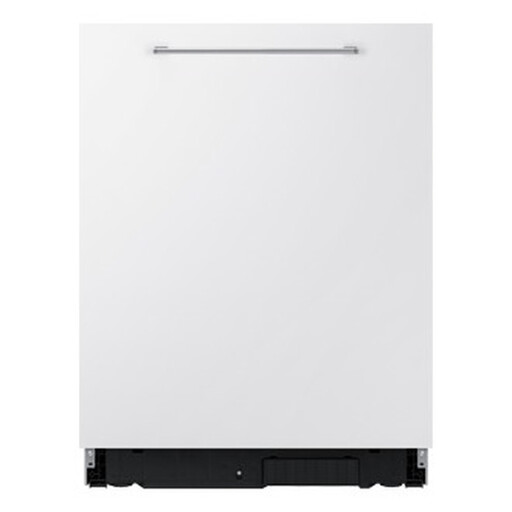 Image unavailable
Samsung DW70H72WCB0U1 integrated dishwasher, 60 cm, 13 place settings
Consider this model if you have a suitable alcove and 13 place settings match the loads you usually wash. The model name indicates an energy rating of C; check that the door panel and installation dimensions are suitable, then compare the noise level, water and electricity use on the label.
View on Joybuy
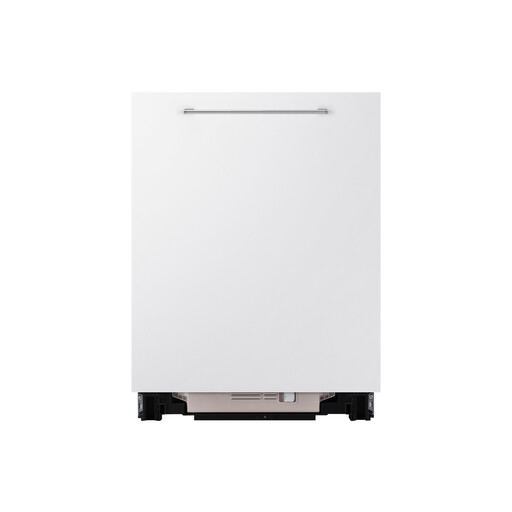 Image unavailable
Samsung DW80H72YBB0U1 integrated dishwasher, 60 cm, 13 place settings
This 13-place-setting model is worth considering if your kitchen has a suitable alcove for a 60 cm integrated dishwasher. Its name indicates an energy rating of B: compare all the figures on the label and check the conditions attached to the stated noise level for any programme you’re interested in.
View on Joybuy
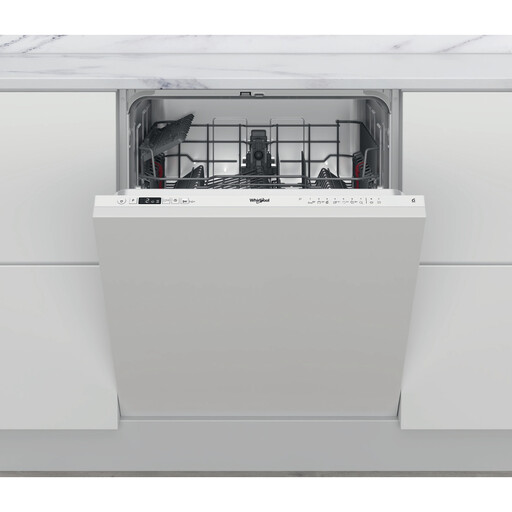 Image unavailable
Whirlpool W2I HD526 A integrated dishwasher, 60 cm, 14 place settings
Consider this model for everyday loads that suit its stated capacity of 14 place settings, provided you have a suitable alcove. The model name indicates an energy rating of E; check the door panel, connections and the model’s noise, water and electricity figures before making your decision.
View on Joybuy
Frequently asked questions
What connections do you need for a dishwasher?
A plumbed-in dishwasher needs a water supply, a drain and an electricity supply, as Bosch’s installation guidance explains. Before buying, check the model’s manual against the available space, the route for the hoses and your existing connections.
Why check the noise level in an open-plan kitchen?
Because the dishwasher runs close to where you spend time in the living area. Que Choisir highlights how important this is in a shared space: compare the dB level and noise class on the energy label instead of relying on a programme name alone.
How can you compare the consumption of two models?
For models with a similar size and capacity, compare the kWh per 100 cycles and litres per cycle shown on their energy labels. Also check the Eco programme duration: ADEME presents these figures as useful complements to the energy rating.
What should you check before choosing an integrated dishwasher?
Make sure the alcove matches the model’s required dimensions, then check the door type, compatible panel and connections. An integrated dishwasher needs a designated space; it isn’t a like-for-like replacement for a freestanding model without checking first.


