For an open-plan kitchen, start by choosing a dishwasher with a noise level and basket layout suited to when your living space is in use and to the dishes you need to wash after meals. A freestanding model gives you more flexibility over where you install it; an integrated model needs a compatible housing unit and door panel, while a compact model is best if space is tight and you usually have smaller loads.
Who is this guide for?
Households where noise in the living area matters
If a cycle is running while someone nearby is working, watching a film or sleeping, compare the noise level in dB(A) and the noise class of the exact model. ADEME and UFC-Que Choisir highlight how important this is when the kitchen opens onto the living area.
Households that regularly share meals
There should be room for plates, glasses, cutlery, serving dishes and pans without always needing to run a second load. UFC-Que Choisir includes this variety of items in its tests, so check the basket layout with your own dishes rather than relying on the place-setting capacity alone.
People with a small kitchen or a rented home
Whether you choose a freestanding, integrated or worktop model depends on the available space, connections and the amount of washing up. For an integrated model, UFC-Que Choisir notes that you need a suitable housing unit; also check the door panel and whether any alterations need approval.
Which criteria should you prioritise?
For regular meals in an open-plan kitchen or shared home, start with the factor that will matter most in day-to-day use: keeping noise down, fitting in all your dishes, planning cycles or finding space for the appliance.
| Criterion |
What to check before you buy |
Who is it for? |
| Noise in the living area |
Compare the noise emissions in dB(A) and the noise class on the energy label for the exact model, rather than relying on a marketing claim. |
If I run a cycle while someone nearby is resting or working, I want to keep noise disruption to a minimum; around 36% of consumers put quiet operation first. |
| Loading after meals |
Check that the baskets suit your dishes and glasses; see whether the upper basket is adjustable and how the cutlery is arranged. |
After a meal with several people, I want to fit in serving dishes and pans too, without splitting the washing up into separate loads; loading is the top priority for around 29% of consumers. |
| Energy use and programmes |
Check the energy and water consumption figures and the Eco programme duration, then look at the cycles you plan to use when you need your dishes sooner. |
When people in the household keep different hours, I want to plan cycles without mistaking Eco programme figures for those of a quick cycle; around 21% of consumers prioritise this way of using their dishwasher. |
| Space and installation |
Measure the available space and check the water supply and drainage; for an integrated model, also check the housing unit and door panel. |
In a small kitchen or rented home, I first need to know which size can actually be installed; around 14% of consumers put this practical consideration first. |
Mistakes to avoid
-
Relying solely on the word ‘quiet’
This term does not help you compare two appliances in an open-plan kitchen. The dB(A) rating and noise class give you a more precise way to compare models when you plan to run a cycle while the living area is in use.
Check the energy label for each model and consider the figures in relation to when you use your dishwasher.
-
Choosing based only on the place-setting capacity
This figure does not show you how to fit larger serving dishes, pans or glasses. UFC-Que Choisir takes these items into account in its loading tests.
Look at the baskets and their settings with the items you wash after shared meals in mind.
-
Overlooking what an integrated model requires
An integrated model needs to fit a housing unit and have a compatible door panel; installation is different from that of a freestanding model.
Check the dimensions, door clearance and door-panel compatibility before choosing this style.
Depending on your kitchen, you may also need to prepare the door panel and arrange for an installer.
-
Assuming Eco programme figures apply to every cycle
The consumption figures on the energy label are based on the Eco programme. They do not automatically reflect the shorter cycles household members might choose when they need to reuse their dishes sooner.
Check the Eco programme duration and the other available programmes against your actual routine.
Remember to factor in the cleaning products needed for your chosen model.
Brands to consider
Bosch
If you are comparing integrated and freestanding models, Bosch lists features including a 42 dB noise level and a Flex basket on the fully integrated SMV4EBX33E, according to the Bosch Home Appliances France product information.
- The model mentioned provides specific information about noise and how to arrange your load.
- These features are not available across the entire range. For an integrated model, check the housing unit and door panel; some Home Connect features require an internet connection and an account.
Siemens
Siemens Home Appliances France lists varioFlex baskets, a one-hour programme and the varioSpeed Plus function for the freestanding SN23HI02KE.
- These features are worth considering if basket layout and programme choice matter in your household.
- On their own, they do not tell you about the noise or energy use of another model. Home Connect features depend on the app, an account and an internet connection.
Miele
According to Miele France, the G 7042 SC AutoDos has a noise level of 43 dB, capacity for 14 place settings and uses 8.4 L per Eco cycle. It also has a cutlery tray.
- The product information for this model lets you consider loading alongside the figures given for the Eco cycle.
- These figures and AutoDos dosing apply to this specific model. Check which consumables are required and the specifications of the version you are considering.
Beko
Beko France lists, among other options, a 45 cm freestanding model with capacity for 11 place settings and an adjustable upper basket. Basket layouts vary between models.
- These configurations are worth comparing when space and how you arrange your dishes are key factors in your choice.
- Before choosing a model for an open-plan kitchen, check its usable capacity, noise level and energy label.
Models for different needs
This Joybuy selection includes freestanding dishwashers for regular shared meals, plus a worktop model to consider if space and the amount of washing up are more limited. Compare their energy labels and installation requirements before you decide.
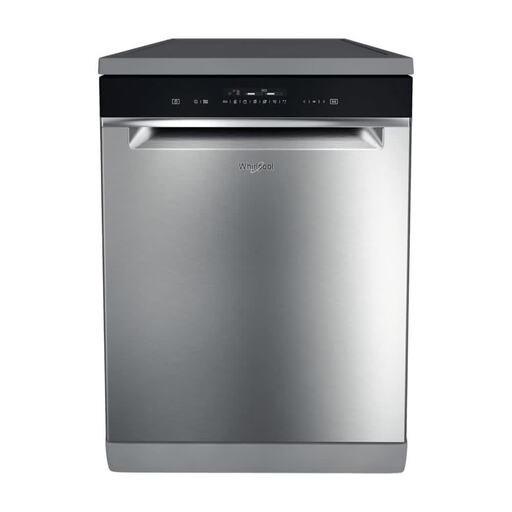 Image unavailable
Whirlpool WFP5O41PLGX, freestanding, 14 place settings
Worth considering if you want a freestanding appliance for washing up after regular meals with several people. The product title lists a width of 60 cm, capacity for 14 place settings and energy rating C; check the basket layout, noise level and connections for the exact model.
View on Joybuy
 Image unavailable
Samsung DW60M6050FS, freestanding, 14 place settings
Worth comparing for shared meals if you want a choice of programmes. The product title lists capacity for 14 place settings and 7 cycles; check the product information for the exact model to confirm the interior layout, noise label and clearance needed to open the door.
View on Joybuy
 Image unavailable
Indesit D2F HK26 S, freestanding, 14 place settings
Worth considering for a 60 cm space and regular loads after meals. The product title lists capacity for 14 place settings and energy rating E; compare the Eco programme duration and noise figures on the label for the exact model.
View on Joybuy
 Image unavailable
Heinrich's HTG 8840 Schwarz, worktop model, 6 place settings
Worth considering if space is tight and six place settings are usually enough; larger shared meals may mean running several cycles. The product title lists 7 programmes, a 24-hour delay start and 47 dB. Check the noise class on the energy label, along with the worktop space and connections required.
View on Joybuy
Frequently asked questions
How can I compare the noise levels of two dishwashers in an open-plan kitchen?
Compare the noise emissions in dB(A) and the noise class shown on the energy label for each exact model. A marketing claim that a dishwasher is quiet is no substitute for these figures; also consider when the living area is in use.
Do the energy label figures apply to every programme?
No. The consumption figures on the energy label are based on the Eco programme. If you plan to use other cycles, compare their specifications too, along with the Eco programme duration, as recommended by the approach to choosing a dishwasher set out by UFC-Que Choisir.
Can you replace a freestanding dishwasher directly with an integrated model?
Not without checking the installation first. An integrated model needs a suitable housing unit and a compatible door panel, as UFC-Que Choisir points out; also measure the space needed to open the door.
When is a compact dishwasher suitable for shared meals?
It is best suited to homes where space is limited and the amount of washing up is fairly modest. UFC-Que Choisir describes worktop models with capacity for 6 place settings as suitable for smaller homes; if serving dishes and pans pile up after meals, check how many loads you will need to run.


