For an open-plan kitchen or one close to your living areas, start by comparing each model’s dB rating and sound class. Then choose a capacity that suits your meals, without overlooking the water and electricity figures on the energy label. According to ADEME, an extra 3 dB is equivalent to almost doubling the noise, making this particularly important if the dishwasher is running while you’re using the living room. Also check the dimensions and installation type. A slimline appliance may need to run more often, while an integrated model isn’t automatically quieter just because it’s built in.
Who are these criteria useful for?
Households sensitive to evening noise
If your dishwasher runs near a living room, study or bedroom that’s in use, check the dB rating and sound class before looking at extra features. Bosch points out that noise levels can vary during filling, washing and draining, so the declared figure doesn’t describe every moment of the cycle.
Households with lots of washing-up
For family meals, dishes and pans, compare the stated place setting capacity with the basket layout and how often you’ll need to run a cycle. UFC-Que Choisir says a slimline model with 9 place settings can suit a small family, although it may need to run every day.
Small kitchens with limited space
If the appliance needs to fit in an alcove or a narrow kitchen, measure the available height, width and depth. Then compare the capacity and noise level of your chosen model: its size alone won’t meet both needs.
Which criteria should you compare?
For an appliance close to your living areas, start with the factor that matters most to your everyday use, then compare models by their energy labels and dimensions.
| Criteria | What to check | Who it matters to |
|---|
| Noise near living areas |
Compare the dB rating and sound class for the exact model, and check the information about the programmes used. |
If I run a cycle while the living room or a bedroom is in use, keeping things quiet matters more than extra features. Around 33% of consumers would prioritise this. |
| Capacity and cycle frequency |
Check the stated place setting capacity and how much room the baskets offer for dishes and pans. |
When meals create lots of washing-up, I want to avoid having to run the dishwasher more often because there isn’t enough room. Capacity would be the top priority for around 27% of consumers. |
| Water and electricity |
Check the kWh per 100 cycles, litres per cycle and Eco programme duration, taking capacity into account. |
If the appliance runs often, I want to compare its consumption rather than relying on the energy rating alone. Around 20% of consumers would prioritise this. |
| Space and fit |
Measure the space; for an integrated model, also check that the housing unit and door panel are compatible. |
In a narrow or already fitted kitchen, the appliance needs to fit without its capacity being unsuited to your meals. This would be the top priority for around 20% of consumers. |
Mistakes to avoid
-
Relying only on the word ‘quiet’
A marketing claim is no substitute for the dB rating and sound class. ADEME notes that a 3 dB difference is equivalent to almost doubling the noise, so it’s worth paying attention to in an open-plan kitchen.
Compare the sound information on each model’s label, and treat a Silence programme as an additional detail.
-
Assuming integrated means quiet
An integrated model suits your kitchen units and the overall look of your kitchen, but that doesn’t tell you how noisy the appliance is.
Once you’ve checked the housing unit and door panel, compare the dB ratings and sound classes of the integrated models you’re considering.
-
Choosing a narrower model without reconsidering capacity
A 45 cm model may suit a space constraint, but a smaller capacity could mean running more cycles. UFC-Que Choisir notes that a 9-place-setting model could be used daily by a small family.
Think about how much washing-up your meals create, especially larger dishes, before choosing between sizes.
-
Comparing only the energy rating
The energy rating alone doesn’t tell you how much water the appliance uses, how much it holds or how noisy it might be in a living area.
Also check the kWh per 100 cycles, litres per cycle, Eco programme duration and sound class on the label.
Brands to consider
Bosch
The range includes 45 cm and 60 cm freestanding appliances, as well as integrated models.
- Bosch lists 42 dB, sound class B and 9,0 L per Eco cycle for the 60 cm SMS4EMC25E.
- These specifications apply to this model only. The brand’s quietness claims don’t replace the label for the appliance you choose.
Miele
The brand offers fully integrated appliances, among other options, for fitted kitchens.
- Miele lists 41 dB and 8,4 L per Eco cycle for the G 7790 SCVi AutoDos K2O.
- These figures apply to this specific model; check its dimensions and capacity are right for your kitchen too.
Beko
Consider the 60 cm freestanding models if capacity is an important factor.
- Examples in this range include models with up to 15 place settings and one listed at 41 dB(A).
- Specifications vary by model, so compare the capacity, noise level and consumption figures on its product details and label.
Dishwashers by installation type
This selection of Joybuy models includes freestanding and integrated appliances. For a kitchen close to your living areas, compare them by the available space, capacity and sound information for each model.
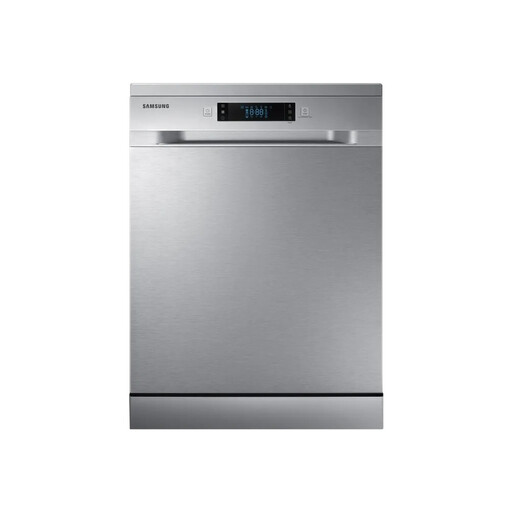 Image unavailable
Samsung DW60M6050FS, freestanding, 14 place settings
Worth considering for larger loads in a 60 cm space. The title lists 14 place settings and 7 programmes. Before choosing when to run it, check the label for noise, consumption and Eco programme duration.
View on Joybuy
 Image unavailable
Hotpoint H4FD641A, freestanding, 14 place settings
Consider this if you’re looking for 14 place settings in a 60 cm freestanding model. The title lists 41 dB; compare this with the model’s sound class and other figures on its label.
View on Joybuy
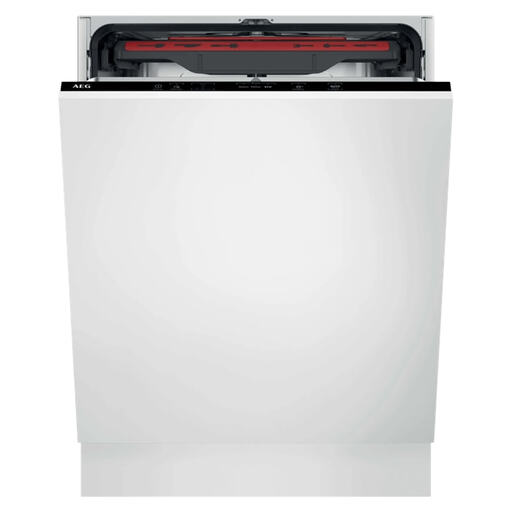 Image unavailable
AEG FSB34707Z, fully integrated, 14 place settings
For a kitchen designed around a fully integrated appliance, with a stated capacity of 14 place settings. The title lists 60 cm, but the description mentions 68 cm. Confirm the exact dimensions and check it’s compatible with your housing unit before buying.
View on Joybuy
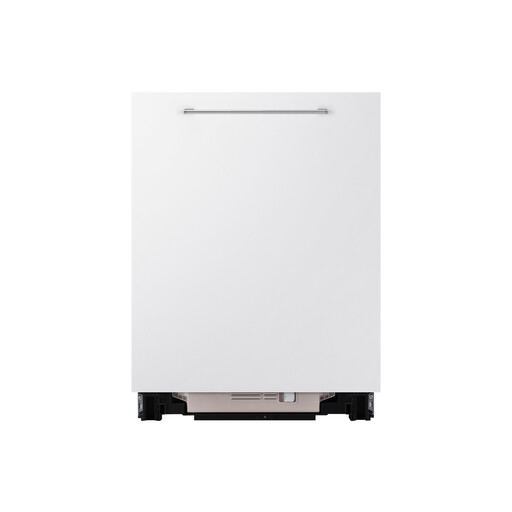 Image unavailable
Samsung DW80H72YBB0U1, integrated, 13 place settings
Worth considering for a fitted kitchen if 13 place settings suit the size of your meals. The title lists a 60 cm model; check the housing unit dimensions and distinguish the overall noise level from that of the Extra Silence programme before planning to run cycles near occupied rooms.
View on Joybuy
 Image unavailable
Indesit D2F HK26 S, freestanding, 14 place settings
For 14-place-setting loads in a 60 cm space. The delay start can help you choose when to run a cycle, but compare the stated noise level of 46 dB and sound class C with the level of quiet you need at home.
View on Joybuy
Frequently asked questions
Should you check the dB rating or sound class first?
Check both when choosing a dishwasher for an open-plan kitchen. The dB rating shows the declared noise level, while the sound class helps you compare models. ADEME notes that classes A and B indicate particularly quiet appliances.
Does a 3 dB difference matter in a living area?
Yes. According to ADEME, an extra 3 dB is equivalent to almost doubling the noise. This doesn’t predict how disruptive it will feel in every home, but it’s worth checking if your dishwasher runs near the living room or bedrooms.
Does the stated noise level apply to every stage of the cycle?
No. Bosch says noise levels can vary during washing, drying, filling and draining. If you plan to use the dishwasher in the evening, also check the manual and the information for the programmes you intend to use.
How do you compare capacity, water and electricity use?
Check the place setting capacity, kWh per 100 cycles and litres per cycle together on the energy label. Also check the Eco programme duration, as it can affect when you choose to run the dishwasher, especially when your living areas are in use.


