People without a suitable external duct
If ducted extraction isn’t possible in your home, check that your chosen cooker hood can work in recirculation mode and find out which kit and filters are compatible with its model number.


For a renovated or open-plan kitchen, first choose between ducted extraction and recirculation, based on what your home allows. Then pick a style that suits the position of your hob. Ducted extraction requires a dedicated duct and may mean getting approval before work begins. With recirculation, you’ll need to check that the hood, kit and filters are compatible, and factor in filter maintenance. In either case, compare noise levels and extraction rates for the mode you plan to use.
If ducted extraction isn’t possible in your home, check that your chosen cooker hood can work in recirculation mode and find out which kit and filters are compatible with its model number.
In an open-plan living space, compare the extraction rate and noise level for the installation mode you plan to use. A hood’s style won’t tell you how it performs.
Before choosing a ducted hood that requires a new opening, check which planning requirements apply. Depending on your circumstances, you may also need approval for work affecting communal areas or permission from your landlord. Service Public and ANIL explain how requirements vary according to the work and property involved.
Choose how the air will be treated before you decide on a style. A wall-mounted, island or built-in cooker hood should then suit the position of your hob.
Consider this if: your home has a dedicated external duct, or it’s possible to install one.
Bear in mind: you’ll need to plan the duct route. Before making an opening, check the requirements that apply, particularly if the work affects the outside of the building or communal areas.
Consider this if: ducted extraction isn’t possible, and you have a cooker hood and kit that are compatible with recirculation.
Bear in mind: filtered air is returned to the room, and charcoal filters need cleaning or replacing, depending on their model number.
| What to consider | What to check | Your needs |
|---|---|---|
| Installation mode | Check whether there’s a dedicated external duct, or confirm that the cooker hood is specifically compatible with recirculation. Elica states that not all its cooker hoods can be converted from one mode to the other. | I want to choose a mode that will work in my home before settling on a model. |
| Odours and grease | Check the figures for your intended mode and read the grease-filter care instructions. If you’re using recirculation, check the charcoal filter model number too. | In an open-plan kitchen, cooking smells can spread straight into the living space. |
| Noise and extraction rate | Compare figures measured in the same mode and at a similar speed. UFC-Que Choisir’s test protocol measures extraction rate with a charcoal filter in recirculation mode and without one in ducted mode. | I want to be able to chat while cooking, and to compare figures for the same mode. |
| Filters | Find out which kit and filters are compatible, and check the care instructions for their specific model numbers. Make sure you know whether charcoal filters are disposable or regenerable. | If I choose recirculation, I want to be able to plan filter maintenance. |
| Positioning | Measure the available space on the wall, above an island or inside the planned cabinet. For a built-in hood, check the installation dimensions, not just the stated width. | My new kitchen layout needs to accommodate the hood without getting in the way of the units or hob. |
A cooker hood that looks right in your kitchen might not be compatible with the mode your home requires or the cabinet you have planned.
First check whether ducted extraction is possible, then confirm the installation mode and dimensions in the product documentation.
The charcoal filter used in recirculation changes the test setup. UFC-Que Choisir’s protocol distinguishes between the two modes, and Electrolux also publishes mode-specific figures for its LFG517X hood.
To compare noise and extraction rates, use figures for the mode you’ll actually use and for similar speeds.
In recirculation mode, the filter type and model number determine how it needs to be cared for. Elica gives different lifespans for its disposable and regenerable filters, depending on the product.
Note the compatible filter’s model number, check that it’s available, and follow the instructions for care or replacement.
UFC-Que Choisir says that a ducted cooker hood must have its own dedicated duct. Its guide advises against connecting one to a mechanical ventilation system or chimney because of the risks involved.
Consider installing a dedicated duct or choosing a cooker hood compatible with recirculation. Have the project assessed if a duct needs to be installed.
Bosch’s French website features a range of cooker hood styles and recirculation accessories.
Elica offers cooker hoods for both installation modes, as well as disposable and regenerable charcoal filters.
Electrolux’s French website features built-in hood units, among other products.
These wall-mounted models are designed for hobs positioned against a wall. For each one, check the available space and the figures for the mode you plan to use, whether ducted extraction or recirculation.
 Image unavailable
Designed for wall-mounted installation, this model is listed as suitable for both ducted extraction and recirculation. The title states an extraction rate of 580 m³/h, three speeds and touch controls. Check the extraction rate and noise level for the mode you choose. Before installing in recirculation mode, confirm whether the package includes CBCF055 filters.
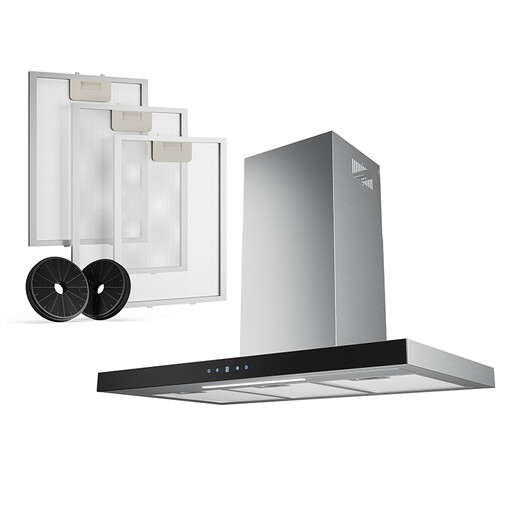 Image unavailable
At 90 cm wide, this model requires you to check the space above your hob. The title lists ducted extraction and recirculation, an extraction rate of 564 m³/h and an included charcoal filter. Check the noise level and extraction rate for your chosen mode, as well as the filter model number for maintenance.
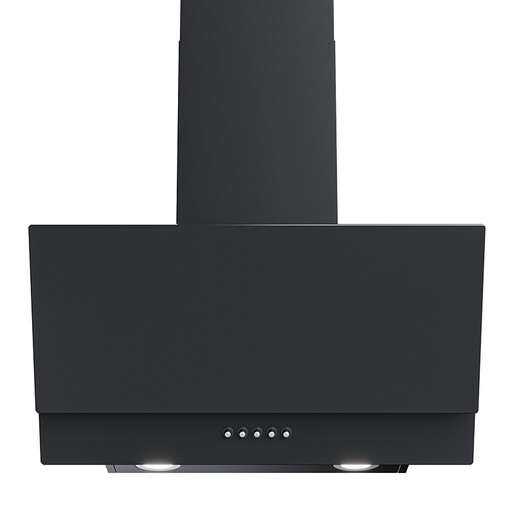 Image unavailable
This 60 cm wall-mounted model is listed as suitable for ducted extraction and recirculation. The title states an extraction rate of 300 m³/h and an included charcoal filter. Check the extraction rate and noise level for your installation mode, then confirm the filter model number and care instructions.
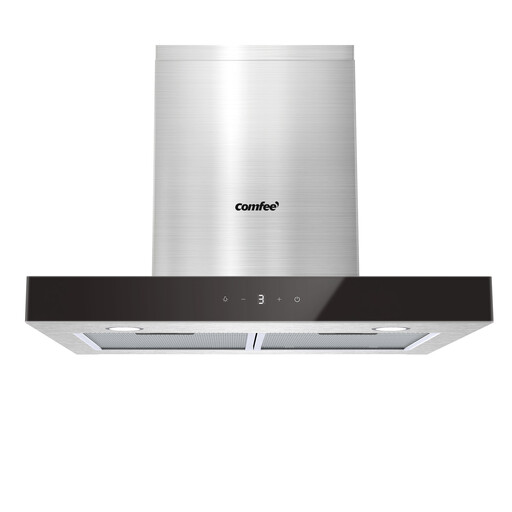 Image unavailable
This wall-mounted cooker hood is listed as suitable for ducted extraction and recirculation, with an extraction rate of 650 m³/h and gesture and touch controls stated in the title. Check the extraction rate and noise level for your chosen mode. For recirculation, confirm the model number of the compatible charcoal filter and whether it’s included in the package.
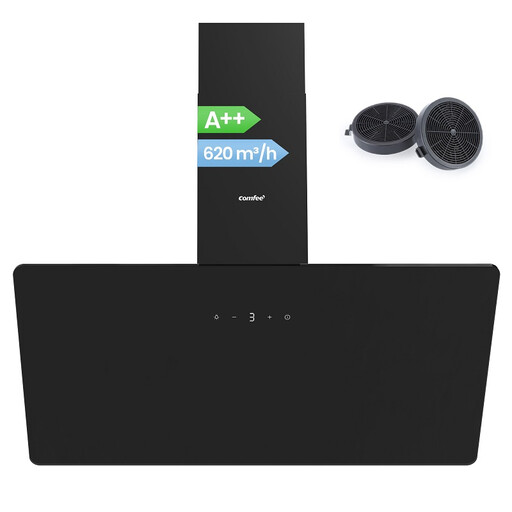 Image unavailable
If your hob is against a wall, check you have enough space for this 90 cm model. The title lists ducted extraction and recirculation, an extraction rate of 620 m³/h, 59 dB and four speeds, without specifying which mode the figures apply to. Check the figures for your setup and find out which charcoal filter you’ll need for recirculation.
Check which requirements apply before choosing a ducted cooker hood. In France, Service Public states that changes to a building’s external appearance may require a prior declaration. Discuss your specific plans with your local council, particularly if the property is in a protected area.
According to ANIL, a project affecting communal areas or building equipment may need approval from the general meeting of co-owners. Before making an opening, ask the building manager to review the proposed route and work. The requirements depend on the nature of the work.
ANIL says that written permission from the landlord is required for work that alters the property or its equipment. Ask for permission before considering making an opening or installing a duct.
Not if it’s a ducted cooker hood. UFC-Que Choisir says its duct must be used exclusively for this purpose, and that connecting it to a mechanical ventilation system or chimney is prohibited. Consider installing a dedicated duct or choosing a model compatible with recirculation.
Follow the instructions for your cooker hood and filters. How often they need attention depends on their model number and type. Elica recommends replacing its disposable CFC0141497 filter every 3 to 4 months, according to the instructions, and replacing its regenerable CFC0166361 filter every 2 years. These recommendations don’t apply to every model.