First, check whether you can install an external duct in your home: an extractor hood with external extraction sends the air it draws outside, while a recirculating hood filters the air and returns it to the room, and needs suitable filters. Then choose a style that suits the position of your hob, and compare extraction rates and noise levels using the same operating mode and similar speeds.
Who is this choice for?
Households that often cook near the living area
In an open-plan living space, consider how well the hood captures grease and odours, as well as how noisy it is at the speed you’ll use. UFC-Que Choisir’s testing protocol measures performance separately in extraction and recirculation modes.
People without an obvious route to the outside
Before choosing a hood with external extraction, have the duct route and any proposed work assessed. If this type of installation isn’t suitable for your home, check that a recirculating hood accepts the filters specified for its model.
Projects with an island or bespoke cabinetry
The position of your hob determines which styles are worth considering. Measure the ceiling or cabinetry, allow space for ducting and make sure you can access the filters before choosing a ceiling-mounted, built-in or hob-integrated hood.
What should you check before buying?
Start with the airflow route and the position of your hob. These will rule out unsuitable configurations before you even compare the figures on product specifications.
External extraction
Consider this if: you can install an outlet to the outside without compromising ventilation in your home.
What to bear in mind: check the duct, route to the outside and any necessary permissions before you buy.
Recirculation
Consider this if: an external outlet isn’t suitable for your home and the hood supports recirculation.
What to bear in mind: filtered air returns to the room. The filters need maintenance, and your home still needs to be ventilated.
| Priority | What to check | What I need |
|---|
| Installation |
Check the duct route, the status of any existing duct and the work required. If you’re planning an external opening or work to communal areas, check what permissions apply to your home with the relevant people. |
I don’t want to choose a hood with external extraction before finding out whether an outlet can be installed in my home. |
| Filtration |
For recirculation, check which kits and filters are compatible with the model, whether they’re easy to access and what maintenance they need. Bosch notes that its kits aren’t universal. |
If the air is returned to the kitchen, I need to be able to maintain the filters without neglecting ventilation in my home. |
| Capture performance |
Compare grease capture results and, for recirculation, odour reduction results using the same testing protocol. UFC-Que Choisir measures these separately from airflow rate. |
Odours and steam shouldn’t become a nuisance in the living area. A maximum airflow rate on its own doesn’t tell me whether they will. |
| Noise and airflow |
Check the figures for the speed and operating mode you’re considering. Compare like-for-like acoustic measurements: sound power and sound pressure aren’t interchangeable. |
I want to be able to chat in the room while cooking, so I won’t judge noise levels on the intensive setting alone. |
| Space and fit |
Check the hob width against the installation dimensions in the manual. For an island, check the ceiling fixing; for a venting hob, check the cut-out and the space available in the base unit. |
My hob is on an island or built into a specific unit, so I need a style that will actually fit my kitchen. |
What mistakes should you avoid?
-
Buying a hood with external extraction before checking the outlet
A hood that suits your hob may still be impossible to install as planned if the duct route or the work required causes a problem. ANIL notes that an opening which changes the external appearance of a building may require prior planning permission, while work affecting communal areas or shared building equipment is subject to collective decisions.
Before choosing a model, confirm the duct route, which parts of the building are affected and what permissions apply to your home.
-
Assuming recirculation is maintenance-free
The air is filtered and returned to the room. Recirculation doesn’t replace the general, continuous ventilation required in homes under the French Order of 24 March 1982.
Check which kit is compatible with the model, what type of odour filter it uses and how to clean or replace it.
The initial installation kit and regular filter maintenance are part of the ongoing requirements.
-
Comparing maximum figures only
Published airflow and noise figures may relate to different speeds or operating modes. UFC-Que Choisir measures airflow separately in extraction and recirculation modes.
When comparing two models, look at figures for the intended mode and similar speeds, then check the available capture performance results.
-
Choosing a style before taking measurements
A ceiling-mounted hood needs a suitable fixing; a venting hob takes up space beneath the cooking surface; and an under-cabinet hood needs to leave the filters accessible.
Measure the hob, ceiling and cabinetry, then check the installation distances and technical space specified in the model’s manual.
Which brands should you consider for your project?
These examples showcase styles worth considering. The features mentioned apply to the specific models listed, not every hood from each brand.
Bosch
Bosch wall-mounted hoods offer extraction and recirculation options, depending on the model.
- According to its product information, the DWK81AN20 is an 80 cm wall-mounted hood that can be used in both modes. Bosch states an airflow rate of 432 m³/h at maximum extraction and 915 m³/h on intensive mode.
- For recirculation, check which kit and filters are compatible with the model you choose.
Novy
The Phantom Cable 7530 is an example of a ceiling-mounted island hood with recirculation.
- For this 130 cm model, Novy states that a Monoblock filter is included as standard and gives a recirculation airflow range of 280 to 501 m³/h, depending on the speed.
- Check the fixing dimensions and filter maintenance requirements for your installation. The details for this model don’t represent the entire range.
Elica
The NikolaTesla Fit combines an induction hob with integrated extraction, so there’s no hood above the cooking area.
- Elica describes it as suitable for 60 cm cabinets and states a height of 19.4 cm.
- Check the space in the base unit, the airflow route and whether it’s compatible with your planned hob installation.
Which Joybuy options are right for this?
These models are suited to a hob against a wall or a project involving a hob with integrated extraction. Compare their installation types and dimensions with your kitchen before weighing up their stated features.
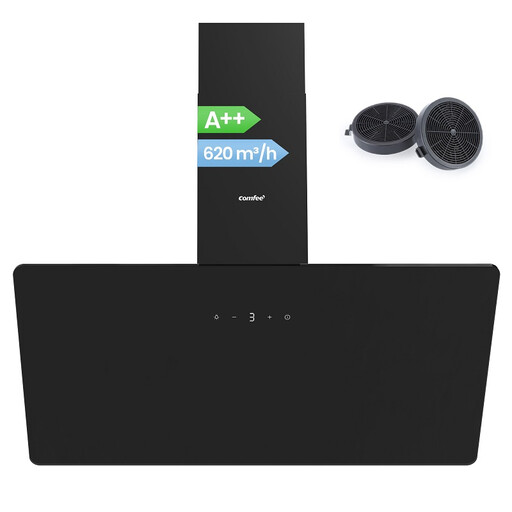 Image unavailable
Comfee' CH90J64ET4A2B2-EU, 90 cm angled cooker hood
For a hob against a wall, this hood offers both extraction and recirculation. Its product information lists four speeds, a maximum airflow rate of 620 m³/h and a noise level of 59 dB. Check the figures for the mode and speed you’ll use, as well as the odour filter required for recirculation.
View on Joybuy
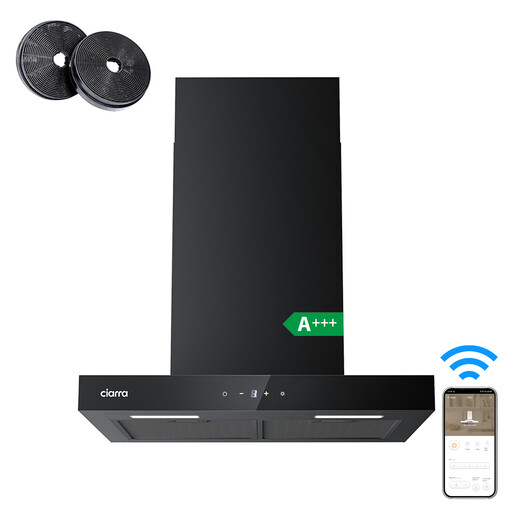 Image unavailable
Ciarra, 60 cm recirculating wall-mounted cooker hood
This 60 cm wall-mounted style is worth considering if it matches the width of your hob. The product title lists four speeds with a booster and an airflow rate of 650 m³/h. Check the operating levels for this model and its noise figures for the mode you intend to use.
View on Joybuy
 Image unavailable
Ciarra CBCS6765B, 60 cm angled cooker hood
This 60 cm angled wall-mounted hood offers extraction and recirculation, with three speeds and an airflow rate of 580 m³/h. Before choosing it for an open-plan kitchen, check the noise level in the intended mode, the installation dimensions and the exact grease filter configuration.
View on Joybuy
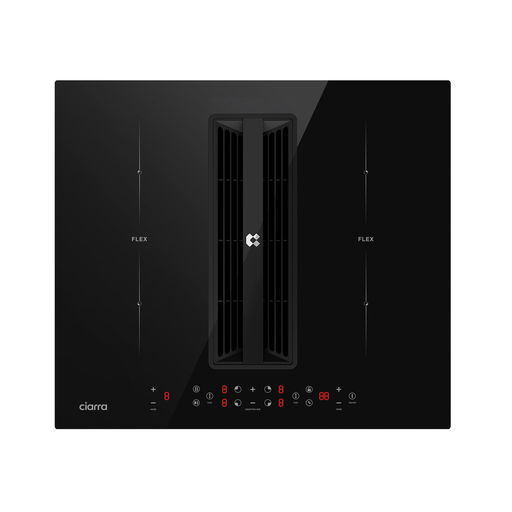 Image unavailable
Ciarra ONE CBBEH594BBFF, 59 cm venting hob
This induction hob has integrated extraction, making it an option if you don’t want a hood above the cooking area. Check how it expels air, how much space it needs in the cabinet and its installation requirements. The product name indicates that you’ll need to allow for CBEHKIT accessories with the hob.
View on Joybuy
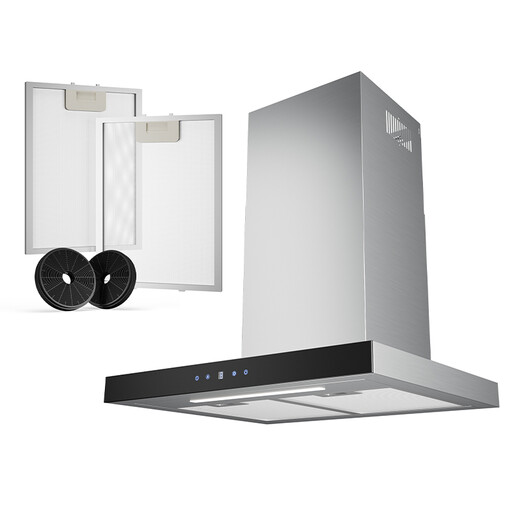 Image unavailable
Heinrich's HDU 7631 IX, 60 cm wall-mounted cooker hood
For a wall-mounted hob, this 60 cm hood offers extraction and recirculation, and is listed as including a charcoal filter. Its stated airflow rate of 611 m³/h is a quoted figure, so check which mode it applies to and consult the noise data relevant to how you’ll use it.
View on Joybuy
Frequently asked questions
Does a recirculating hood replace ventilation in the home?
No. It filters the air it draws in, then returns it to the room. The French Order of 24 March 1982 requires general, continuous ventilation in homes. Keep your home ventilated and follow the cooker hood’s filter maintenance instructions.
Can you drill through an external wall to install a hood with external extraction?
First, check the rules that apply to your building and the status of the wall. ANIL notes that an opening which changes the external appearance may require prior planning permission. In a leasehold building, work affecting communal areas or shared equipment is subject to collective decisions. Also check that you’re allowed to use any existing duct.
How do you compare the noise levels of two cooker hoods?
Compare the same acoustic measurement, in the same operating mode and at similar speeds. A figure for intensive mode alone won’t tell you how noisy the hood will be during everyday cooking; sound pressure and sound power can’t be compared directly.
What maintenance does a recirculating hood need?
Clean the grease filter and maintain the odour filter according to the manual for your model. Bosch specifies different schedules for its standard filters and CleanAir modules; Novy also notes that filter life depends on the type of filter. Check the instructions and schedule for your specific model.


