People without a usable external duct
If your kitchen opens onto the living room and there’s no viable way to vent air outside, check that the model supports recirculation, and find out which kit and filter references you’ll need.


For an open-plan kitchen, choose an extractor hood that vents outside if there’s a suitable nearby dedicated duct and you have obtained any necessary permissions. Otherwise, look for a hood that supports recirculation, along with the required kit and filters. In either case, make sure the model’s specifications suit your installation and cooking habits. As ADEME points out, an extractor hood is no substitute for your home’s ventilation or airing the room after cooking.
If your kitchen opens onto the living room and there’s no viable way to vent air outside, check that the model supports recirculation, and find out which kit and filter references you’ll need.
Before comparing hoods, confirm that a suitable duct is available and check whether your home requires any permissions. ADEME states that a hood which vents air outside needs a dedicated duct nearby.
In an open-plan living space, compare the stated noise level with the speeds you expect to use, and check what maintenance the chosen model’s filters require.
First, decide which installation mode is right for your home. Whatever type of hood you choose, you’ll still need to maintain your existing ventilation and air the room, as ADEME reminds us.
Consider it if: the captured air can be directed outside through a nearby dedicated duct, in line with ADEME’s guidance.
Bear in mind: the project depends on your home’s layout and may require permission before work begins.
Consider it if: external extraction isn’t an option and the hood supports recirculation.
Bear in mind: filtered air is returned to the room. Compatible charcoal filters need maintenance or replacement, depending on their reference, according to Bosch and Electrolux.
| Criterion | What to check before buying | Who should consider this? |
|---|---|---|
| Suitability for your home | For external extraction, confirm that a suitable nearby dedicated duct is available. If you rent or live in a flat with shared ownership, check which permissions apply to your project. | If I can’t connect the hood as intended, its specifications won’t make installation possible; around 42% of consumers would prioritise whether installation is feasible. |
| Odours and steam | Check the operating mode, the right width for your cooking area and the stated extraction rates at the speeds you’re comparing. | When I cook near the living room, my main aim is to limit the spread of odours and steam; around 33% of consumers would share this priority. |
| Noise and maintenance | Compare the noise level at the speed you expect to use, and check the instructions for maintaining compatible filters. | If I cook regularly in a shared living space, I want an acceptable noise level and maintenance I can keep up with; around 25% of consumers would put these considerations first. |
An extractor hood works at the cooking area. It doesn’t replace whole-home ventilation. ADEME advises keeping your mechanical ventilation system (VMC) running and airing the room after cooking.
Before you buy, make sure air inlets and vents aren’t blocked. Then use the hood while cooking, alongside your home’s ventilation system.
ADEME states that venting air outside requires a nearby dedicated duct. Work that alters a rented home or affects shared property may also require permission.
Confirm that a duct is available, then check the rules that apply to your project before choosing a hood. In particular, ANIL recommends consulting the shared-ownership regulations if your project may affect them.
According to Bosch and Electrolux, recirculation uses charcoal filters, and maintenance requirements depend on the filter reference. Elica says a clogged filter can reduce extraction rate and increase noise.
Find the compatible filter reference, check whether the required kit is included with the model, and follow the maintenance instructions in the manual.
Depending on the filter type, allow for periodic replacements or set aside time to clean or regenerate it.
For an open-plan kitchen, the noise level at the speed you’ll use, the width of the hood and its installation mode all matter too. Whirlpool’s model specifications show that stated extraction rates and noise levels vary from one reference to another.
Compare the figures given at equivalent speeds for models that are genuinely suitable for your installation.
The details below relate to the ranges and filters described by the manufacturers. Always check the reference of the hood you’re considering.
Worth considering if you want to identify the exact filters compatible with an extraction or recirculation set-up.
Worth considering if you’re looking for a recirculating hood and can follow the maintenance instructions for your chosen filter.
Worth considering, provided you check that the hood is compatible with its replacement or regenerable filters.
Worth considering model by model to compare the stated operating modes, dimensions, extraction rate and noise level.
These Joybuy models give you a choice of 60 or 90 cm wall-mounted hoods, depending on the space available and the installation mode you’re considering. Before choosing a model for recirculation, confirm which kit and compatible filters it needs. For external extraction, first check that a suitable duct is available and whether you need any permissions.
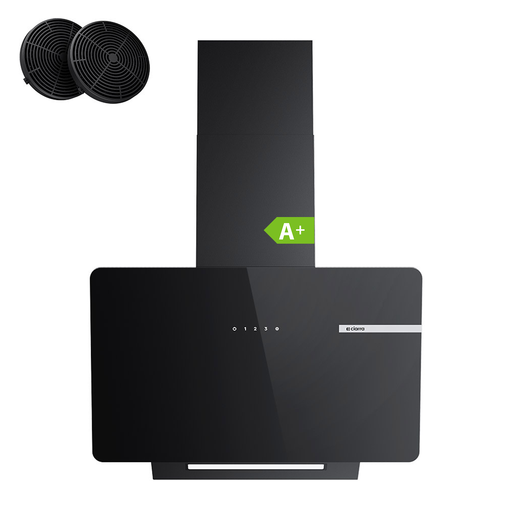 Image unavailable
Worth considering for a 60 cm wall-mounted installation. The product name lists LED lighting and a dual-airflow system. If you’re planning to use recirculation, confirm which kit is needed and whether CBCF055*2 filters are included before buying.
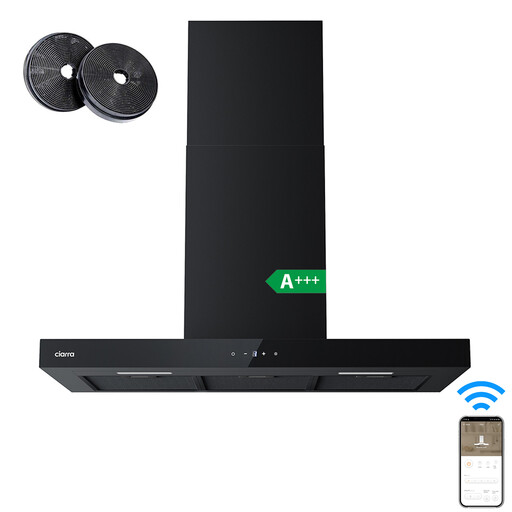 Image unavailable
Worth considering if your cooking area and available space call for a 90 cm width. The product title lists four speeds with a boost function and a maximum extraction rate of 650 m³/h. Check that the CBCF003 filters are compatible and find out how to maintain them for recirculation.
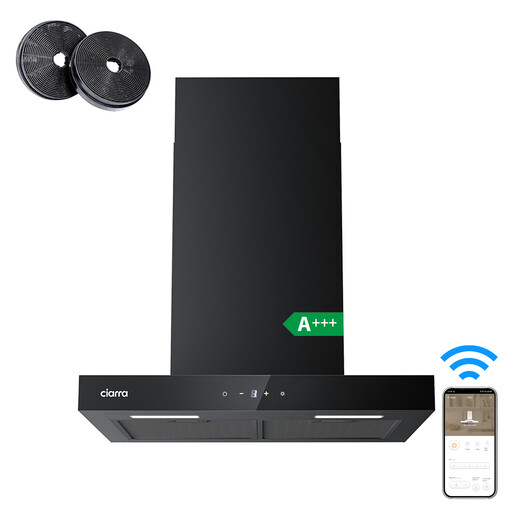 Image unavailable
Worth considering for a 60 cm wall-mounted space if you’re planning to use recirculation. The product title lists four speeds with a boost function and a maximum extraction rate of 650 m³/h. Check the manual for compatible CBCF003 filters and their maintenance requirements.
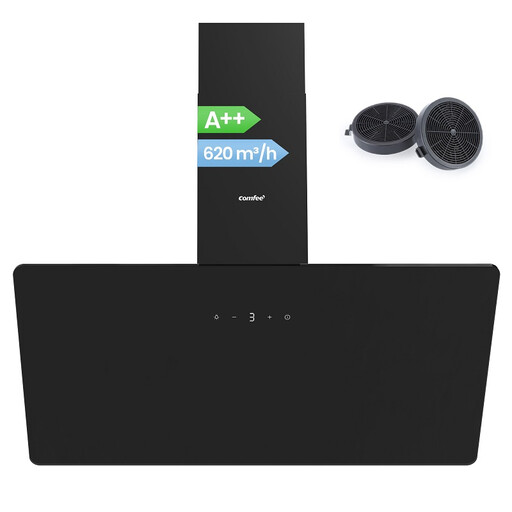 Image unavailable
Worth considering if your installation suits a 90 cm angled hood and you’ve confirmed which operating mode you’ll use. The product title lists external extraction and recirculation, four speeds, an extraction rate of 620 m³/h and a noise level of 59 dB. Check which speed the noise figure applies to and which charcoal filter is needed for recirculation.
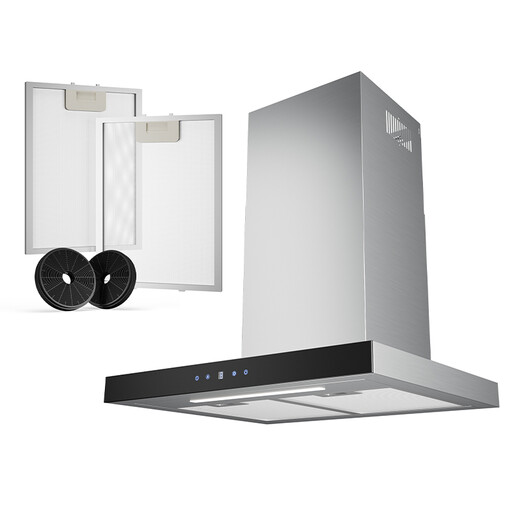 Image unavailable
Worth considering for a 60 cm wall-mounted installation, provided your home is suitable for the chosen operating mode. The product title lists external extraction and recirculation, an extraction rate of 611 m³/h and an included charcoal filter. Find out the replacement filter reference and check the product details or manual to compare noise levels at the speeds you’ll use.
No. ADEME recommends keeping your VMC running, leaving air inlets and vents unobstructed, and airing the room after cooking. Use the hood while cooking, alongside these measures.
Recirculation is an option if external extraction isn’t possible. Check that the hood supports this mode, then confirm which kit is needed and the exact references of compatible charcoal filters.
Follow the instructions for your model and filter: the method and frequency vary depending on their references. As a guide for some Bosch standard filters only, the brand states that activated charcoal filters last 6 to 12 months. This doesn’t apply to all recirculation filters.
Check whether the planned work would alter the rented property or its fittings. Article 7 of the law of 6 July 1989, published by Légifrance, requires the landlord’s written permission in this situation. Check the details of your project before making any changes.
Yes. If the project affects a shared area or building equipment, for example, approval from the general meeting may be required. ANIL advises checking the shared-ownership regulations to find out what may be affected before choosing an extraction installation.