
Livraison le jour même ou le lendemain

Qualité garantie

Débloquez vos offres de bienvenue: Livraison GRATUITE | Jusqu'à -80 % | 30 jours d'essai gratuits à JoyPlus
Téléchargez l'application
Open-ear wireless earbuds have won over runners, cyclists and anyone who wants to listen to music or podcasts without being cut off from the outside world. Their design lets surrounding sounds through: a bicycle bell, a station announcement or simply a conversation.
Despite the marketing promises, there are some limitations worth knowing about. Before buying open-ear Bluetooth earbuds, it is best to check their fit, water resistance and real-world battery life. Here are the criteria to consider when comparing models, rather than relying solely on their specification sheet.
An open-ear model does not block out external noise. That is, after all, the whole point of the concept. The trade-off is that music may seem less prominent in a noisy environment. Even with open earbuds, setting the volume too high can mask some of the surrounding sounds.
The term ‘bone conduction’ does not necessarily describe the same technology as an air-conduction earbud. Bone-conduction models transmit vibrations through the area near the ear, while other open-ear earbuds direct sound towards the entrance of the ear canal without blocking it.
A total battery life of 25 or 36 hours generally includes the extra charges provided by the case. You should therefore distinguish between battery life per charge and total battery life with the case. For a long outing, the first figure is the one that really matters.
Also consider charging time, the type of connector and whether fast charging is available. A model that can provide several hours of listening after just a few minutes of charging can be extremely convenient for everyday use, even if its total battery life is similar to that of its competitors.
The IPX4, IPX5, IPX7 and IPX8 ratings do not guarantee the same level of protection:
Even when a high rating is advertised, the charging case may not be protected to the same level. For swimming, you also need to consider Bluetooth: its signals travel very poorly through water. A model with internal memory for playing audio files may therefore be more suitable than a standard Bluetooth headset.
Earbuds fitted with an ear hook or designed in a clip format distribute pressure around the ear instead of resting solely inside the ear canal. This can be a good option for people who find in-ear tips uncomfortable.
For running or cycling, check the stability of the band or hook, the stated weight and how easy the controls are to access. An overly sensitive touch surface can cause an unintended track change when you adjust the earbud.
Bluetooth earbuds with a microphone make it easy to switch from music to meetings and calls. Ambient-noise reduction applied to the microphones, often known as ENC, can make your voice clearer in a busy location. However, it does not guarantee the same results in windy conditions, near a road or at a railway station.
Multipoint connectivity is useful if you want to keep a smartphone and computer connected at the same time. Nevertheless, check that this feature is specifically mentioned in the product listing: it is not included automatically.
For everyday use, compare these separately:
Earbuds with long battery life are useful for commuting and extended sessions. However, the stated capacity is not the whole story: listening volume, calls and enabled audio features can significantly reduce operating time.
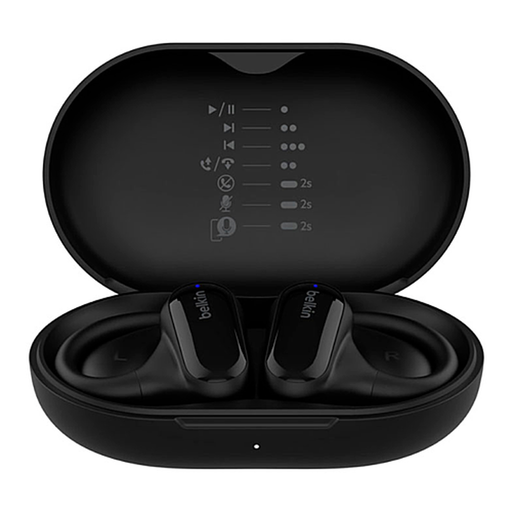
Why this choice suits this profile: this model combines an open-ear design, Bluetooth 5.3 connectivity and simple controls. An accessible introduction to open-ear earbuds for everyday use.
Battery life is clearly separated: 8 hours for the earbuds and 26 hours with the case. The IPX5 rating indicates resistance to splashes, but not immersion.
Bluetooth 5.3, multipoint connectivity, fast USB-C charging and microphones with ENC for calls.
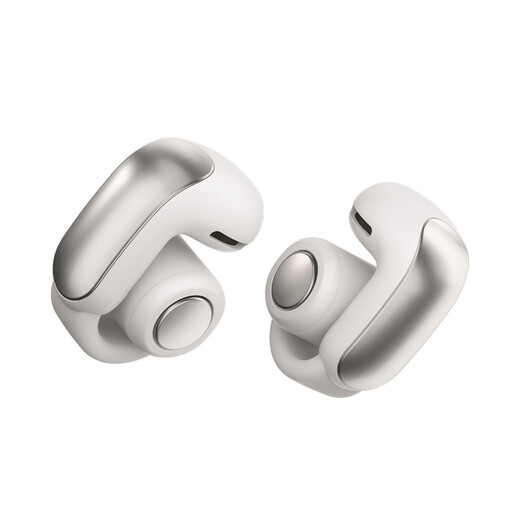
Why this choice suits this profile: its clip design and compatibility with a dedicated app make it a suitable companion for regular use, at work, while travelling and during leisure activities.
The product listing clearly states that there is no noise reduction and announces IPX4 protection. It should therefore not be chosen for immersion or very noisy environments.
Up to 7 hours of listening per charge, 25 hours with the case, flexible hinge and multipoint connectivity.
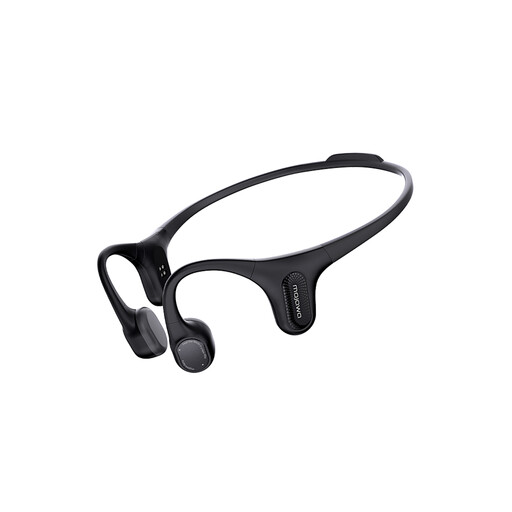
Why this choice suits this profile: its bone-conduction design and sports-focused band can suit running and cycling sessions that demand a secure fit.
The IP67 rating corresponds to temporary immersion at up to 1 metre for 30 minutes. However, the product listing specifies that it is not designed for swimming lengths.
Built-in microphone, open-ear design and IP67 protection for training in the rain or when exposed to perspiration.

Why this choice suits this profile: the product listing states that it has 32 GB of internal memory and IPX8 resistance. These are features worth considering for activities where your phone needs to stay dry and at a distance.
The internal memory reduces reliance on Bluetooth while swimming. Nevertheless, check the exact IPX8 conditions and dry the port before starting to charge.
Stated 32 GB storage, built-in microphone, Bluetooth and a bone-conduction design suited to sport.
We have brought together a complete, real-time updated selection of products that meet these demanding criteria, as well as European safety requirements.
They can be perfectly suitable if they stay securely in place and their protection rating matches the intended use. When cycling, especially on open roads, keep the volume moderate so that you can continue to hear important sounds. The open design improves awareness of your surroundings, but it does not eliminate the risks associated with traffic.
Not necessarily. Check the IP rating, the case’s protection and the manufacturer’s instructions. As Bluetooth is not well suited to transmitting underwater, a model with internal memory that can play music independently will generally be more suitable for the swimming pool.
This depends on how often they are recharged, heat, moisture and the condition of the lithium-ion battery. Avoid extreme temperatures, use a compatible cable and do not dismantle the device. Before buying, also check the warranty and the service conditions stated in the product listing.