
Livraison le jour même ou le lendemain

Qualité garantie

Débloquez vos offres de bienvenue: Livraison GRATUITE | Jusqu'à -80 % | 30 jours d'essai gratuits à JoyPlus
Téléchargez l'application
By the Joybuy editorial team, your tech experts
We're all familiar with in-ear headphones: they often become uncomfortable, creating an unpleasant pressure after just a few hours. For athletes, especially runners and cyclists, completely blocking out ambient sounds is simply dangerous. A new generation of audio devices was born to solve these exact problems: open-ear headphones.
These models, designed to avoid obstructing the ear canal, are an excellent alternative. They let you enjoy your music or podcasts while remaining fully aware of your surroundings. In this guide, we'll break down how these open-ear headphones work and help you find the perfect model for your needs, whether for sports, remote work, or just everyday life.
Before diving into our top picks, here are the criteria to keep in mind to make the right choice.
The main advantage of headphones that don't go inside your ears is, of course, comfort. Unlike in-ear models, they rest gently on or around the ear. There are two main attachment systems:
The choice will depend on your ear shape and the intensity of your activity. An excellent fit is crucial to prevent the headphones from slipping or falling off mid-workout.
Let's be clear: open-ear technology has made giant leaps. Recent models use directional sound to minimise sound leakage and guide audio towards your eardrum, preserving listening privacy. For calls, the presence of multiple microphones and noise-reduction technologies (often AI-enhanced) is an excellent performance indicator. This ensures your voice remains perfectly clear to the person on the other end, even in a noisy environment.
For wireless sports headphones, resistance to sweat and rain is non-negotiable. To gauge this, rely on the IP (Ingress Protection) rating. An IPX4 certification is the bare minimum for splash resistance, while an IP55 rating or higher provides much better protection against dust and water jets. Battery life is also a decisive factor, especially if you're tackling long sports sessions or marathon workdays.
Here are a few models that perfectly illustrate the strengths of open-ear technology.
Highlights
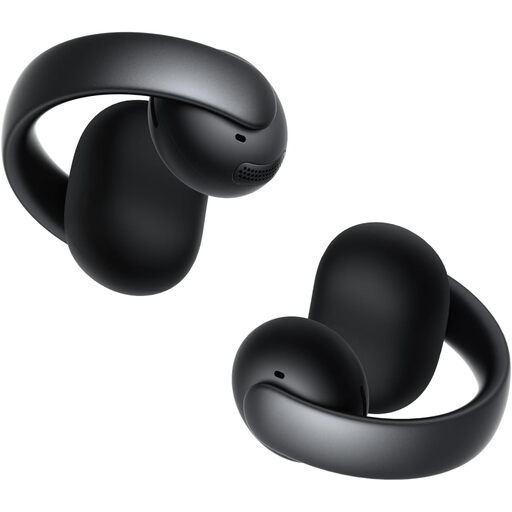
The Soundcore AeroClip excel with a design engineered for long-lasting comfort. Their flexible memory-titanium ear hooks adapt naturally to the contour of your ear without ever applying pressure. This quality was also praised by our colleagues at Frandroid in their feature on open-ear headphones.
Advantages
Who are they for?
For professionals who take back-to-back calls and seek maximum comfort, as well as for athletes (runners, cyclists) who demand a reliable fit and perfect awareness of their surroundings.
Highlights
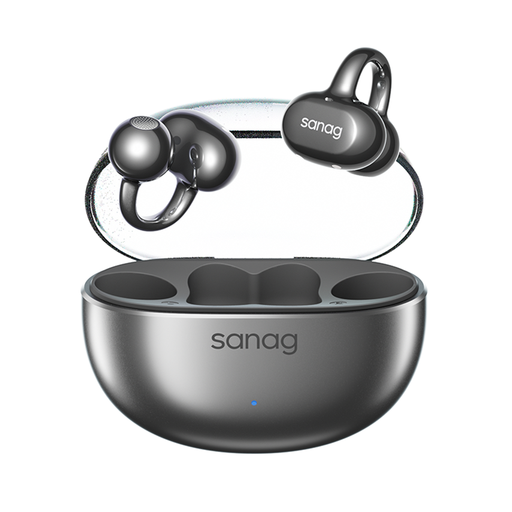
The Sanag S6S Nova feature an ultra-discreet "clip" format. They attach directly to the ear without any hook, making them incredibly lightweight and easy to wear daily. Their open design ensures a comfortable and safe listening experience.
Advantages
Who are they for?
For users looking for an ultra-lightweight and discreet solution to listen to music and take calls without being cut off from the world. Their format is ideal for intermittent use throughout the day.
Highlights
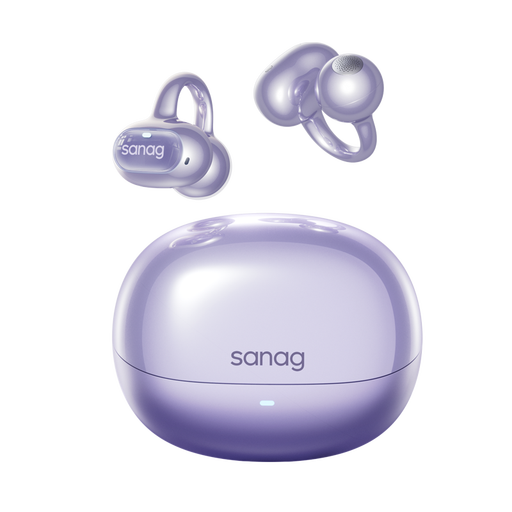
The Sanag S8S Ultra combine the clip-on format with a "suspended" design that conforms to the outer ear, offering enhanced stability for intense activities. Designed with sports in mind, they are built to stay in place, no matter how you move.
Advantages
Who are they for?
Primarily for hardcore athletes and fans of high-impact activities who need headphones that won't budge an inch while allowing them to stay aware of traffic or other people.
Open-ear technology comes in many models, each with its own unique features. If these models don't check all your boxes, know that other formats and functionalities are available.
To discover a wider range, we invite you to explore our complete category of wireless clip-on earbuds.
Discover More Wireless Clip-On Earbuds
Both technologies allow you to listen to music without inserting anything into your ear canal. However, they work differently. Bone conduction headphones transmit sound via vibrations applied to the bones of the skull, just in front of the ear. Open-ear headphones (or air conduction headphones) act like mini-speakers that direct sound towards the ear canal without entering it. The sound from air conduction is often considered more natural and less disorienting.
Yes, and it's one of their primary use cases. Their key advantage is safety: as headphones for cycling or running, they allow you to hear cars, other cyclists, or pedestrians. Furthermore, models designed for sports offer a rock-solid fit and sweat resistance, making them especially practical for physical exertion.
The sound quality of open-ear headphones has improved considerably. While it's true that high-end in-ear models still have the edge with better passive isolation and deeper bass, modern open-ear headphones offer a clear and balanced sound that is perfectly satisfying for daily and sports listening. Enhanced bass technologies and larger drivers are helping to close the performance gap.