
Livraison le jour même ou le lendemain

Qualité garantie

Débloquez vos offres de bienvenue: Livraison GRATUITE | Jusqu'à -80 % | 30 jours d'essai gratuits à JoyPlus
Téléchargez l'application
For many athletes, city dwellers, and professionals, it's a daily dilemma: how do you listen to your music without shutting yourself off from the world? In-ear headphones, while highly effective for isolation, lock you in a bubble that can be uncomfortable, or even dangerous, in certain situations. This is precisely where open-ear headphones offer a prime alternative.
Designed to sit outside the ear canal, they allow you to enjoy your music and podcasts while remaining aware of the world around you. Whether you're a runner mindful of traffic, a parent keeping an ear on your children, or a professional juggling calls, this guide will help you make an informed choice and introduce you to the best models currently available.
Before diving into our selection, let's review the key criteria that will make all the difference in your experience.
Comfort is arguably the greatest strength of open-ear headphones: gone is the intrusive feeling or pressure inside the ear canal. But the fit is just as crucial, especially if you're active. Models with adjustable ear hooks or a neckband guarantee rock-solid stability, making them perfect companions for running or cycling. Also, remember to check their weight: a few grams less can make a huge difference over time!
Nothing is more frustrating than headphones running out of battery in the middle of the day. Battery life is therefore a criterion that should not be overlooked. Consider the battery life of the earbuds themselves, as well as the extra power provided by the charging case. A recent Bluetooth version (like Bluetooth 5.3 or 5.4) ensures a stable connection, optimised power consumption, and low latency—a winning combination for watching videos or making calls seamlessly.
Open-ear technology has made enormous strides. While bass might seem a bit subdued compared to in-ear models, many current options compensate with larger drivers and sound enhancement technologies. Support for demanding codecs like LDAC, which opens the door to Hi-Res Audio, is a real bonus for audiophiles. Finally, some innovative features, like an earbud with an instant translator, can turn your headphones into true personal assistants for your travels or meetings.
Our team has combed through spec sheets and user reviews to bring you models that stand out from the crowd, each with its own unique strengths.
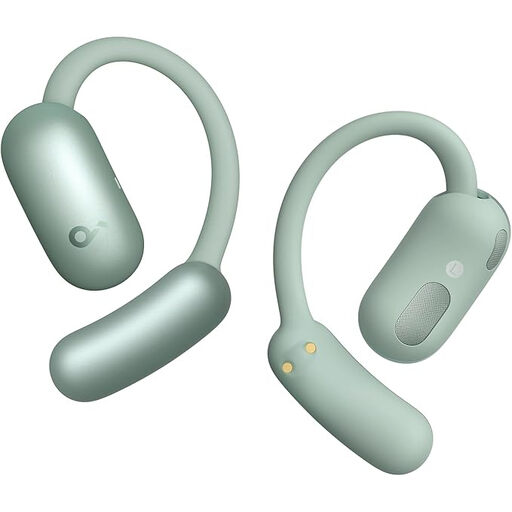
Why It Stands Out: The Soundcore AeroFit 2 establishes itself as an ultra-versatile model and a true powerhouse of technology. Its 4-level adjustable ear hook system promises a near-custom fit, ensuring impeccable comfort and stability regardless of your ear shape. It also packs advanced features that are still rare for this type of headphone.
Advantages:
Who is it for? For tech enthusiasts, travellers, and athletes looking for high-performance, comfortable sports bluetooth headphones and who want much more than just a simple pair of earbuds.
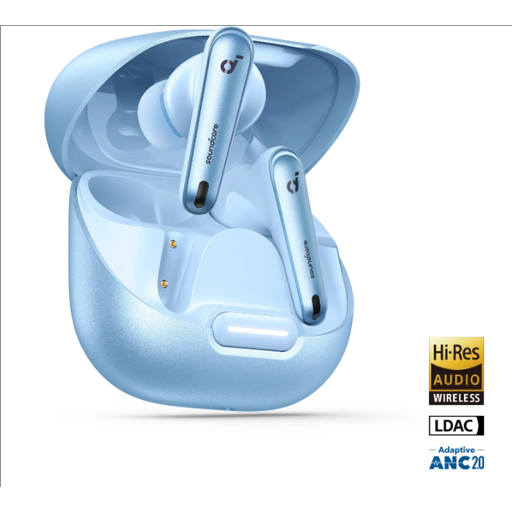
Why It Stands Out: While these are in-ear headphones, the Liberty 4 NC earn their place here as the perfect alternative for those who prioritise total immersion. If your goal is to block out the hustle and bustle of commuting or the open-plan office, their adaptive Active Noise Cancellation (ANC) is formidable.
Advantages:
Who is it for? For users who prioritise immersive sound and effective isolation from ambient noise, whether for concentrating at work, on public transport, or for distraction-free music listening.
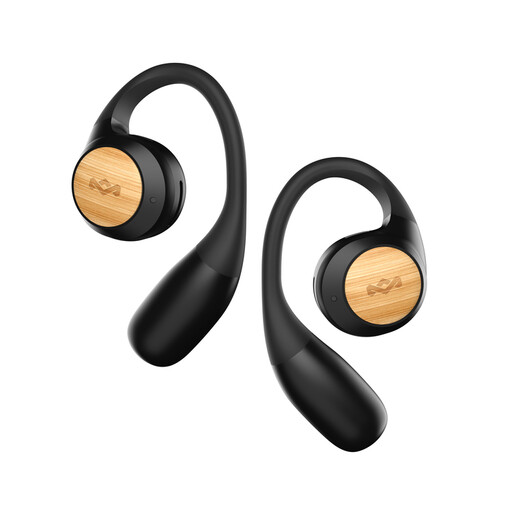
Why It Stands Out: True to its DNA, House of Marley focuses on sustainability. The Liberate model is no exception, featuring a design that blends bamboo and recycled plastic. It's a meaningful choice, combining environmental consciousness and a sleek design with the practical benefits of open-ear headphones.
Advantages:
Who is it for? For those who want to combine ecological awareness with technology, as well as for design lovers seeking simple and effective open-ear headphones for daily life: commutes, calls, podcasts, and more.
Our selection highlights models with distinct profiles, but the headphone market is full of hidden gems. To explore other designs, compare prices, or find specific features, feel free to browse our complete catalogue.
1. Is the audio quality of open-ear headphones comparable to in-ear models? By their very design, open-ear headphones involve a slight trade-off: bass can seem less present because the sound isn't sealed within the ear canal. However, manufacturers have made enormous progress, incorporating directional drivers and sound processing algorithms to deliver a rich and detailed listening experience. For daily listening and most music genres, the quality is more than up to the task, especially on models that support Hi-Res Audio.
2. Are open-ear headphones really suitable for sports? Absolutely. In fact, it's one of their favourite playing fields. Their key advantage is safety: whether you're running or cycling, they allow you to remain aware of traffic, pedestrians, and other potential hazards. Sports-focused models also ensure a rock-solid fit (thanks to hooks or neckbands) and are certified resistant to sweat and rain (via an IP rating, like IP55).
3. Can people around me hear what I'm listening to? This is the question on everyone's mind! Modern models use directional audio technology that channels sound towards your ears, minimising sound leakage as much as possible. At very high volume in a quiet environment, the person right next to you might be able to guess what you're listening to. But under normal listening conditions—whether outdoors, in the office, or on public transport—the effect is virtually non-existent.