
Livraison le jour même ou le lendemain

Qualité garantie

Débloquez vos offres de bienvenue: Livraison GRATUITE | Jusqu'à -80 % | 30 jours d'essai gratuits à JoyPlus
Téléchargez l'application
Running, cycling or working with open-ear wireless earbuds lets you keep your ears clear and stay more aware of conversations, announcements and surrounding sounds. However, this design is not suitable for every situation. Fit, moisture resistance and sound quality can vary considerably from one model to another.
Before buying open-ear earbuds, it is therefore worth looking beyond the marketing claims and checking a few practical features.
Open earbuds generally do not block the ear canal. They therefore do not eliminate outside noise, and you still need to remain vigilant in traffic. At high volume, music can nevertheless drown out a siren, a bicycle bell or an instruction.
Open Bluetooth earbuds are particularly suitable for walking journeys, the office, indoor training or activities where you can remain alert. When cycling or in urban areas, follow the Highway Code and the local rules applicable to using an audio device.
A certification such as IPX4 indicates resistance to splashes, sweat and light rain. It does not mean that the product can be submerged. An IPX5 model will generally withstand water jets better, while an IP67 or IP68 rating offers greater protection in specific conditions, which should be checked in the instructions.
The term “water-resistant” therefore does not mean you can skip drying the earbuds before charging them or protecting the charging case from moisture.
Battery life varies depending on listening volume, connection type, calls and activated audio features. The Bose Ultra Open Earbuds, for example, claim up to 7 hours of listening, but only 4 hours with immersive audio mode. The case then provides several further charges, but you will still need to recharge the set regularly.
For long days, check the battery life of the earbuds and the case separately, as well as whether fast charging is available.
Ear-clip earbuds attach around the outer ear without entering the ear canal. They reduce the feeling of pressure, but their stability depends on the shape of your ear and the flexibility of the hinge.
Bone-conduction headphones are generally positioned near the cheekbones and transmit sound through vibration. Your ears remain clear, with sound reproduction that differs from conventional open earbuds. To choose between these two designs, consider your glasses, cycling helmet and how long you plan to wear them.
For wireless sports earbuds, look for an IP certification clearly stated on the product page. Sweat, rain and dust do not place the same demands on a product. An IPX4 rating may be sufficient for everyday use and moderate training, while frequent outdoor use justifies a higher level of protection.
Certification guarantees neither comfort nor a secure fit. A well-protected device that moves with every stride will still be poorly suited to running.
Earbuds with a microphone are practical for both professional and personal calls. Ambient-noise reduction features on the microphone, such as ENC, work on the voice captured during a call: they do not necessarily reduce the noise you hear.
A multipoint connection lets you keep two devices paired, such as a computer and a smartphone. Physical buttons are often easier to use with gloves or during a workout, while touch controls may require greater precision.
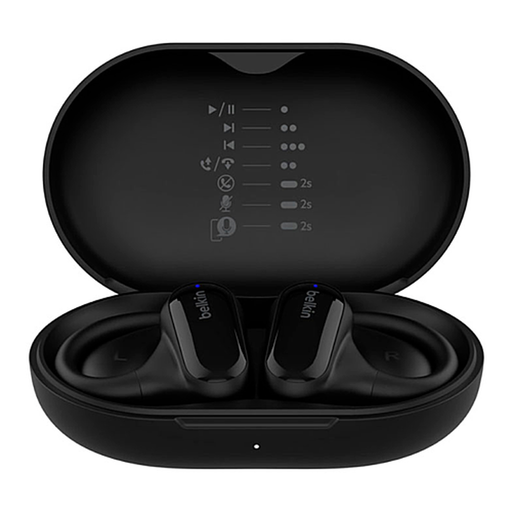
Why this choice suits this profile : Its open design is ideal for people discovering this format who want to listen to music at work, go for walks or train without in-ear tips.
The product page clearly states the IPX5 protection rating and distinguishes splash resistance from immersion protection. Battery life is also detailed: 8 hours for the earbuds and 26 hours with the case.
Bluetooth 5.3, multipoint connectivity, stated fast charging and microphones with ENC for calls.
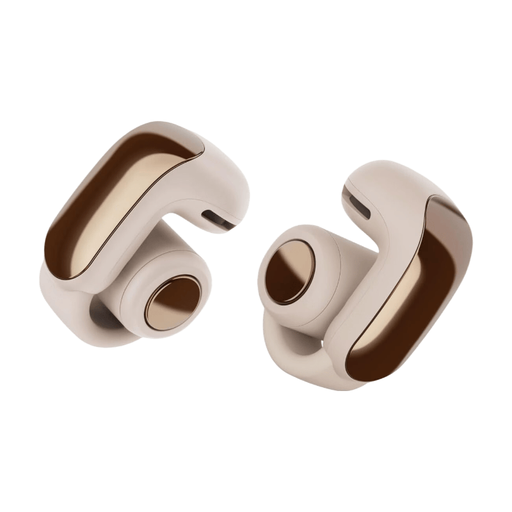
Why this choice suits this profile : The hook system and flexible hinge are designed for people looking for comfortable open earbuds that can be worn for long periods, both in the office and while running.
The product page specifies that there is no noise reduction and confirms the IPX4 certification. You can therefore assess it for what it is: an open model, not a fully waterproof product.
OpenAudio technology, Bose Immersive Audio mode, Bluetooth multipoint, built-in microphone and up to 7 hours of stated listening time.
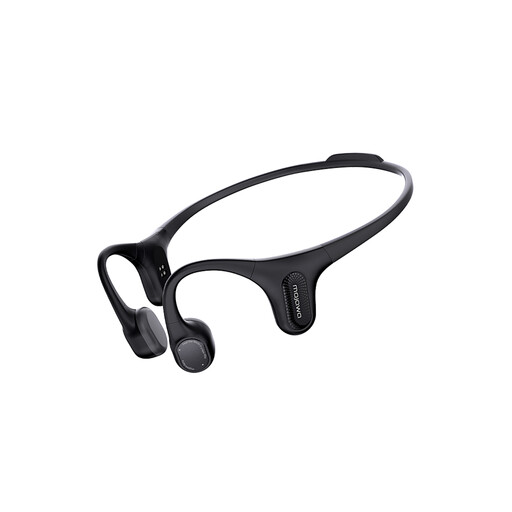
Why this choice suits this profile : These bone-conduction headphones are aimed at runners and cyclists who prefer a stable band around the head to a clip attached to the ear.
The product page mentions IP67 protection, but reminds you that Bluetooth is not suitable for swimming and that the magnetic contacts must be completely dry before charging.
Open design, built-in microphone, a fit designed for sport and IP67 resistance stated on the product page.
We have put together a comprehensive, real-time updated selection of products that meet these demanding criteria and European safety regulations.
With running earbuds, adjust the hook or band before setting off and check that no glasses arm is creating a pressure point. Start at a moderate volume so that you can continue to hear your surroundings clearly.
After training, wipe the surfaces with a soft, dry cloth. Never put a damp device in its case: moisture can damage the charging contacts. For calls, test the microphone in a quiet place, then in a busier environment. Quality also depends on the wind and the connected phone.
They keep the ear canals clear, but do not guarantee that you will remain sufficiently aware in traffic. When using cycling earbuds, stay alert to vehicles and audible signals, keep the volume moderate and check the regulations that apply to your route.
It depends on the battery, the number of charging cycles, exposure to sweat and how well the earbuds are maintained. Avoid high temperatures, unintended immersion and unsuitable chargers. A gradual reduction in battery life is normal with a lithium-ion battery.
Bone conduction is suitable for users looking for a stable band and no contact with the ear canal. Ear-clip earbuds often offer a more discreet format, with different sound reproduction. The choice depends on the fit you want, whether you wear glasses and the activity you take part in.