
Livraison le jour même ou le lendemain

Qualité garantie

Débloquez vos offres de bienvenue: Livraison GRATUITE | Jusqu'à -80 % | 30 jours d'essai gratuits à JoyPlus
Téléchargez l'application
For demanding gamers and esports competitors, every millisecond and every pixel counts. In this quest for the decisive edge or absolute immersion, all eyes are turning to one technology: OLED. An OLED gaming monitor is the promise of the deepest blacks, explosive colours, and a near-instantaneous 0.03ms response time. These are assets that can literally transform your gameplay.
But with a crowded market, finding the perfect gem can quickly become a headache. This guide is here to decode the technical jargon and present you with the best of the best for 2026. The goal: to help you find the monitor that's right for you, regardless of your budget.
By Joybuy, your high-tech expert.Last updated: July 14, 2026.
Before diving into our selection, let's review the key points that will help you make the right choice.
In fast-paced games like FPS or racing sims, fluidity is paramount. The refresh rate, measured in Hertz (Hz), is the number of images the screen displays per second. A 240Hz gaming monitor has become the standard for competitive play, ensuring impeccably sharp images even in the most frantic action. Some models push the envelope even further, becoming a 500Hz gaming monitor aimed at esports professionals in search of every possible advantage.
Response time, on the other hand, measures how quickly a pixel can react. On this front, OLED panels are unbeatable: with times around 0.03ms, they eliminate motion blur (ghosting).
The ideal resolution will primarily depend on your games of choice and the power of your PC.
To say goodbye to screen tearing, adaptive sync technologies like G-Sync (NVIDIA) and FreeSync Premium Pro (AMD) are simply essential. They lock the monitor's refresh rate to the frame rate output by the graphics card.
QD-OLED screen (Quantum Dot OLED) technology goes even further. It merges the strengths of OLED (absolute blacks) with those of quantum dots (richer, brighter colours). The result is spectacular HDR (High Dynamic Range) performance, certified by labels like VESA DisplayHDR True Black, which ensures striking contrasts and perfect legibility in both the darkest and brightest areas.
Here are three models that stand out from the crowd, each tailored for a specific type of gamer.
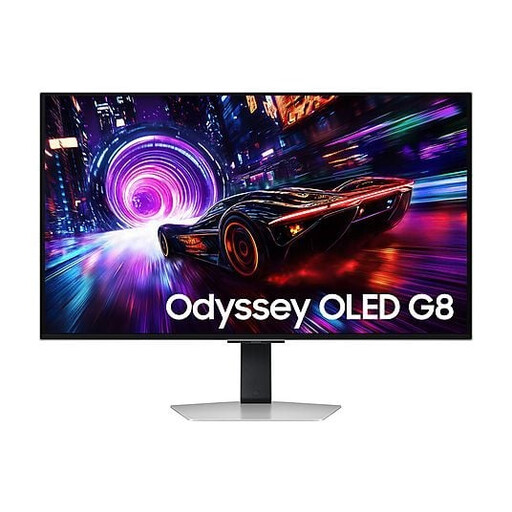
Why it stands out: This monitor pulls off the ultimate balancing act: combining an ultra-immersive 4K resolution with a 240Hz refresh rate. It's the best of both worlds, delivering stunning visuals and top-tier responsiveness.
Key features:
Who is it for? For gamers who want to have their cake and eat it too: the visual impact of 4K in AAA games and the essential responsiveness for competitive titles. Also an excellent choice for demanding content creators.
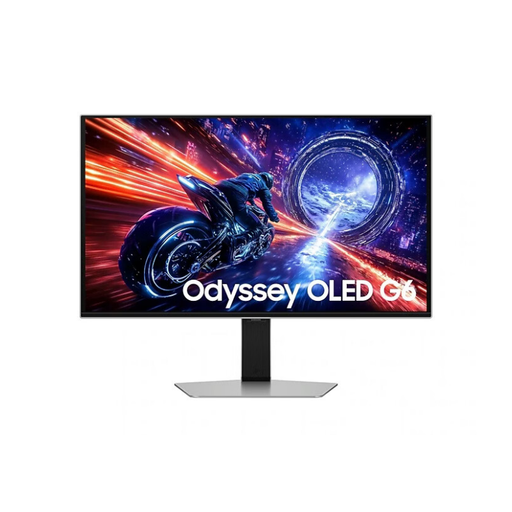
Why it stands out: With 500Hz on the clock, this screen has only one goal: pure performance, built for esports.
Key features:
Who is it for? For esports pros and fierce competitors—those for whom every frame counts and where the slightest millisecond can decide the outcome of a match.
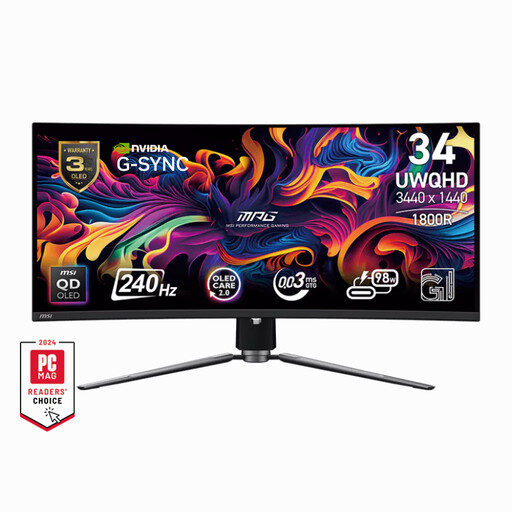
Why it stands out: Immersion above all! This curved ultrawide model plunges you into the heart of the action without compromising on fluidity, thanks to its 240Hz refresh rate.
Key features:
Who is it for? For fans of immersive games (RPGs, sim-racing, adventure) who want to be literally pulled into their universe. Its panoramic format is also a real bonus for multitasking.
Our selection highlights very specific models. If you don't find what you're looking for here or are searching for different formats, don't worry.
Discover our full range of OLED gaming monitors to find the monitor that fits your setup.
1. Are OLED gaming monitors prone to burn-in?
Burn-in, the notorious "ghosting" of a static image on the screen, has long been the Achilles' heel of OLED. Rest assured: recent models include an entire arsenal of protective features to drastically reduce this risk. Functions like pixel shifting, logo and taskbar brightness reduction, and even dedicated cooling systems are now standard. With a few good habits (using a screensaver, hiding the taskbar), the lifespan of your monitor is secured.
2. Does a 500Hz monitor really make a difference?
Let's be clear: for the vast majority of gamers, a 240Hz monitor already offers a stunningly smooth experience. The gain between 240Hz and 500Hz is subtle and will only be truly perceived by the elite of professional players. For them, this extra motion clarity and tiny reduction in latency can represent a decisive advantage in competition. Be aware, to display 500 frames per second stably, you will need a true beast of a machine.
3. Do I need G-Sync or FreeSync Premium Pro?
The answer is an unequivocal yes. These technologies are practically essential today. They prevent screen tearing and micro-stuttering by forcing the monitor and the graphics card to synchronise perfectly. The result is flawless fluidity, which is particularly crucial on a high-frequency esports monitor. Today, almost all gaming monitors are compatible with one or the other, and often both.