How do you decide what to replace first?
For each appliance you’re considering replacing, work out the annual kWh difference between your current appliance and a comparable new model. Then check whether its capacity and condition make replacement worthwhile.
| Factor |
What to check |
How it applies to me |
| Appliances that run continuously |
Check the kWh/year figures for your current appliance and the new model. Compare appliances of the same type and with a similar usable capacity. The European Commission lets you look up the declared parameters for models in EPREL. |
My fridge or freezer runs continuously, so I want to find out whether replacing it would make a bigger difference to my annual consumption than my other projects. |
| Washing cycles |
For a washing machine or dishwasher, use the kWh/100 cycles figure on the energy label alongside the number of cycles you run each year. The ADEME notes that this figure is often based on the Eco programme, so also check capacity and water use per cycle. |
I run a lot of washing cycles, so the number of cycles and the programmes I use matter more to my decision than the energy rating letter on its own. |
| Electric cooking |
Estimate how often you cook. For an oven, compare the kWh per standardised cycle for similar cavities and modes, in line with the measurement basis set out in European regulations. |
If I cook often, I want to compare this with my refrigeration and laundry appliances before deciding which one to replace. |
| Size and installation |
Check the volume or capacity you need, the space available and the installation requirements. A model of a different size won’t give you a like-for-like comparison of energy consumption. |
I’m looking for an appliance that suits my usual loads and the space available, without choosing a capacity based solely on its energy rating. |
| Condition of the appliance |
If your current appliance has developed a fault, get the cost of a repair assessed. For a new model, check the applicable repairability or durability information as well as its energy label. |
My appliance still works, or could be repaired, so I want to assess its condition before deciding that the difference in energy consumption justifies replacing it straight away. |
Which brand models should you look at?
There are no brand models to display in this section.
Which appliances should you consider on Joybuy?
These models illustrate two different options: replacing a fridge-freezer or choosing a compact dishwasher. Before deciding which option is right for you, compare your current appliance’s energy consumption and how you use it.
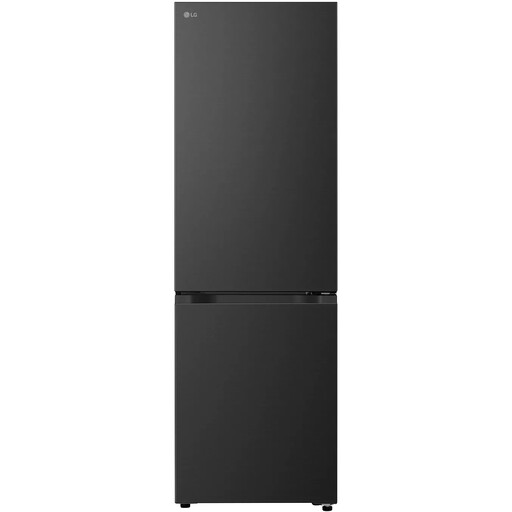 Image unavailable
LG GBBS312AEV, 333 L fridge-freezer
If you’re considering replacing your fridge or freezer, compare its 333 L capacity with the space you have and the capacity you need. The product name indicates No Frost and an A rating; check the annual energy consumption on the label for the exact model before calculating the difference compared with your current appliance.
View on Joybuy
 Image unavailable
Heinrich's HTG 8840 Schwarz, tabletop dishwasher with 6 place settings
Its capacity of 6 place settings is worth considering if it suits your usual loads and the space available. The product name indicates a D rating and 47 dB; check the label for the exact model to compare Eco programme energy consumption based on how many cycles you run.
View on Joybuy
Frequently asked questions
How do I compare my appliance’s annual energy consumption with that of a new model?
Convert both figures to kWh per year, then work out the difference. Use the kWh/year figures for fridges and freezers. For a washing machine or dishwasher, use the kWh/100 cycles figure and the number of cycles you run. For an oven, use the kWh per cycle figure and how often you cook. Compare models with capacities and usage patterns that are as similar as possible.
Is the energy rating enough to decide which appliance to replace?
No. You should also compare the stated energy consumption and check how it was measured. According to ADEME, washing figures are often based on a reference Eco programme. For fridges and freezers, capacity and kWh/year are essential when comparing models.
Where can I check the energy specifications of a new model?
Check its energy label and look up the exact model in EPREL, the European Commission’s database of models subject to energy labelling in the European Union. Compare the declared parameters for the model and variant you’re considering.
Should I replace an old washing machine if it still works?
Not necessarily. Compare its energy consumption based on how often you wash with that of a new model that has a suitable capacity, and take its condition into account. If it has developed a fault, an assessment can help you consider whether it can be repaired before you decide.


