To replace an old fridge while keeping energy use in check, compare the kWh/year figures for models with the capacity and features you need. As an appliance that runs continuously, its energy rating alone isn’t enough to compare models. Choose a fridge-freezer if you’ll make good use of the freezer; if not, consider a fridge-only model. Before replacing your current appliance, also look into whether you could keep or repair it.
Who is this choice for?
Households replacing an older fridge
If your priority is to reduce the energy use of an appliance that runs all year round, compare its kWh/year figure with the capacity and format you need. ADEME points out that fridges and freezers run continuously.
Households that also store frozen food
The space you need for fresh food and the space you need for frozen food are two separate considerations. Check the capacity of each compartment before choosing a fridge-freezer over a fridge-only model.
Households still deciding whether to replace
If your appliance is getting old or has developed a fault, check whether it’s covered and get an assessment of the repair before making a decision. Then compare the condition and known energy use of your existing appliance with those of a suitable new model.
What should you look at first?
First work out how much space you need for fresh and frozen food, then compare the annual energy use of models with a similar format. The European Commission’s energy label rates appliances from A to G. Check the kWh/year figure too, along with the capacity of each model.
| What matters |
What to check |
Who is it for? |
| Annual energy use |
Compare the kWh/year figures for models with a similar capacity and format, then check their energy ratings. |
My old fridge runs all year round, so I want an annual figure to help me decide whether to replace it. Around 33% of consumers put energy use first. |
| Capacity and freezing |
Check the usable capacity of the fridge and freezer compartments separately, as well as the installation dimensions. |
If I don’t store much frozen food, I don’t want to choose a large freezer at the expense of useful space for my shopping. The right capacity is the priority for around 33% of consumers. |
| Features you need |
Look for features you’ll use, such as No Frost or a door alarm, then check the kWh/year figure for the specific model. |
I want to store my food without paying for features I won’t use, so I prefer to consider what each one actually offers. Around 17% of consumers prioritise this simplicity. |
| Repair or replacement |
Check whether the appliance is covered and get a repair quote. Then compare its condition and energy use with those of the replacement you’re considering. |
If my fridge could still be useful after a repair, I want to explore that option before replacing it. Avoiding a premature replacement is the priority for around 17% of consumers. |
Mistakes to avoid before you buy
-
Relying on the energy rating alone
A small fridge-only model and a large fridge-freezer don’t offer the same storage space. Their ratings alone won’t tell you whether they meet your needs or let you compare their annual energy use.
Shortlist models with comparable formats and capacities, then check their kWh/year figures and the layout of their compartments.
-
Choosing a fridge-freezer if you won’t use the freezer
A separate freezer compartment is useful if you regularly buy frozen food, but don’t assume you need one just because it’s there.
Think about your shopping habits and storage needs before choosing between a fridge-only model and a fridge-freezer.
-
Assuming convenience features mean lower energy use
No Frost, alarms and storage zones describe features, not the annual energy use of the model they’re fitted to.
Keep the features that suit the way you use your appliance, then check the kWh/year figure for the exact model.
-
Ruling out a repair without checking the appliance
A fault or an old age doesn’t automatically mean you should repair or replace your fridge. Its overall condition and energy use matter too.
First check whether it’s covered and ask for a repair quote, then compare your options.
Brands to compare
Bosch
Bosch offers freestanding and built-in fridge-freezers. Check the specifications for each individual model.
- The Bosch France product details for the KGE39AWCA fridge-freezer list an energy rating of C.
- This rating applies to the KGE39AWCA; it doesn’t describe every Bosch fridge.
Liebherr
Liebherr’s French range includes fridge-only models and fridge-freezers, both freestanding and built-in.
- Liebherr offers models with features called NoFrost and BioFresh, among others.
- Check the capacity, features and kWh/year figure for the model you’re considering rather than assuming they’re the same across the range.
Whirlpool
Whirlpool’s French range includes fridge-freezers with different cooling and storage configurations.
- The brand offers several fridge-freezer configurations to consider based on how much space you need for fresh and frozen food.
- A particular configuration or feature doesn’t tell you how much energy an appliance uses. Check the capacity and kWh/year figure for the exact model.
Fridge-freezers to consider on Joybuy
These models are worth considering if you’re replacing your appliance with a fridge-freezer to store both fresh and frozen food. If you don’t use a separate freezer, or a repair is still an option, compare those alternatives before choosing a fridge-freezer.
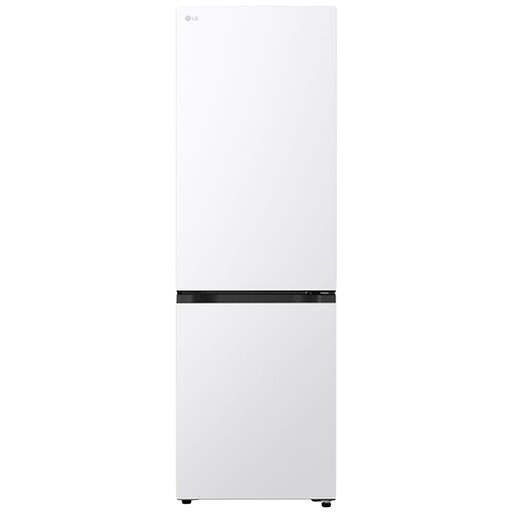 Image unavailable
LG GBBSJ1CCSW, 333 L, class C
Worth considering if you need both fridge and freezer space in one appliance, but don’t want to choose a larger model just for the extra capacity. The model name lists a capacity of 333 L and a class C rating.
The product details list an energy use of 169 kWh/year. Check this figure and the capacity of each compartment on the label for the exact model before comparing it with another fridge-freezer.
View on Joybuy
 Image unavailable
Samsung RB33B612EBN, 344 L, class E
This fridge-freezer could be on your shortlist if its fresh and frozen food storage suits your shopping habits. The model name lists a total capacity of 344 L and a class E rating.
The product details list an energy use of 254 kWh/year. Check this figure on the label for the exact model, and make sure the capacity of each compartment suits the way you’ll use it.
View on Joybuy
 Image unavailable
Haier HTW5618ENMG, 360 L, three doors
This three-door model, listed with a capacity of 360 L, is worth considering if you need both types of storage. The model name mentions Total No Frost and a class E rating.
The product details list an energy use of 271 kWh/year. Check this figure on the label for the exact model, then make sure you have enough space to install it.
View on Joybuy
 Image unavailable
Candy CFQQ5T817EPS, 467 L, four doors
This four-door model is only worth considering if you’ll make good use of its 467 L capacity for both fresh and frozen food. The model name mentions Total No Frost and a class E rating.
The product details list an energy use of 290 kWh/year. Check this figure on the label for the exact model, and make sure the capacity and dimensions match your actual needs.
View on Joybuy
 Image unavailable
Sonlu CC-520WE, 444 L, class E
Consider this model if a large capacity with a freezer suits your storage habits. The model name lists a capacity of 444 L and a class E rating.
The product details list an energy use of 289 kWh/year. Check this figure on the label for the exact model, and make sure the space is divided between the fridge and freezer in a way that suits you before choosing this format.
View on Joybuy
Frequently asked questions
Is the energy rating enough to compare two fridges?
No. Check their annual energy use in kWh/year too, and compare appliances with similar formats, capacities and uses. The A to G rating set by the European Commission doesn’t replace this comparison when a small fridge-only model and a large fridge-freezer meet different needs.
What capacity should I choose to avoid buying a model that’s too large?
Start with your usual shopping habits and work out how much space you need for fresh food and how much for frozen food. UFC-Que Choisir suggests 100 to 150 litres for one person, plus 50 litres for each additional person. Adjust this guide to match your actual storage needs before choosing a fridge-freezer.
Should I consider repairing my fridge before replacing it?
Yes, if its condition means a repair is still an option. Check whether it’s covered and get the fault assessed. Then compare the proposed repair with the appliance’s overall condition and known energy use, as well as with a new model that’s the right size for your needs.
What should I do with my old fridge after replacing it?
Take it to a suitable recycling or disposal service for refrigeration appliances rather than putting it out with ordinary rubbish. ADEME notes that you may be able to return it to the retailer or delivery driver when your replacement is delivered. These appliances need to be handled appropriately because of their refrigerants.


