
Livraison le jour même ou le lendemain

Qualité garantie

Débloquez vos offres de bienvenue: Livraison GRATUITE | Jusqu'à -80 % | 30 jours d'essai gratuits à JoyPlus
Téléchargez l'application
A cluttered desk slows down document retrieval, a poorly organised bedroom quickly loses space, and a messy living room becomes difficult to keep tidy. Yet choosing office and home storage solutions isn't simply about picking the piece of furniture with the most compartments.
Some appealing features can even spring unpleasant surprises. Here are the main pitfalls to avoid before buying a storage unit, a shelf or a document organiser.
A cabinet may look compact on its product page, but its depth, the way drawers open or the space needed in front of the doors can obstruct movement. Measure the available area, taking into account skirting boards, electrical sockets and the clearance required to access each compartment.
In a small flat or a home office corner, a narrow bookcase, a vertical shelf or a space-saving unit makes better use of height than floor space.
A large number of compartments doesn't necessarily mean the unit can hold books, thick files or heavy equipment. Check the maximum load specified by the manufacturer, making sure to distinguish the total load from the weight each shelf or compartment can bear.
A4 documents, ring binders and tools can quickly exert significant pressure. For a creative workshop or a small business, this information is far more telling than a simple promise of "large capacity".
A unit on castors must remain stable once locked in place. A tall shelf should be fixable to the wall using the provided kit. As for collapsible boxes, they need to hold their shape well enough to withstand repeated handling.
Also examine the details that make a difference day to day: drawer runners, non-slip feet, handles, accessible edges and moisture resistance. These are often what determine long-term comfort of use.
Note the available width, depth and height, then allow sufficient margin to open a drawer or pull out an A4 tray. In an office, an A4 desk organiser should remain accessible without blocking the keyboard or screen. In a hallway or bedroom, a vertical shelf can keep the walkway clear.
For smaller spaces, compare in particular:
Painted or powder-coated metal works well for document holders and desk trays. Cleaning it generally just requires a soft cloth. Wood-derived panels offer a practical surface for furniture and bookcases, but must be protected from prolonged dampness.
Textile boxes, woven paper or soft-material containers are suitable for toys, clothes, accessories and lightweight supplies. However, they are not a substitute for furniture designed to bear heavy loads. Avoid overfilling them or storing sharp objects inside.
Place any tall piece of furniture on a stable floor and follow the instructions carefully. When the manufacturer includes an anti-tip kit, use it for wall fixing, checking that the support is suitable for your wall type. For units on castors, lock the wheels before placing a printer, files or equipment on them.
Simple assembly doesn't mean you can skip checking that screws are tight. A follow-up check after a few days of use can also prove worthwhile.
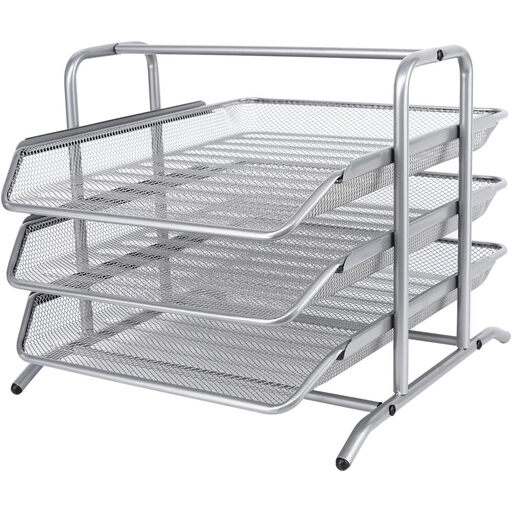
Why this suits this profile: This compact tray is ideal for students and remote workers who want to start organising their documents without installing bulky furniture. Its three tiers accommodate A4 sheets, files, post and magazines.
Its stated dimensions of 35.5 × 29.5 × 26 cm make it easy to check available space before purchase. The rubber feet are designed to minimise marks on your desk.
Metal structure, sliding trays, A4 compatibility and screw assembly.
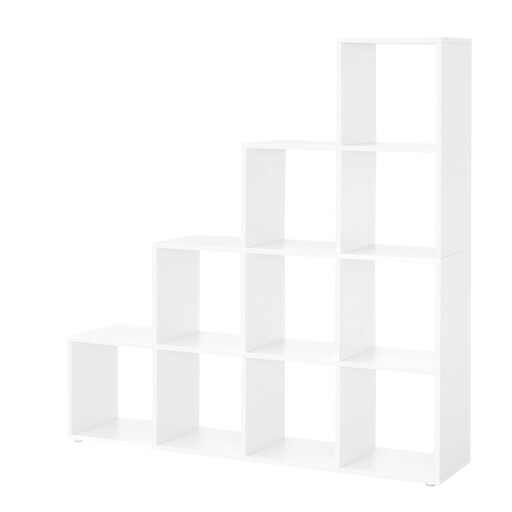
Why this suits this profile: Its ten compartments allow you to combine storage and display in a living room, bedroom or home office. The cubes can hold books, decorative items or boxes.
Each compartment is rated for a maximum static load of 10 kg. The included anti-tip kit helps secure this wide, open structure.
Size of 129.5 × 29 × 129.5 cm, ten open cubes and the option to use it as a room divider.
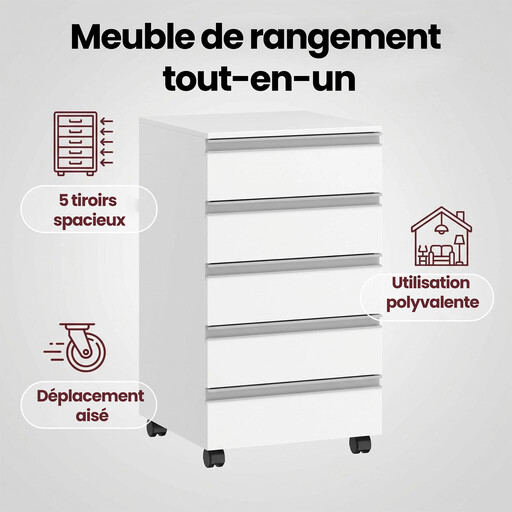
Why this suits this profile: This mobile drawer unit is designed for workshops, studios, professional offices and home workspaces where files, tools and supplies are regularly moved around.
The stated dimensions are approximately 40.5 × 40.5 × 65.5 cm. The 360° swivel castors and two lockable front wheels make it easy to move and then stabilise the unit.
Five drawers, a handy top tray for small items and a stated total load capacity of up to 50 kg.
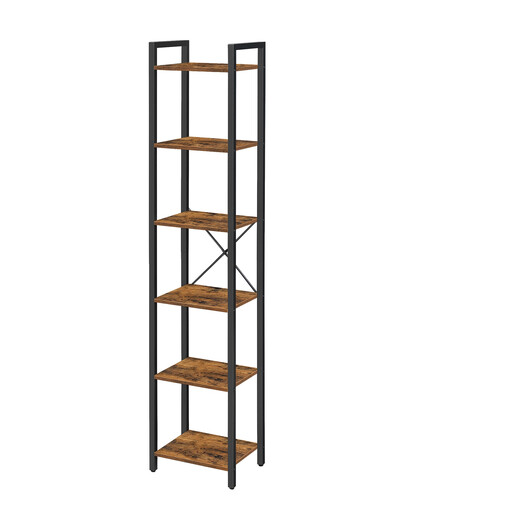
Why this suits this profile: This narrow bookcase is ideal for hallways, studios, offices and bedrooms where available height matters more than floor width.
Its dimensions of 30 × 40 × 187.5 cm are designed for vertical installation. The listing mentions an X-bar, adjustable feet and a wall fixing kit.
Six tiers, a steel frame and wood-derived panels, with a stated maximum load of 50 kg.
We have compiled a comprehensive, real-time updated list of products that fully meet these strict selection criteria and European safety regulations.
For post, bills and everyday documents, go for a metal magazine rack or a multi-level A4 tray. Office supplies will be easier to find in a drawer unit or an organiser with separate compartments.
Clothes, toys and accessories can be distributed among collapsible storage boxes or baskets. A set of three containers makes it easier to sort by category, but check their dimensions before sliding them into a shelf.
For books and decorative items, an open storage shelf offers quick access. If it's tall, place heavy objects on the lower levels and fix it to the wall when the manufacturer recommends doing so.
Start with the items you use every day. Place current documents in an A4 tray within easy reach, supplies in a drawer and archives in a separate unit. A vertical shelf or a rolling cabinet frees up desk space without multiplying accessories.
Its lifespan depends on the materials, the load it bears, humidity and how often it's handled. Respect the stated load, avoid moving an overfilled unit and regularly check screws, castors and fixings. Soft boxes should be kept away from water and overly heavy items.
The budget varies according to volume, material and the features you're after. An A4 tray or a few baskets let you start with a modest investment. For a larger need, compare the price of a complete unit with that of several accessories, taking into account actual capacity, dimensions and the possibility of reusing the storage in another room.