
Livraison le jour même ou le lendemain

Qualité garantie

Débloquez vos offres de bienvenue: Livraison GRATUITE | Jusqu'à -80 % | 30 jours d'essai gratuits à JoyPlus
Téléchargez l'application
Between invoices, administrative files, course notes, contracts and post to deal with, office document storage can quickly become a headache. An ill-sized accessory, drawers that are too shallow or flimsy folders are enough to turn a workspace into a dumping ground.
Before you buy, three common pitfalls keep cropping up:
The most suitable solution therefore depends on the volume of documents, how often you need to access them and the space you have available.
The A4 format – 21 × 29.7 cm – remains the standard for French administrative documents. If you use an A4 ring binder, also check:
OXFORD A4XL pockets are designed to hold A4 documents with extra margin. Their nine-hole perforation is said to be compatible with the ring binders and lever-arch files commonly used in France. Each pocket can hold around 25 sheets, according to the product information provided.
Plastic, polypropylene, metal and melamine panels are not all suited to the same uses.
Be wary of vague claims like "ultra-durable" when no maximum load, thickness or dimensions are specified.
For sensitive papers, a simple document sorter is not always enough. Check for:
A fireproof document bag can be used to quickly gather important papers together. However, claims of being "fire-resistant" or "water-resistant" do not guarantee that the contents will remain intact in every situation. Always consult the features and limitations stated by the manufacturer.
A desk organiser is sufficient for everyday stationery. For administrative files you consult regularly, it is better to combine vertical filing, pockets and closed storage. Here is a selection based on the stated features and clearly different uses.
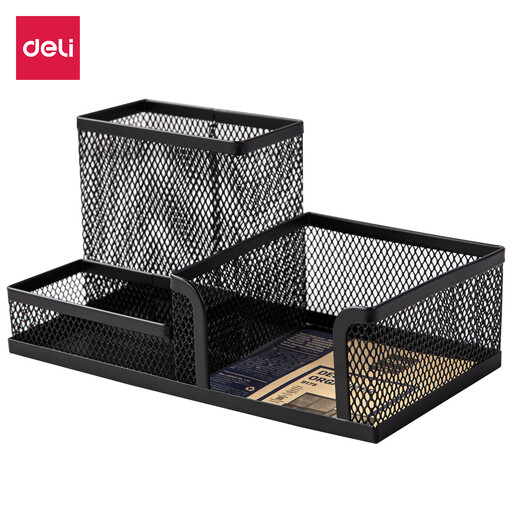
Why this choice suits this profile: Its compact design lets you group pens, scissors, rulers, sticky notes and paperclips together on the desk of a student or someone working from home.
The different compartments prevent small stationery items from getting mixed up and reduce the need to buy separate accessories. However, it does not replace a filing system for A4 folders.
Plastic construction, multiple storage compartments and a small footprint on the desk.
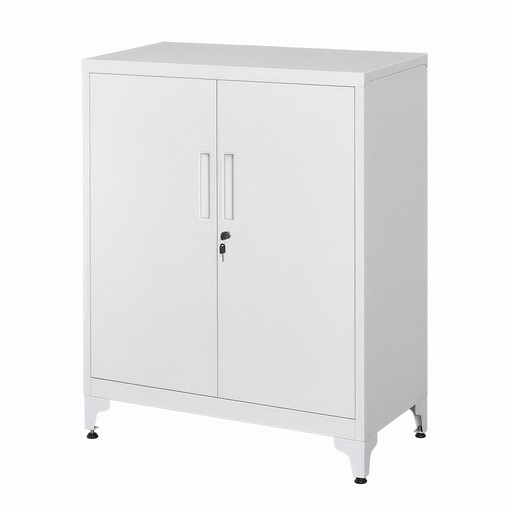
Why this choice suits this profile: This steel cabinet is suitable for an office where files, supplies and personal belongings need to be kept together and secured with a lock.
The lock and adjustable shelves overcome the limitations of open storage. The anti-tip kit must be installed in accordance with the instructions.
Steel, two doors, two adjustable shelves, lock with two keys and dimensions of 40 × 80 × 90 cm.
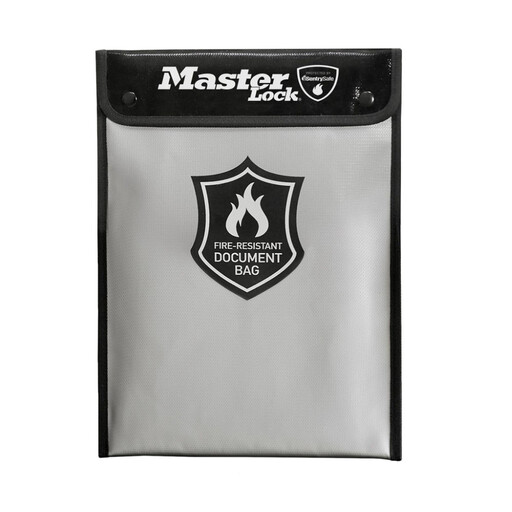
Why this choice suits this profile: This bag is ideal for people who want to quickly gather ID documents, contracts, digital media or A4 papers in a portable container.
The zip and press-stud closure prevent documents from scattering. However, you must follow the usage limits stated by the manufacturer rather than assuming the protection is absolute.
Stated four-layer construction, silicone coating, 2.8 litre capacity and size of 38 × 28 cm.
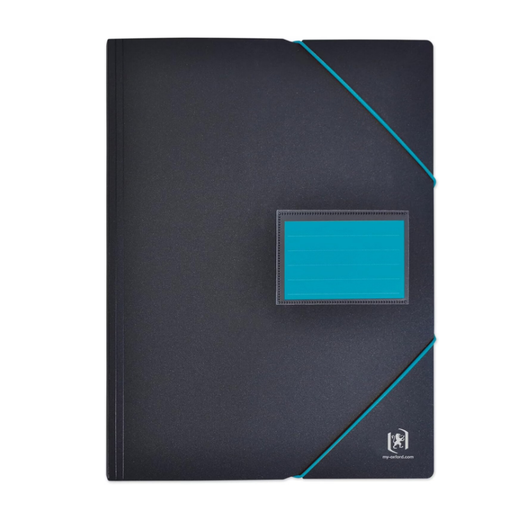
Why this choice suits this profile: This document folder is aimed at students, mobile workers and anyone who regularly consults or transports large numbers of A4 documents.
The 60 pockets prevent loose sheets from getting mixed up, while the elastic closure keeps the contents secure during transport. However, avoid exceeding the stated capacity.
A4 format, 60 pockets offering 120 views, transparent pockets, elastic closure and a temporary storage pocket.
We have put together a comprehensive, real-time updated list of products that meet these demanding selection criteria and European safety standards.
Start with four simple categories: to process, to keep, to archive and to destroy. Then use an A4 ring binder with coloured dividers for active files, and a cabinet or cupboard for documents you access less often. A monthly sort is usually enough to prevent build-up.
A document sorter separates several categories using its compartments. A document folder generally protects sheets inside pockets, making it practical for transport or presentation. A letter tray is used to distinguish incoming, outgoing or documents requiring a signature. In a shared office, this separation makes the different workflows much clearer.
Respect the stated maximum load, avoid forcing drawers and keep accessories away from excessive heat and humidity. Dust surfaces regularly, check the screws on wall-mounted models and do not overload sliding trays. These simple steps help prevent warping and make it easier to access your documents.