
Livraison le jour même ou le lendemain

Qualité garantie

Débloquez vos offres de bienvenue: Livraison GRATUITE | Jusqu'à -80 % | 30 jours d'essai gratuits à JoyPlus
Téléchargez l'application
Between invoices, client files, course materials, contracts and stationery, office document storage can quickly become a daily headache. A cabinet that’s too deep, drawers that stick, or poorly chosen dividers are all it takes to turn a well-thought-out system into yet another pile of papers.
Before investing in a mobile filing cabinet, an office storage cabinet or a few filing accessories, there are three pitfalls to avoid.
A piece of furniture may boast several drawers without specifying their internal dimensions, depth or weight capacity. To file A4 documents, make sure your folders won’t need to be folded and that the runners allow enough opening width to access the contents easily.
A storage unit on castors is handy for rearranging your space, but castors without brakes can cause the unit to move while you’re using it. Conversely, a model that’s too heavy or difficult to move loses much of its appeal in a shared office or a home-working space.
A filing cabinet with a lock can limit casual access to certain documents, but it doesn’t replace a proper confidentiality policy, a secure area, or professional solutions for particularly sensitive documents. Also check whether the lock secures all the drawers or only part of the unit.
A4 format corresponds to sheets of 21 × 29.7 cm, but a folder, punched pockets or dividers quickly add bulk. An A4 document organiser must therefore leave enough margin around the sheets to avoid crumpling or damaging them.
Be sure to measure:
A wall-mounted document holder can be a good solution when floor space is limited. You’ll then need to choose a suitable wall and use fixings compatible with the surface: plasterboard, brick or concrete.
For a filing system you use regularly, choose a structure whose specifications are clearly stated: material, unit weight, maximum load per drawer and type of runners. Steel is well suited to heavy use, while melamine-coated wood-based panels require more care with moisture and impact on the edges.
Full-extension runners give you better visibility of the contents, but they don’t exempt you from respecting the stated maximum load. Distribute heavy files across several drawers rather than concentrating all the weight in one place.
Accessories play a key role in a home office storage system. A4 dividers, punched pockets and filing tabs make it easy to separate the main categories: admin, billing, housing, studies or professional projects.
To avoid duplicates and find each document quickly, adopt a simple method:
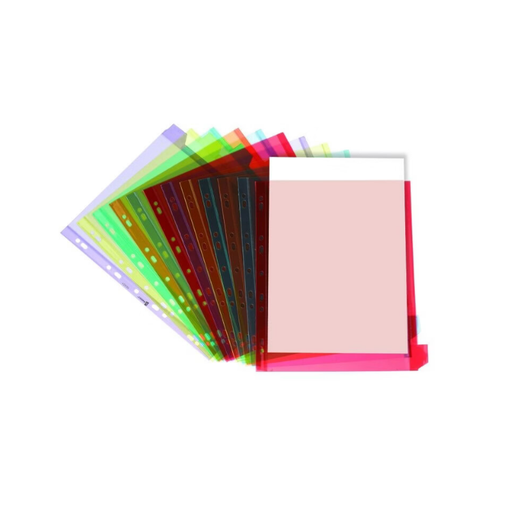
Why this choice suits this profile: This pack of 12 pockets is ideal for students, individuals and beginners who want to organise a ring binder without investing in a piece of furniture straight away.
The A4XL format leaves more margin around documents, while the 9-hole punching is compatible with French ring binders.
12 pockets, six tab colours, Bristol labels included and a stated capacity of around 25 sheets per pocket.
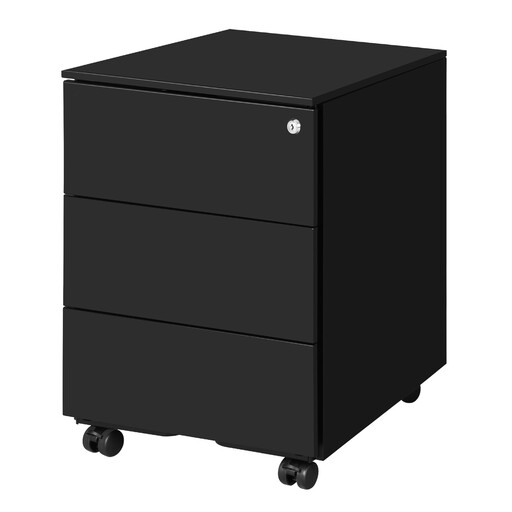
Why this choice suits this profile: Its matte black finish and compact size of 45 × 39 × 55 cm fit equally well in a professional office or a tidy workspace.
The product page specifies three lockable drawers, full-extension runners and two castors with brakes to limit movement.
Steel structure, stated load of 15 kg per drawer, four castors and assembly limited to fitting the wheels.
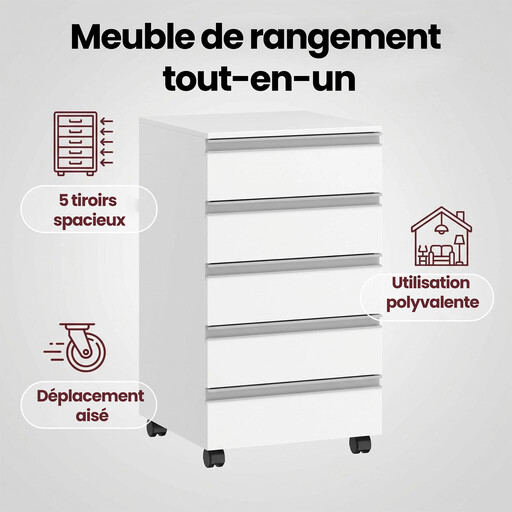
Why this choice suits this profile: Workshops, studios, teachers and small businesses that also store supplies, tools or bulky files benefit from a more versatile space.
Its dimensions of approximately 40 × 40 × 66 cm and its castors with brakes should be compared with the available space and floor type.
Five drawers, a top shelf, a stated total load of up to 50 kg and a chipboard structure with steel elements.
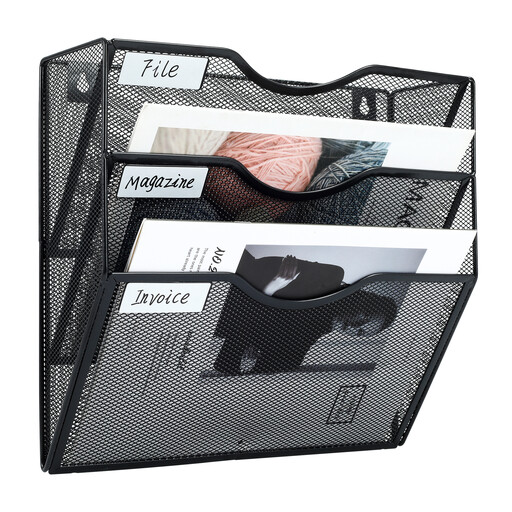
Why this choice suits this profile: This wall-mounted document holder frees up your desktop and keeps post, invoices or current files within easy reach.
The three tiers and label holders make it easy to distinguish documents to process, archive or pass on.
Metal structure, size 32.5 × 10.5 × 30 cm, screws and self-adhesive labels included.
We’ve put together a comprehensive, real-time updated selection of products that meet these demanding criteria and European safety standards.
Start by separating current documents, archives and supplies. Place the files you consult each week in the most accessible drawer or compartment. Then add A4 dividers and filing tabs with short, consistent labels.
Yes, provided you measure its depth and check the space needed for the drawers to open fully. A compact cabinet on castors can slide under a desk, while a wall-mounted document holder makes use of the available height. Brakes are especially useful when the unit needs to stay firmly in place while you’re using it.
It all depends on the material, how often they’re handled and the storage conditions. PVC pockets should be kept away from excessive heat and direct sunlight to reduce the risk of warping or yellowing. For adhesive tabs, a clean, dry surface helps them stick well. Regular checks let you replace damaged items before they harm your documents.