
Livraison le jour même ou le lendemain

Qualité garantie

Débloquez vos offres de bienvenue: Livraison GRATUITE | Jusqu'à -80 % | 30 jours d'essai gratuits à JoyPlus
Téléchargez l'application
Between administrative files, invoices, contracts and supplies, office document storage quickly becomes a daily concern. A cabinet that's too narrow, a filing drawer that doesn't close properly, or a folder that barely protects its contents can turn a well-thought-out organisation into a real waste of time.
Before you buy, three common pitfalls to watch out for:
Here are the key criteria to consider when choosing storage for a professional office, remote working, studying, or home document filing.
For everyday administrative documents, A4 format remains the standard. A document folder, ring binder or suspension file should be stored without being folded or squashed.
Measure:
A mobile desk cabinet on castors is practical in a shared space. However, you need to be able to lock the castors to prevent unwanted movement. In a small room, a low-profile model can also double as an extra surface, as long as you respect the maximum load.
Steel is ideal for those who want a rigid structure for storing files and office supplies. When comparing two models, look at the maximum load per drawer, the total weight of the unit, and the quality of the runners.
A stated capacity of 15 kg per drawer, for example, gives you a concrete benchmark for distributing files, folders and accessories. It's best to place heavier items in the bottom drawers and never exceed the stated load.
For sensitive documents, a filing cabinet for documents fitted with a lock can restrict access to contracts, professional information and personal papers. However, it does not guarantee protection against fire or water damage.
A ring binder or document folder makes it easy to consult and transport papers, but it isn't designed to withstand a disaster. A fireproof document bag serves a different purpose: quickly gathering important papers, ID documents, digital media or small items that need to be kept safe.
Before buying, check the product description carefully:
Don't take the term "fireproof" to mean unlimited protection. The duration and conditions of resistance depend on the product and how it's used.
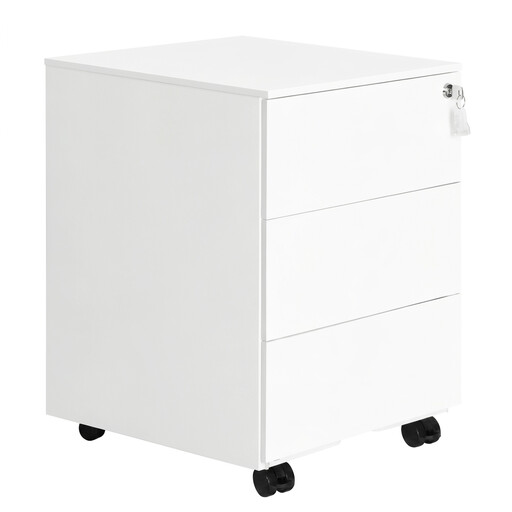
Why this choice suits this profile: With its dimensions of 45 × 39 × 55 cm and pre-assembled format, this cabinet is ideal for a first remote-working setup or a student desk.
The dimensions and stated maximum load of 15 kg per drawer let you check its suitability before buying. The lock also prevents sensitive papers from being left in open access.
Steel structure, 3 drawers, lock and 4 castors, 2 of which have brakes. The unit arrives pre-assembled: only the castors need to be fitted.
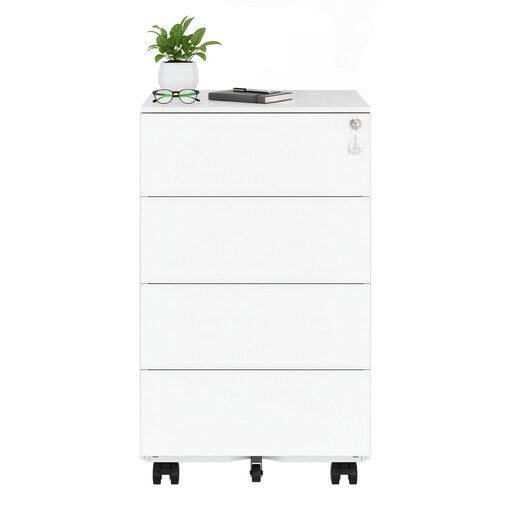
Why this choice suits this profile: Its 4 drawers and top surface allow you to separate categories more effectively in a workspace where documents and accessories are used daily.
Its product page specifies a steel structure, full-extension drawers and a 15 kg load per drawer – far more useful information than a simple promise of large capacity.
4 drawers, lock, castors included and dimensions of 45 × 39 × 69.3 cm. Its white finish blends easily into any office, at home or in the workplace.
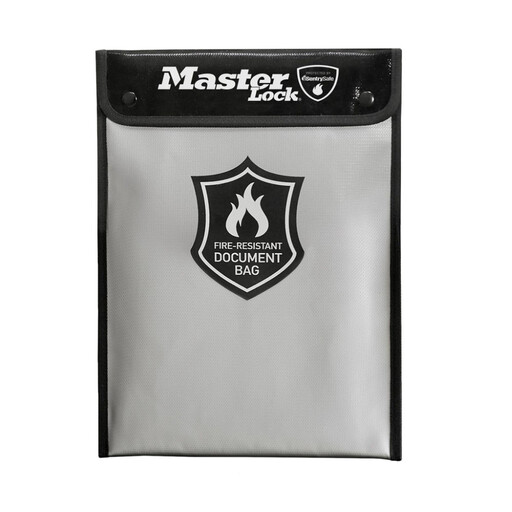
Why this choice suits this profile: This bag is designed for families, freelancers and small businesses who want to keep their priority documents together in a container that's easy to grab in an emergency.
It doesn't present itself as a filing cabinet – its purpose is clearly focused on gathering and quickly transporting documents in an emergency.
4-layer construction with silicone coating, zip and press-stud closure, stated capacity of 2.8 l and dimensions of 38 × 28 cm.
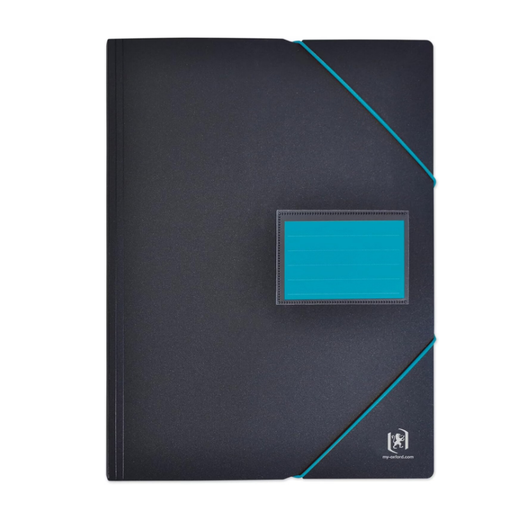
Why this choice suits this profile: Its A4 format and elastic closure meet the needs of a student or employee who regularly transports their documents.
The 60 pockets, giving 120 views, are clearly stated in black and white. This makes it much easier to assess the actual capacity, rather than relying on a visually impressive cover.
Opaque polypropylene, transparent pockets, a temporary storage pocket and manufactured in France.
We've put together a comprehensive, real-time updated list of products that fully meet these strict selection criteria and European safety regulations.
Effective storage also relies on a simple method. Reserve one drawer for documents to be processed, another for active files, and a third for current archives. Label the categories with headings that are immediately clear: housing, tax, insurance, clients or studies.
For files that are rarely consulted, avoid filling your mobile cabinet unnecessarily. Priority documents can be kept in a separate bag, stored in a place known to everyone in the household. This combination of everyday filing, locking and specific protection reduces unnecessary handling.
A lockable cabinet is suitable for everyday filing of professional or personal files. However, check the type of lock, the internal dimensions and the stability of the unit. To protect against a disaster, add a bag designed to resist fire and water, without confusing it with a certified safe.
Its lifespan depends on the load it carries, how often it's moved, and how well the castors and runners are maintained. Don't exceed the stated maximum load, lock the castors when the unit is in place, and avoid uneven floors. A steel structure can remain functional for longer if it isn't deformed by overloading.
Start by measuring the space, then group your documents according to how often you need them. Papers you use every week should stay easily accessible; archives can go in the bottom drawers or in separate boxes. An A4 document folder is ideal for sheets you consult or transport regularly.