Who are these crispbreads for?

People in charge of office snacks

If you’re stocking a shared box, the number of slices, individual packs and storage instructions after opening matter just as much as the recipe. Auchan and Brioche Pasquier’s product pages list 26 and 20 slices respectively, while Jardin BiO étic offers two freshness sachets.

Fans of simple, grain-based recipes

You’re looking for a base to add toppings to and want to tell a short-ingredient-list rye recipe apart from a crispbread with other ingredients. The ingredients list and nutritional information per 100 g make it easier to compare the options you’re interested in.

Teams with known dietary requirements

If a gluten-free option is needed, check the relevant claim as well as any other allergens and possible traces listed on each pack. In a shared box, keep products for different dietary needs separate.

What should you look for?

For a shared box, start with serving and storage, then compare recipes using the label.

Criteria What to check Who is it for?
Pack size and crunch Number of slices, individual packs and storage instructions after opening. When the box is used for several breaks, I want to be able to take a few crispbreads without leaving the rest exposed to moisture. Around 30% of consumers would prioritise ease of serving in a group.
Recipe and flavour Ingredients list and expected flavour with your chosen toppings: rye, country-style or chestnut. For a more varied break, I’m looking for a particular flavour rather than just a ‘premium’ label. The recipe would be the top criterion for around 30% of consumers.
Nutritional information Fibre, salt, sugars and fat per 100 g; the weight of one slice if you’re preparing portions. If I’m comparing two packs of different sizes, I need figures based on the same quantity. Around 20% of consumers would put this nutritional information first.
Allergens Allergenic ingredients, trace warnings and the ‘gluten-free’ claim on the pack you buy. When someone in the team has a known dietary requirement, I need to be able to clearly identify the product that meets it. This would be the top priority for around 20% of consumers.

Mistakes to avoid

  • Assuming ‘gluten-free’ means ‘allergen-free’

    Auchan’s product page for Jardin BiO étic chestnut crispbreads says they are gluten-free and lactose-free, but warns that they may contain traces of nuts.

    Check the ingredients and trace warnings on the pack you buy. If someone has a specific dietary requirement, keep their option separate and don’t describe the shared box as allergen-free.

  • Relying on the word ‘premium’ alone

    A short-ingredient-list rye recipe, a chestnut crispbread and a country-style toasted bread don’t have the same ingredients or flavour.

    Decide whether you’re mainly looking for a particular flavour, ingredient list, pack size or presentation, then compare the labels against that criterion.

  • Leaving the pack open in the box

    Auchan and Wasa’s product pages recommend storing their products in a dry place. The Auchan rye and sesame variety should also be kept away from heat and moisture.

    Reseal the pack after serving or place the crispbreads in a dry, airtight container, away from moist toppings.

    If the pack isn’t sealed properly, the remaining crispbreads may lose their crunch.

  • Comparing nutritional values per serving only

    Different serving sizes don’t give you a like-for-like basis for comparing fibre, salt, sugars or fat.

    Compare the values per 100 g first. The Directorate-General for Competition Policy, Consumer Affairs and Fraud Control presents this as a way to make it easier to compare products.

Brands to know

Wasa

The Authentic rye variety is a useful point of comparison if you’re looking for a short-ingredient-list recipe and fibre values per 100 g.

  • Auchan’s product page lists four ingredients, 19 g of fibre per 100 g and storage in a dry place.
  • It contains rye and may contain traces of lupin, milk, mustard, sesame and soya.

Jardin BiO étic

Its chestnut crispbreads offer a different recipe if you’re looking for an option labelled gluten-free and lactose-free.

  • Auchan’s product page lists 20% chestnut flour and two freshness sachets.
  • It may contain traces of nuts, and its chestnut flavour won’t make it a substitute for plain crispbread in every situation.

AUCHAN

The rye and sesame variety gives you a useful quantity guide when planning a shared serving.

  • Its product page lists 26 crispbreads per 250 g, made with wholemeal rye flour and sesame seeds.
  • It contains gluten and sesame and should be kept away from heat and moisture.

Carrefour Extra

The plain and wholemeal rye varieties let you compare two ingredients lists before choosing a base for toppings.

  • Carrefour’s product pages distinguish a plain recipe containing wheat, sugar and rapeseed oil, among other ingredients, from a wholemeal rye recipe.
  • Both product pages include warnings about possible traces of allergens, so check the one for the variety you choose.

Brioche Pasquier

Its country-style bread slices are suited to breaks when you’d prefer toasted bread to add toppings to.

  • Auchan’s product page lists 20 slices and recommends storing them in a cool, dry place.
  • This variety contains wheat, rye, barley and gluten; its sachets aren’t individually wrapped.

A crispbread option on Joybuy

If you’re stocking an office snack box with crispbreads to add toppings to, this selection focuses on crunchy varieties. Check the pack size if you’re planning to share them between several people.
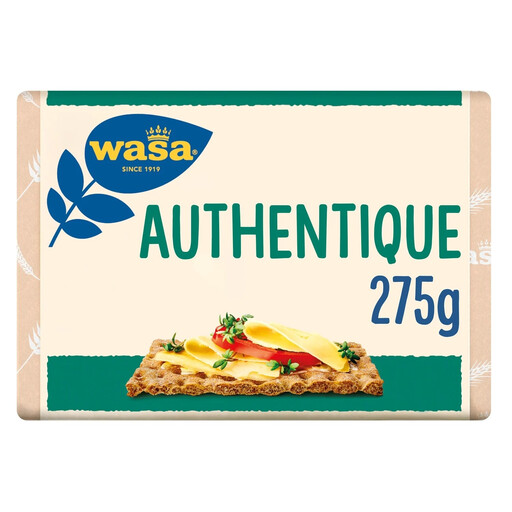
Pack of WASA Authentic crispbreads, 275 g

WASA Authentic crispbreads, 275 g

A 275 g pack of crunchy crispbreads to consider as a base for toppings at your office break. Before adding them to a shared box, check the allergens, number of crispbreads and storage instructions after opening on the packaging.

View on Joybuy

Frequently asked questions

Is gluten-free crispbread always suitable for a shared box?

No: ‘gluten-free’ doesn’t mean ‘free from other allergens’. Auchan’s product page for Jardin BiO étic chestnut crispbreads warns that they may contain traces of nuts. Check the pack you buy and keep options for different dietary requirements separate.

What should you check on the packaging of pre-packed crispbreads?

Start with the product name, ingredients, allergens, quantity and date shown, then check the storage instructions. For pre-packed food sold in France, the Directorate-General for Competition Policy, Consumer Affairs and Fraud Control notes, among other things, that allergenic ingredients must be highlighted.

How can you compare packs of different sizes?

Compare their nutritional values per 100 g first, then check the number of slices and pack weight against the serving you have in mind. The Directorate-General for Competition Policy, Consumer Affairs and Fraud Control says that presenting values per 100 g makes it easier to compare products.

What does ‘best before’ mean on dry crispbreads?

This wording indicates a best-before date, which is different from a use-by date. The French Ministry for the Economy explains that it relates to the product’s quality: if the date has passed, check that the packaging is intact and follow the storage instructions before deciding whether to use it.