Small team with shared breaks
Several of you drink similar coffee at the same time and want to avoid queues and preparing drinks one cup at a time. A filter coffee machine with a carafe can make serving easier when breaks are scheduled.


Start by considering how your team drinks coffee: a filter coffee machine is ideal for serving several people at once, while a bean-to-cup machine is better suited to individual drinks if someone is genuinely prepared to keep it maintained. Capsules make it easy to prepare one cup at a time, but you will need to keep an eye on supplies. A manual machine using ground coffee is best for users who are happy to clean it after every use.
Several of you drink similar coffee at the same time and want to avoid queues and preparing drinks one cup at a time. A filter coffee machine with a carafe can make serving easier when breaks are scheduled.
You want individual drinks made from beans, are happy to accommodate a larger and noisier appliance, and can organise refilling, emptying the coffee grounds, rinsing and descaling.
You prefer a compact machine with a simple operation for unpredictable usage, while accepting that someone will need to manage purchases of capsules or pods and follow the applicable recycling instructions.
Start by recording the drinks served during the busiest period, then compare the capacities and maintenance requirements of the specific model you are considering.
| Priority | What to check | Your needs |
|---|---|---|
| Capacity at peak times | Compare the capacity of the carafe or water tank with the peak number of drinks. Also check the coffee-grounds container or capsule collector, and how the machine performs when several drinks are prepared one after another. | I want everyone present during the same break to be able to serve themselves without having to refill the machine or wait straight away. The total number of employees is not enough to go by: peak usage is the deciding factor. |
| Shared maintenance | Identify the trays, tanks, drip tray and removable parts that need cleaning. Check what manual descaling steps are required, even if the machine offers an automatic programme. | I want to know who will empty, rinse and carry out the periodic maintenance. A machine with a portafilter or steam wand requires more steps after preparation. |
| Running costs | Compare beans, ground coffee, capsules or pods for the same drink size and over the same period. Include filters, descaling products and the management of consumables. | I want to assess the budget based on the actual pace of use, not just the price of the machine. UFC-Que Choisir states that, under its comparison conditions, a bean-to-cup espresso can cost two to three times less per cup than a pod espresso. |
| Space and noise | Measure the available space and the clearance needed to fill the tank. Check noise and vibration levels, particularly for a grinder, as well as access to the parts that require maintenance. | I want a machine that remains practical in a small break room without disturbing nearby workstations. A compact format alone does not guarantee sufficient capacity for the team. |
A team of eight people might need eight drinks within a few minutes, or just a few coffees spread throughout the day. Headcount alone therefore cannot confirm whether a tank, carafe or coffee-grounds container has sufficient capacity.
Record the number of cups served per day, and especially the busiest break period, then compare this requirement with the capacity of the exact model.
The tasks involved go beyond pressing the preparation button: tanks, containers, the drip tray, the brewing unit and cleaning programmes all need to be taken into account. UFC-Que Choisir assesses these elements separately in its testing protocol for grinder machines.
Set up a simple rota for daily and weekly tasks, as well as descaling. Avoid a bean-to-cup or manual machine if this arrangement is not realistic.
Rinsing, emptying, cleaning and descaling also take time that needs to be shared among the team.
The true cost depends on the volume served, the type of consumable and the tasks actually carried out. A bean-to-cup machine can reduce the cost per cup compared with pods, but it requires more space and maintenance.
Calculate the cost over the same period using the actual number of cups, the chosen type of coffee and the cleaning products. Do not compare drinks of different sizes as though they were equivalent.
Remember to factor in capsules or pods, coffee, filters, descaling products, waste and maintenance time.
De’Longhi lets you compare a compact bean-to-cup espresso machine, such as the Magnifica Start, with a manual machine from the Dedica range that uses ground coffee.
Nespresso is a brand worth considering for capsule-based coffee in a limited space, particularly with the Vertuo Pop+.
Philips is a relevant brand for comparing bean-to-cup espresso machines designed for individual drinks, such as the 2200 Series.
Moccamaster provides a useful comparison point for a filter coffee machine for a small group, particularly when drinks are prepared in a carafe.
These Joybuy options cover bean-to-cup and capsule or pod machines for individual drinks in a small break room.
 Image unavailable
Worth considering for frequent individual espressos if the team is happy to assign maintenance duties.
1.8 L tank, coffee-grounds container for 12 pucks and 275 g hopper. The removable brewing unit, drip tray and LatteGo are advertised as dishwasher-safe, with guided descaling.
Check the grinder noise in the break room, how often the machine needs emptying during peak periods and the availability of maintenance consumables.
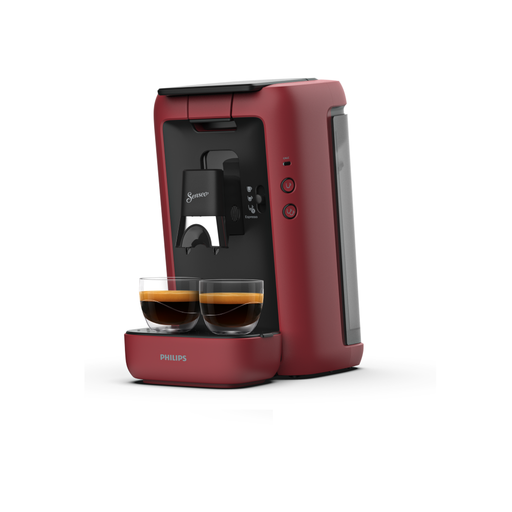 Image unavailable
This pod machine suits a small team that values simple preparation and short, shared breaks.
The removable 1.2 L tank is advertised as making at least 8 cups. It can prepare two cups at once, and the removable parts are dishwasher-safe.
Plan your pod supplies, check the applicable recycling instructions and allow for descaling, which is advertised with a reminder every three months.
 Image unavailable
Best suited to a very small office with irregular consumption and limited available space.
Removable 0.6 L tank, six-capsule collector, two programmable Espresso and Lungo volumes, and dimensions of 8.4 × 33 × 20.4 cm.
The tank and capsule collector will need frequent refilling and emptying when several people use the machine at the same time.
No. Légifrance states that employers must provide workers with fresh drinking water; this obligation does not require a coffee machine to be installed. A coffee machine is therefore optional equipment.
For at least one week, record the number of coffees served per day, the number of drinks during the busiest period and the drink sizes. MaxiCoffee Coffee Spirit gives 15–20 coffees per day for very small businesses and 30–60 for small offices as commercial guidelines; they should not replace a record of your actual usage.
Assign responsibility for filling the water and bean tanks, emptying the coffee-grounds container and drip tray, cleaning the removable parts and descaling. UFC-Que Choisir assesses these tasks separately for grinder machines: pressing the preparation button does not reflect the full maintenance workload.
Do not assume so. In France, the Info-tri recycling information shown on the product, packaging, instructions or associated documents indicates how it should be sorted. Also check the collection rules at your workplace before organising capsule collection.
Generally, no. A manual machine requires the portafilter to be emptied or removed, the components to be rinsed and the steam wand to be cleaned immediately after preparing milk-based drinks. It is better suited to willing users than to a team without a designated person in charge.