Small teams taking breaks at different times
If everyone makes their drink at a different time, pods let people prepare one cup at a time. Just make sure someone is responsible for restocking and emptying the used-pod container.


For a small shared office, start by thinking about how people take their breaks: choose a filter coffee maker to brew several cups of the same coffee, pods for individual drinks, a bean-to-cup machine if the team can keep on top of maintenance, or a kettle if people want a wider choice of drinks. Your decision should also take into account who will refill the water, clean the parts and manage supplies and waste.
If everyone makes their drink at a different time, pods let people prepare one cup at a time. Just make sure someone is responsible for restocking and emptying the used-pod container.
A bean-to-cup machine needs a regular maintenance routine, with someone assigned to the job. Depending on the model, this may include emptying the containers, cleaning accessible parts and descaling as instructed.
A kettle lets everyone make tea, herbal infusions or instant coffee. If several colleagues want the same coffee at the same time, a filter coffee maker is a better way to brew a pot to share.
Start with the number of drinks people will make at the same time, then check who will handle refilling, cleaning and waste.
| Consideration | What to check | Questions for your office |
|---|---|---|
| Serving style | Compare one-cup-at-a-time serving with brewing a pot for several people. Check the reservoir and container capacities against the number of drinks needed between refills or emptying. | Do people take breaks at different times, or do several colleagues want the same coffee together? I’d rather not have a full container or empty reservoir bring things to a halt. |
| Maintenance | Check which parts need emptying and washing, and what descaling involves for the exact model. Make sure there’s convenient access to water and a sink. | We need a realistic rota for the machine and cups. In a March 2023 IFOP survey of French employees, 78 % of those who use a mug at work said they washed it at least once a day; this figure relates to the mug, not the machine. |
| Supplies and recycling | Identify the pods, filters, coffee grounds or tea bags the appliance uses, then plan where to store them and provide a suitable recycling or waste container nearby. ADEME gives separate guidance for pods and office food waste. | I want to know who will restock the area and where to put the waste after each use. |
| Choice of drinks | A kettle provides hot water for drinks made individually, while a filter coffee maker brews coffee to share. Check what supplies are needed for each use. | Does our team mainly drink the same coffee, or should everyone be able to choose their own drink? |
| Location and safety | Check that the worktop is stable, there’s enough room around the appliance and you can follow the model’s instructions. For an electrical appliance, also check the installation and conditions of use; INRS highlights these points when advising on electrical safety at work. | We need a place where people can fill, use and clean the appliance without obstructing others. |
Depending on the model, the containers, reservoir, coffee spouts and brewing unit need regular attention. If tasks aren’t shared, one person can end up doing all the cleaning.
Read the manual for the model you’re considering, and agree who will empty, clean and descale it before you buy.
Remember to allow time for descaling, too: De’Longhi says it takes around 45 minutes for its Magnifica S, but this timing doesn’t apply to other machines.
The used-pod container needs to be emptied, and everyone should know where to take the pods. ADEME says aluminium or plastic pods can go in the paper and packaging recycling stream.
Put a clearly labelled container near the machine, and check the applicable recycling guidance as well as the capacity of the chosen model’s container.
In a shared office, refilling the water, emptying the waste and restocking supplies all matter too: each task can interrupt service.
Estimate how many drinks will be made between visits from the person responsible for maintenance, then compare the capacities and tasks listed for the models you’re considering.
If water or a sink is hard to reach, cleaning becomes more difficult. Electrical appliances also need a suitable power supply and conditions of use; INRS includes these in its guidance on preventing electrical risks at work.
First, find a stable surface with easy access for cleaning, space for recycling and a suitable electrical installation, without blocking the walkway.
This manual coffee maker is suited to breaks when several people want to share filter coffee. It needs a separate source of hot water, so factor this into your office equipment and arrangements.
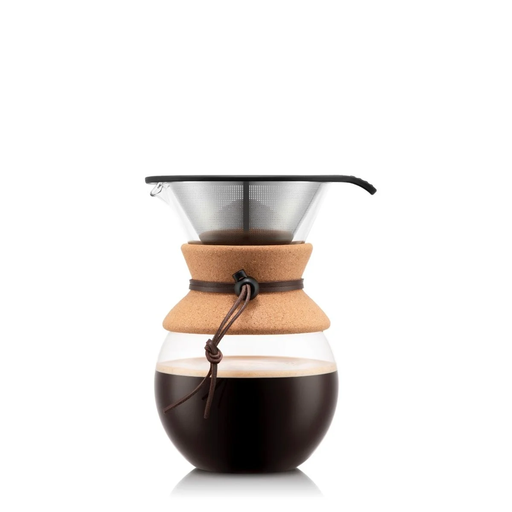 Image unavailable
Brew a pot of filter coffee to share during a group break. Stated capacity: 1 L; permanent filter. You’ll need a separate source of hot water, and should handle the glass carafe with care.
Assign someone to take responsibility or set up a visible rota for refilling the water, emptying the containers and cleaning accessible parts. Check the manual for the exact model to find out about any required rinsing and descaling; the tasks vary between appliances.
Provide a suitable container and collection option for the food waste produced at the office. ADEME includes coffee filters in this category; check with your site’s facilities team where to put used filters and grounds.
ADEME says aluminium or plastic pods can go in the paper and packaging recycling stream. Provide a clearly labelled container near the machine and check the guidance that applies at your office.
Choose a stable surface that keeps the walkway clear and makes filling and cleaning easy. For an electrical appliance, check the installation and the model’s instructions; INRS reminds us that safe equipment and safe use help prevent electrical risks at work.