What should you compare?
For an office snack tin, start with what matters most to you: protein per serving, a simple recipe or a flavour to share. Then compare the labels of products that meet your needs.
| Criterion | What to check | Who is it for? |
|---|
| Protein per serving |
Compare the protein per 100 g and calculate the amount for your planned serving. Auchan’s listing for its plain product gives 4.5 g of protein per 25 g serving. |
If I have a snack around my workout, I want to know what I’ll get from the amount I actually put in the tin, without attributing any sports benefit to it. Around 42% of consumers would prioritise this measurable amount. |
| Salt and ingredients |
Read the “salt” figure and the ingredients list; “roasted” doesn’t necessarily mean “unsalted” or “oil-free”. |
If I often dip into the tin, I’d rather know what’s been added than rely on the product name alone. Limiting salt and choosing a simple recipe would be the main priority for around 33% of consumers. |
| Flavour and format |
Check the seasoning, pack size and storage instructions after opening before filling a shared tin. |
When I’m planning a snack to share, flavour and a pack that’s easy to portion come first for me. Around 25% of consumers would prioritise this. |
Retailers and brands to know
These range examples are useful for comparing specific recipes; they don’t mean every product from a retailer has the same nutritional profile.
Auchan
The retailer offers plain, unsalted and dry-roasted cashews, as well as recipes from other brands.
- The listing for AUCHAN plain cashews shows 18 g of protein and 0.03 g of salt per 100 g, with a stated serving size of 25 g.
- The Papapéro roasted, unsalted product shows 23 g of protein per 100 g. Compare each recipe rather than assuming the same figure applies to other packs.
Monoprix
The range mentioned includes a 120 g pack of Monoprix Bio roasted and salted cashews.
- Its listing shows 21 g of protein per 100 g.
- This recipe also contains sunflower oil and has 0.56 g of salt per 100 g, so it shouldn’t be treated as a plain recipe.
Carrefour
Carrefour Bio’s listing describes a roasted and salted cashew recipe.
- The published ingredients list specifies 94% organic cashews.
- It also lists 5% organic sunflower oil and 1% salt, so check whether this recipe suits your priorities.
E.Leclerc
The products mentioned include Bio Village roasted cashews, Tokapi unsalted loose cashews and Tokapi honey and salted cashews.
- These options let you choose first between an unsalted product and a seasoned recipe.
- The Tokapi honey and salted cashews contain sweetening ingredients, so check the ingredients list rather than comparing them with plain cashews.
ALDI
ALDI France’s listings feature TRADER JOE'S unsalted roasted and dry-roasted cashews.
- The unsalted roasted version is sold in a 200 g pack.
- To compare its protein content with another product, check the nutritional information on the pack you choose.
Lidl
Lidl describes Alesto as a range of nuts, dried fruit and snacks for sharing.
- It’s a range worth exploring if you’re looking for nuts in store.
- To find cashews that meet your criteria, check the product name, protein, salt and ingredients on the pack.
Cashews available on Joybuy
This Joybuy cashew selection includes a range of pack sizes, a product labelled as unsalted, and salted or spicy recipes. For your office tin, choose the seasoning you prefer, then check the nutritional information and storage instructions on the pack you receive.
 Image unavailable
BENENUTS Unsalted Cashews 130 g
Worth considering if an unsalted recipe is your priority for the tin. The pack contains 130 g; check the ingredients and nutritional information on the label before comparing servings.
View on Joybuy
 Image unavailable
GOLDEN TURTLE Cashews 500 g
The 500 g pack means you’ll need to portion out what you want for the office tin. Check the ingredients, salt content and storage instructions on the pack before using it for several breaks.
View on Joybuy
 Image unavailable
BENENUTS Dry-Roasted Cashews 165 g
If you prefer a roasted flavour, compare this 165 g product with the unsalted versions. “Dry-roasted” doesn’t mean you can skip the ingredients list and the “salt” figure for this seasoned recipe.
View on Joybuy
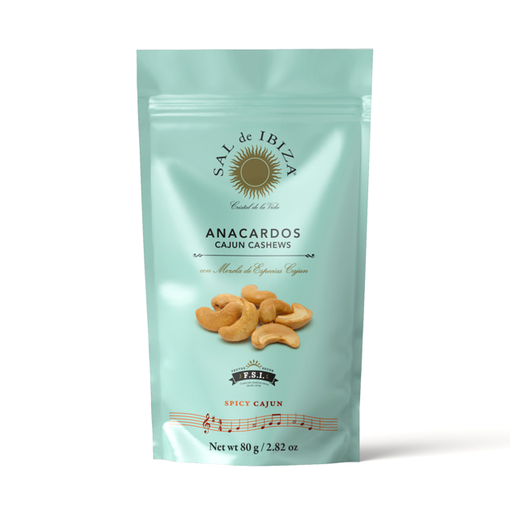 Image unavailable
SAL DE IBIZA Creole Spiced Cashews 80 g
This spicy 80 g recipe is a better fit when you’re after a bold flavour. If you top up the tin regularly, check the ingredients and salt before choosing it instead of an unsalted recipe.
View on Joybuy
 Image unavailable
Xue Ji Chaohuo Salted Cashews with Skin 120 g
Consider these if you’re looking for salted cashews with their skins on in a 120 g pack. For frequent snacking at the office, compare the “salt” figure with unsalted options and follow the instructions for storing the pack after opening.
View on Joybuy
Frequently asked questions
Are cashews automatically “high in protein”?
No. The protein figure per 100 g isn’t enough on its own to establish this nutrition claim. When choosing a snack, first compare the grams of protein in the portion you plan to eat, without assuming it will aid sports recovery.
How much should I put in the office tin?
Preparing portions makes it easier to compare them with the label. For its plain cashews, Auchan’s listing says that a 25 g serving provides 4.5 g of protein; this figure doesn’t apply to other cashews. Santé publique France recommends a small handful of unsalted nuts each day, but this guidance doesn’t set a specific serving size for every product.
Are roasted cashews always unsalted?
No. The roasting method and seasoning are separate things, so read the ingredients list and the “salt” figure. For example, the listing for Monoprix Bio’s roasted and salted recipe includes sunflower oil and salt.
How should I store the pack at the office after opening?
Follow the instructions for the specific product and reseal the pack after taking out your portion. Auchan’s listing for its plain cashews says to seal the pack airtight and eat the product within five days of opening; don’t assume the same time limit applies to another product.
What should I check before sharing the tin?
Keep the product label handy so everyone can check the ingredients and allergen information. Cashews are an allergen, and Carrefour Bio’s listing for its roasted and salted recipe warns that it may contain traces of peanuts.


