
Livraison le jour même ou le lendemain

Qualité garantie

Débloquez vos offres de bienvenue: Livraison GRATUITE | Jusqu'à -80 % | 30 jours d'essai gratuits à JoyPlus
Téléchargez l'application
Finding the perfect gift—one that's fun, durable, and at least a little high-tech—can be a real headache. This is especially true in the remote control car aisle! Between the flashy packaging and descriptions that embellish reality, the risk of turning a promising toy into instant disappointment is very real. As the Head of Product Recommendations at Joybuy, my job is to help you avoid these pitfalls.
Before you start shopping, here are the 3 most common traps to avoid to ensure long-lasting fun.
To make the right choice, ignore the marketing hype and focus on the few technical details that make all the difference once the car hits the pavement.
The ability of an off-road remote control car to withstand impacts is paramount. Look for models whose descriptions mention ABS plastic or alloy reinforcements. This material offers far superior flexibility and impact resistance compared to standard plastic.
A good 4x4 (four-wheel drive) system, often found in a 4x4 RC car, provides better traction on difficult surfaces like grass, sand, or gravel. Also, check for independent shock absorbers; they aren't just for show—they absorb energy from jumps and protect the car's entire structure.
A rechargeable remote control car is the standard today. However, the devil is in the details.
Extra features can multiply the fun, as long as they are well-designed.
To illustrate these criteria in action, here are three models we recommend, each tailored to a specific need.
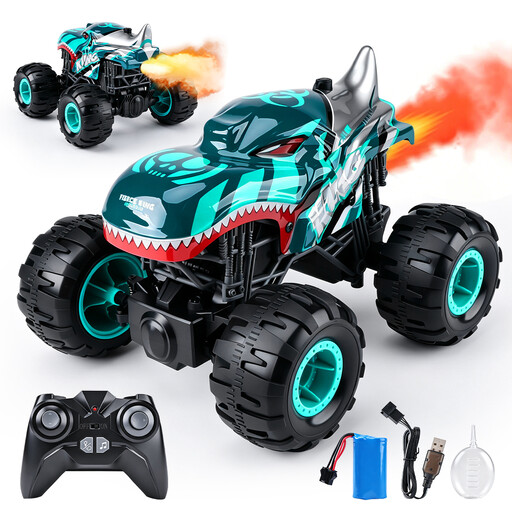
Why we love it: Perfect as a first remote control monster truck, its shark design, lights, and music (with adjustable volume, thankfully!) captivate younger kids. Its durable ABS plastic construction and high-grip rubber tires allow it to tackle grass and sand without fear.
It knocks out the short-lived battery trap by including not only two rechargeable batteries for the vehicle but also the batteries for the remote. The fun can start right out of the box and last much longer.
Complete fun features (lights, music, 360° stunts) and a 2.4 GHz anti-interference system that lets multiple kids play together.
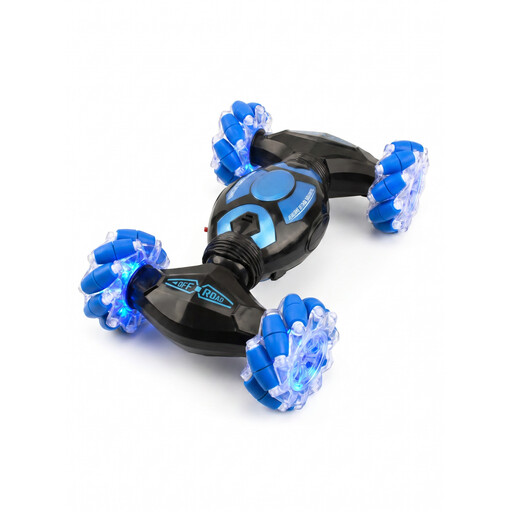
Why we love it: This is the dream model for young drivers fascinated by technology. It offers gesture control via a watch in addition to the classic controller. Its "biomimetic" structure allows it to twist and change shape to adapt to the terrain.
It avoids the useless-gadget trap: its transformation ability is built into a sturdy, functional spine, not a fragile mechanism. The Mecanum wheels enable true multi-directional stunts.
Dual control modes (controller and watch), reversible driving, and the ability to transform between a wide (stable) and narrow (agile) mode.
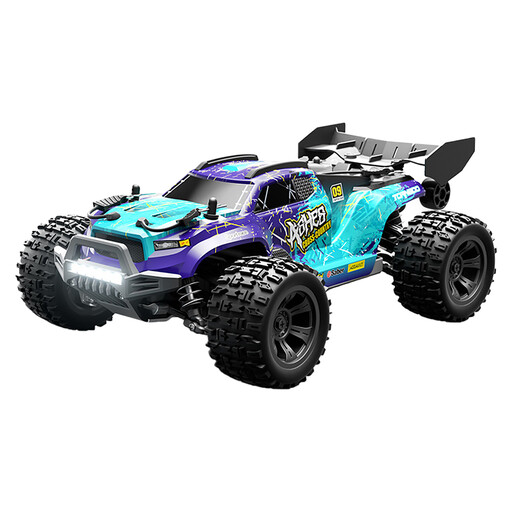
Why we love it: Designed for teens and thrill-seekers, this model is all about performance. With speeds exceeding 40 km/h, a 4x4 transmission with metal gears, and adjustable shock absorbers, it offers a true high-performance driving experience.
It tackles the false durability trap with a chassis reinforced with aluminium alloy bars at strategic stress points. It's built to withstand high-speed crashes and falls where basic models would break.
High speed with 3 adjustable modes (for beginners and experts), two batteries for 50+ min of playtime, and a splash-resistant (IPX4) chassis.
We've put together a complete selection of products that meet our quality requirements and safety standards.
The lifespan depends on two factors: build quality and battery care. A model with a sturdy ABS plastic chassis and well-protected components will last longer. For the battery, avoid fully depleting it and don't leave it charging unattended for extended periods to preserve its long-term capacity.
Yes, provided they use a suitable remote control technology. Most current models operate on a 2.4 GHz frequency, which is designed to prevent interference. This allows multiple cars to drive and race simultaneously without their signals crossing. This is a key point to check if you're planning races with family or friends.
The learning curve is generally quite intuitive. Children often adapt very quickly to controlling the car by simply tilting their hand. Most importantly, good models that offer this feature almost always include a traditional stick-based remote as well. This allows the child to start with whichever method feels easiest and explore the other later on.