
Livraison le jour même ou le lendemain

Qualité garantie

Débloquez vos offres de bienvenue: Livraison GRATUITE | Jusqu'à -80 % | 30 jours d'essai gratuits à JoyPlus
Téléchargez l'application
An off-road electric bike can be just as suitable for a leisurely ride along country paths as for a daily commute – provided you don't rely solely on the advertised power or claimed range. The needs of a commuter are completely different from those of a private trail enthusiast, while a folding model answers very different constraints to a bike fitted with large wheels.
Before you make a purchase, three common pitfalls keep cropping up:
In the UK, a standard electrically assisted pedal cycle (EAPC) intended for use on public roads must generally offer assistance limited to 15.5 mph (25 km/h) and a motor with a maximum continuous rated power of 250 W, in line with the criteria for pedal-assisted cycles.
A 250 W electric bike is therefore particularly well suited to urban travel and daily commutes, provided the model also meets the other safety and equipment requirements. A 500 W electric bike can offer more punch on private land or fall into a different administrative category, but you shouldn't automatically assume it's an EAPC allowed on the road.
As for the 3500 W off-road electric bike and the electric dirt bike, these are intended for private land and dedicated trails when they are not road-legal. The VIPCOO H3 featured here is explicitly stated as not authorised for use on public roads.
Battery capacity is expressed in Wh. This is a more meaningful indicator than a simple "long range" claim, even though it can't predict an exact distance in every situation.
Make sure you check:
An electric bike with a removable battery is especially practical if you live in a flat or need to charge at the office. For a long-range electric bike, also consider the charging time and the extra weight of the battery.
On hilly or uneven terrain, hydraulic disc brakes offer progressive stopping power, but you'll need to keep a regular eye on pad wear and the brake circuit. Mechanical disc brakes can also work well, depending on the bike's weight, the type of terrain and how often you ride.
A 7-speed electric bike transmission makes it easier to adapt to changes in gradient. In town, riding position, lighting, mudguards and ease of maintenance often matter more than high power.
Dimensions are also crucial for a folding electric bike. A 16-inch folding bike is easier to store in a home or car boot, but its smaller wheels can behave differently on cobbles and rough paths.
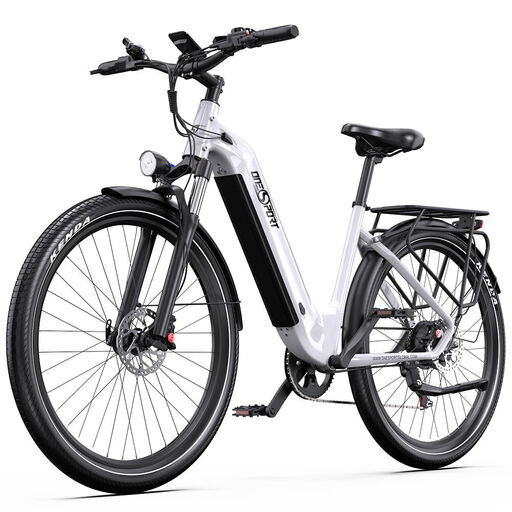
Why this choice suits this profile: With its 250 W motor, assistance up to 15.5 mph (25 km/h), 7 gears and a 655 Wh battery, this model is aimed at urban travel and regular journeys on suitable roads.
The advertised power matches the threshold typically required for an urban EAPC, while the product listing mentions hydraulic brakes. Nevertheless, check the supplied equipment and the bike's compliance before you ride.
250 W motor, 655 Wh battery, hydraulic brakes and 7-speed transmission.
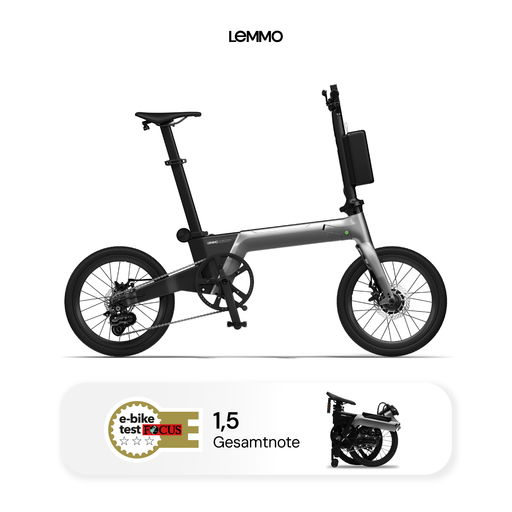
Why this choice suits this profile: This carbon folding bike is aimed at users who prioritise storage, multi-modal transport and a compact size of 68 cm × 73 cm × 32.4 cm.
The listing states that the maximum rider weight is 120 kg. It also recommends using the original 65 W charger and checking the brakes and tyre pressure before every ride.
16-inch folding format, 159 Wh removable battery and easy-to-store dimensions.
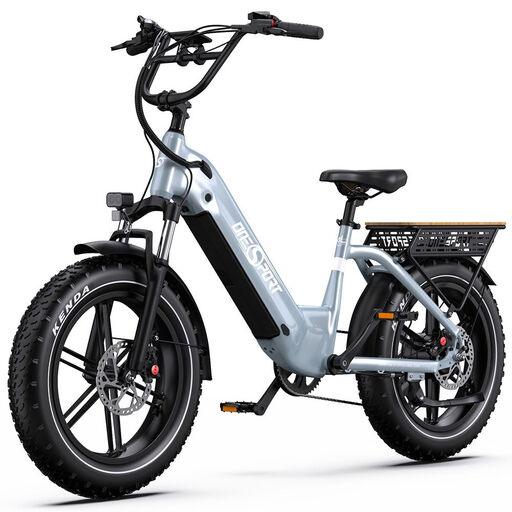
Why this choice suits this profile: Its 20-inch tyres, 864 Wh battery, dual disc brakes and stated maximum load of 150 kg make it suitable for rides on trails and for uses that require a larger energy reserve.
The listing distinguishes several verifiable details: 864 Wh battery, Shimano 7-speed transmission, dual disc brakes and a maximum claimed range of 80 km. This range naturally depends on riding conditions.
864 Wh battery, 20-inch tyres, 500 W motor and Shimano 7-speed transmission.
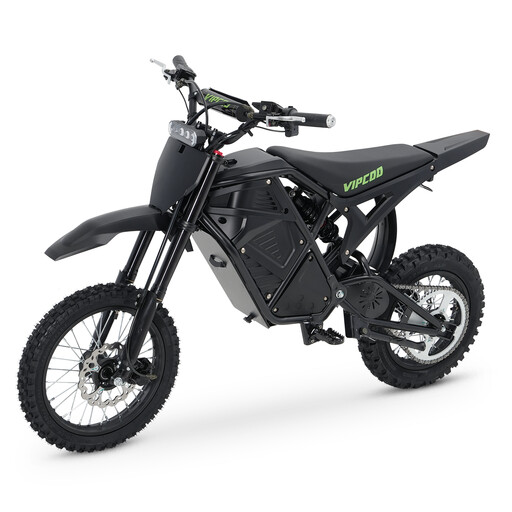
Why this choice suits this profile: This electric dirt bike is designed for dedicated trails and private properties. It features hydraulic front suspension, gas rear suspension and a removable 48 V, 23 Ah battery.
The listing clearly states that this vehicle is not authorised for use on public roads and is intended for private land or a dedicated trail. This restriction should weigh heavily in your buying decision and determine where you use it.
3500 W motor, removable 48 V and 23 Ah battery, off-road tyres and dual hydraulic disc brakes.
We've put together a comprehensive, real-time selection of products that meet these demanding criteria as well as European safety requirements.
It all depends on its category and compliance. An EAPC intended for road use must, among other things, meet the limits applicable to pedal assistance, namely 250 W continuous rated power and assistance that cuts out at 15.5 mph (25 km/h). A 500 W model or a 3500 W dirt bike may fall under a different regulatory framework. Always check the manual, compliance documents and local regulations before you ride on the road.
Actual range depends on the terrain, rider weight and load, but also on temperature, wind, tyre pressure and the assistance level. A high-capacity battery, expressed in Wh, provides a larger reserve. However, the distance claimed by the manufacturer remains an estimate obtained under specific conditions.
Regularly check tyre pressure, wheel tightness, brake condition and the transmission. Charge the battery with the supplied charger, store it in a dry place and avoid extreme temperatures. After a ride on dusty or wet terrain, clean the bike without submerging the electrical components. If parts show signs of wear, have the safety-related elements inspected.