
Livraison le jour même ou le lendemain

Qualité garantie

Débloquez vos offres de bienvenue: Livraison GRATUITE | Jusqu'à -80 % | 30 jours d'essai gratuits à JoyPlus
Téléchargez l'application
An occasional table can complement a living room, define an entrance hall or provide storage space next to the sofa. But rushing your purchase can lead to a few unwelcome surprises: a piece of furniture that is too deep for comfortable movement, a tabletop that is impractical for everyday use or a style that clashes with the rest of the room.
Before comparing models, start by defining how you intend to use the table, measuring the available space and checking the stated specifications. Here are the main criteria to consider, followed by a selection suited to different needs.
A very attractive console table may turn out to be too wide for a hallway or too low behind a sofa. Staged photos can also give a misleading impression of proportions. Always check the full dimensions: width, depth and height.
For a table intended for a small space, just a few centimetres can make it harder to move around. In an entrance hall or corridor, a narrow table will often be the better choice. Behind a sofa, make sure the tabletop remains easy to reach without getting in the way of anyone sitting down.
The maximum load stated on a product page does not mean that the furniture should support this weight continuously, nor that items can be placed on it any way you like. Heavy items should remain centred, while the table must be positioned on a stable surface.
Also examine the table’s construction: tabletop thickness, how the legs are attached and whether adjustable feet are included. These details have a direct impact on stability and floor protection.
An occasional table without enclosed storage may be enough for a lamp or a few decorative items, but it leaves small accessories on display. By contrast, a table with a storage basket can hold throws, books and everyday essentials.
However, remember to measure the space needed around the basket and check its material. Fabric works well for soft items, while an open shelf is more practical for books, plants and decorative objects.
Start by measuring the available area, then allow enough space to open a door, vacuum and move around comfortably. Each format serves a different purpose:
A console table 160 cm wide and approximately 30 cm deep can provide generous surface space without taking up too much floor area. By contrast, a small round model with a diameter of 45 cm will fit more easily next to an armchair or bed.
Solid wood, pine, particle board and metal all have different appearances and maintenance requirements. A particle-board tabletop is easy to clean, but it is best to avoid standing water and abrasive products. Pine adds a warm touch, while a metal frame naturally complements industrial décor.
For a rustic look, wood finishes and natural shades blend in effortlessly. In a contemporary interior, a simple tabletop paired with steel legs can create a more graphic contrast.
Check the maximum load stated by the manufacturer, the number of tiers and the type of legs. Adjustable feet are useful on slightly uneven floors and can also help prevent scratches when fitted with suitable caps.
Finally, check the contents of the package: fittings, tools and illustrated instructions. Even when assembly looks straightforward, tighten the fixings gradually and check the furniture is stable before using it.
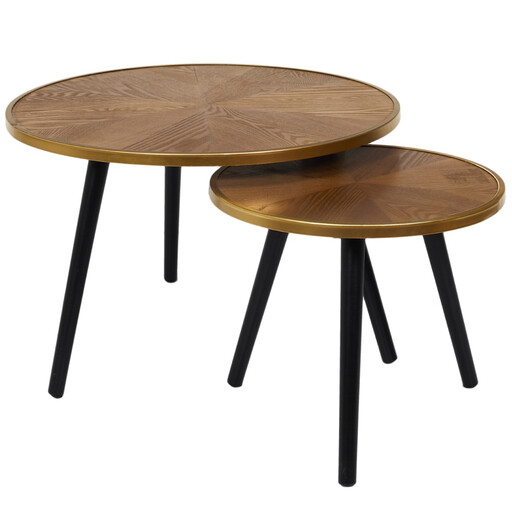
Why this choice suits this profile : This set of two nesting tables is ideal for anyone who wants to adapt their layout without adding several pieces of furniture. The two round tables can be used together or separately, particularly in a small living room.
The nesting design reduces clutter when only one surface is needed. Each table measures 40 cm high and 40 cm in diameter, according to the stated dimensions.
Two round pine tables with a brown finish, to be set up together or separately. Assembly is required.
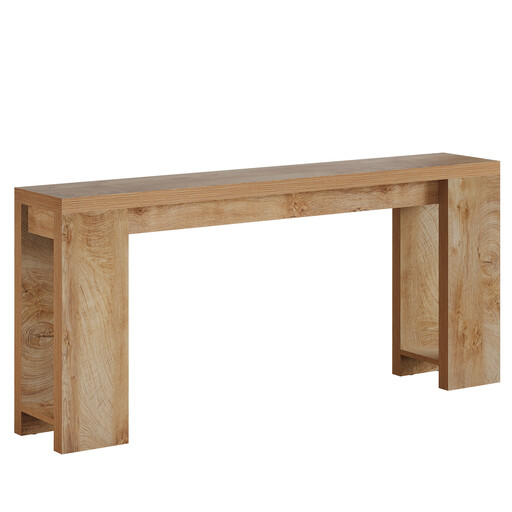
Why this choice suits this profile : This long console table is designed for anyone looking for a piece that is both decorative and practical for an entrance hall, corridor or behind a sofa. Its shallow depth makes it well suited to narrow passageways.
With a stated depth of approximately 30 cm, it takes up minimal floor space. However, check that you have 160 cm of width available before ordering.
Country and rustic style, E1 particle board stated on the product page, with a frame specified to support up to 136 kg.
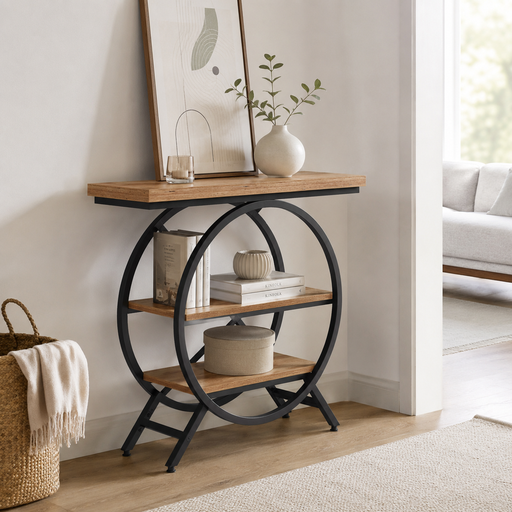
Why this choice suits this profile : This entrance-hall or sofa table offers several open tiers for organising books, plants and decorative items. Depending on its configuration, it can also be used as a storage unit or TV stand.
The open shelves keep contents accessible and prevent everything from piling up on the top surface. The four adjustable feet help compensate for minor unevenness in the floor.
Top stated as 4 cm thick, round metal frame, three staggered tiers and a maximum load of up to 150 kg according to the product page.
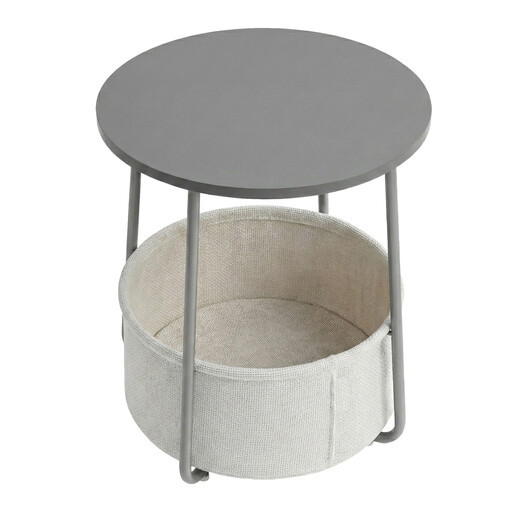
Why this choice suits this profile : This compact side table fits easily beside an armchair, sofa or bed. Its integrated basket keeps accessories close at hand without adding a bulky piece of furniture.
With its 45 cm diameter, it takes up very little space. The basket separates storage from the top surface, but you must observe the stated maximum load for the tabletop.
Double-layer polyester basket, U-shaped steel legs, adjustable feet and a stated maximum tabletop load of 35 kg.
We have brought together a complete, real-time updated selection of products that meet these demanding criteria as well as European safety requirements.
It all depends on the height of your sofa and how you intend to use the table. For placing a glass or remote control, a tabletop close to the height of the armrest is generally the most practical. Measure the seat height and check that the table will not restrict movement.
Yes, provided you choose a shallow model and leave enough room to pass through comfortably. A console table 25 to 30 cm deep may work in some corridors, but accurately measuring the space is essential.
Spread heavy items evenly, do not sit on the furniture and never climb on it. After assembly, retighten the fixings if necessary. Clean the table with a soft, slightly damp cloth and protect wooden surfaces from prolonged exposure to moisture.