
Livraison le jour même ou le lendemain

Qualité garantie

Débloquez vos offres de bienvenue: Livraison GRATUITE | Jusqu'à -80 % | 30 jours d'essai gratuits à JoyPlus
Téléchargez l'application
A professional OBD2 car diagnostic scanner can save valuable time when troubleshooting a fault — provided you choose a device that is genuinely suited to the vehicles you work on and the repairs you carry out. Simply reading an engine fault code is not always enough: the problem may originate from the ABS, automatic gearbox, airbag, electronic parking brake or battery management system.
Before buying a car diagnostic tool, three common pitfalls should be considered.
A car diagnostic tool intended for workshop use should, at a minimum, specify the systems it can access: engine, transmission, ABS, SRS, EPB, TPMS, BMS, air conditioning and bodywork. The phrase ‘all systems’ does not guarantee that every function will be available on every vehicle.
In particular, check that the following functions are included:
For a keen DIY enthusiast, a Bluetooth OBD2 scanner may be sufficient for viewing engine data and certain parameters. For a mechanic or automotive electrician, a tablet with a dedicated interface generally offers more comprehensive navigation and more convenient customer-file management.
Bidirectional control, also known as an automotive active test, allows you to send a command to an actuator and observe its response. Depending on the vehicle, this may involve the cooling fan, fuel pump, air-conditioning relay, door lock, electric window or ABS motor.
This function can help distinguish between a control, wiring or component fault. However, it does not replace electrical measurements or the vehicle manufacturer’s recommended procedures. You should also check which car service reset functions are available: oil service, parking brake, steering angle, battery, tyre pressure, EGR valve, particulate filter or gearbox relearning.
ECU coding deserves particular attention. Some devices offer adaptation or configuration functions for specific makes, while other procedures require online access, a stabilised power supply or compliance with a manufacturer’s procedure. It is therefore best not to choose a model solely based on the number of advertised functions.
Modern vehicles may use the CAN FD protocol, which can carry more data, or the DoIP protocol, which relies on network communication. If your business covers several generations of vehicles, make sure the scanner supports the necessary protocols without an additional adapter where required.
Bluetooth connectivity gives you genuine freedom of movement around the vehicle. However, it must remain stable and offer sufficient range for workshop conditions. Also consider:
A car battery tester can complement your equipment by measuring the state of charge, starting capability and charging circuit. However, it should not be confused with an OBD2 scanner: the former analyses the battery and alternator, while the latter communicates with the vehicle’s control units.
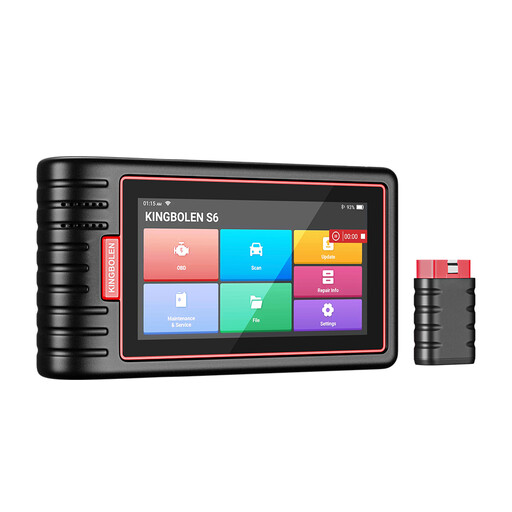
Why it suits this profile : Its compact design and Bluetooth connection are ideal for private users who want to check faults across several systems from their smartphone or tablet, without investing in a large workshop tablet.
It is not limited to a basic engine reader and advertises access to several systems as well as service functions. Compatibility must nevertheless be checked for each vehicle.
Auto-VIN, live data, 28 advertised service functions and CAN FD support after the update mentioned by the seller.
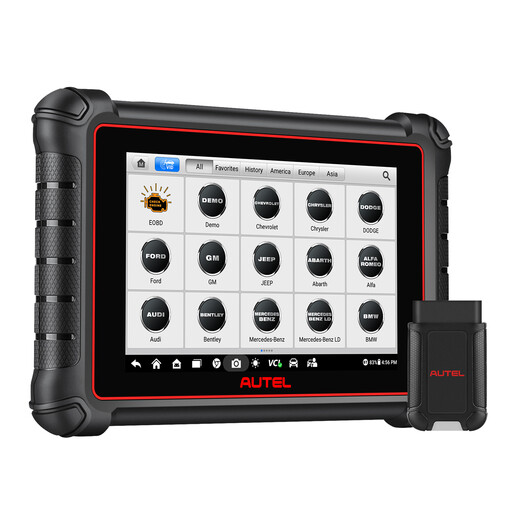
Why it suits this profile : Its 8-inch tablet, full-system diagnostic functions and CAN FD and DoIP protocols meet the needs of a workshop handling vehicles from a wide range of makes and generations.
The product details distinguish between full diagnostics, active tests and special functions. They also specify that certain operations vary depending on the make and model.
Bidirectional control, more than 40 advertised service functions, wireless connectivity and the option to use a BT506 module, sold separately, for battery testing.
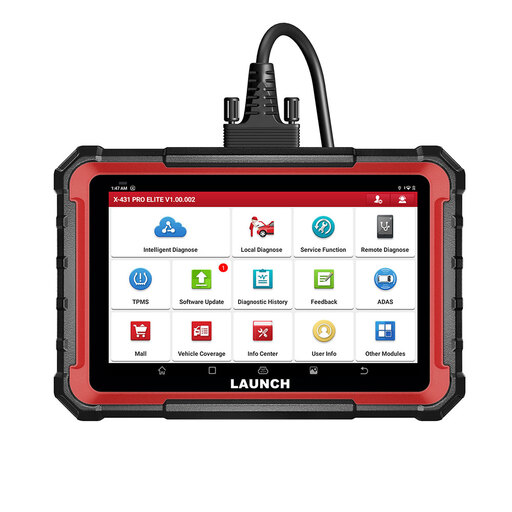
Why it suits this profile : Workshops carrying out adaptations, active tests and certain coding procedures may appreciate this wired tablet, which can be expanded with modules sold separately.
The product details state that ECU coding and bidirectional tests are not universal. This prompts you to check compatibility using the VIN before buying.
8-inch screen, full-system diagnostics, CAN FD and DoIP support, active control functions and report storage.
When troubleshooting an electrical fault, a mechanical diagnostic tool cannot replace a direct measurement. A battery tester such as the VDIAGTOOL BT500 can analyse 6 V, 12 V and 24 V batteries according to the advertised specifications, while also assessing starting performance and alternator charging. Results depend on the battery technology, the stated CCA rating and the measurement conditions.
For standard batteries used in remote controls or certain devices, the VARTA LCD Battery Tester is a separate solution designed to display the voltage of compatible batteries. It cannot diagnose a vehicle’s electronic network.
No. A standard OBD2 reader generally focuses on the powertrain and emissions. To access the ABS, SRS, transmission or BMS, you need a device that supports these systems on the vehicle in question. Clearing a code does not necessarily remove the cause of the fault.
Some fault codes can be read offline, but vehicle identification, updates, access to certain coding functions and remote services may require Wi-Fi or an internet connection. You should also check how long the included software subscription lasts.
It depends on the tablet’s durability, battery life, availability of updates and the extent of its software coverage. A device may continue to read the protocols it supports after the update period ends, but newer vehicles and functions added later may require a renewed subscription.